On-Demand
eCommerce Growth Blueprint - 2024
It’s official. Customers are back in the market 🔥🔥
Shopify's Thanksgiving numbers just put an end to eCommerce growth ambiguity.
We're calling it - 2024 will bring back the excitement into scaling online stores - and we thought we should give you a head start.
Interestingly, 2024 will be less about fancy tech and more about the user experience.
Stores that focus more on building stronger connections with customers will win in 2024.
And many business leaders have the same feeling:
I firmly believe that enriching the customer experience will drive more profit in 2024. - Lev Tretyakov, CEO
Prioritize customer experience above all else in 2024. - Jon Morgan, CEO
eCommerce stores will need to hack their way to delivering great customer experiences.
And this is what we are discussing on the 21st of December.
How to grow 2X faster - by building positive shopping experiences - without spending a bomb.


About the speaker

Shekhar Kapoor
VP, Marketing
Convertcart
Shekhar Kapoor (VP at Convertcart) has worked with 500+ online brands, including Squatty Potty, Prep Expert, and USA Hockey Assn., and helped them boost sales exponentially.
Shekhar Kapoor
VP, Marketing
Convertcart
SESSION REPLAY – ECOMMERCE GROWTH BLUEPRINT 2024
Hey folks, thanks so much for joining us. We were expecting quite a crowd and I’m really happy to see all of you here. I’m Shaker. I’m very excited to walk you through some of the ideas we have today. We’ve tried to keep it extremely genuine, and I was actually formatting this document before we started the call, and I thought, hey you know what, I really hope people are able to walk away with something that they can use instantly.
The whole thought process behind picking this blueprint idea was: it was going to be our last webinar for the year. So that’s of course one. We’ve consistently done one every month, so pat on the back to ourselves, and thanks so much to my own team. I think all of the leg work is actually the team — I just come here and give a one-hour spiel about things. But really speaking, I think we’ve managed to kind of get that done, and I give the credit of being able to do that to having a plan.
It’s extremely important to execute of course, and I’m going to talk a lot about that. But I really hope all of you are putting together an exciting and ambitious plan for the coming year. But I will also caution you that the ambitiousness of your plan is often directly proportional to the disappointment you see or feel right around March. Because that’s when you realize: hey, I don’t think I’ll triple my business in the first six months of the year. But I really hope you do. I really hope that 2024 works out for all of you amazingly.
I think especially for people who have been in markets that have not been that great in 2023 — I hope that turns around. Credit card spending numbers look amazing in the US especially. I think the FED has agreed to start cutting interest rates as early as next quarter. So a lot of positive signals, markets rallying. There are a lot of good things.
But what we wanted to do is talk about 20 to 25 interesting ideas that you could immediately take away with you and try and implement. I will talk about three key areas:
1. Thinking long term — stuff that you think your business might or might not need, but I’ll probably throw some light on why you might not want to overlook some of the stuff I’ll talk about.
2. Customer experiences — although I know everybody wants to deliver the best, maybe I’m able to give you some ideas on how to do that.
3. Emails — now, emails are the one that you might think are not that important, or you might not want to spend too much time on them. But let me assure you that it is the most underrated channel to drive business, and I’m going to walk you through some ideas which will probably change the way you look at your own emails — change the way you’re doing emails today.
Okay, so I don’t want to spend too much time talking about the context. I hope you understand where we’re coming from, and I’m going to jump right in because I have 25 things to talk about. I hope to take a minute to a minute and a half for each one of those and try and gift back some of your time to you — that was the plan.
If you have questions, please put them in the chat. Can somebody say hi in the chat so that we know the chat is working for everyone? Because the last time, I figured out halfway through the webinar that chat really wasn’t working. Hey J, thank you so much — so yeah, we know that chat’s working. If you have questions, put them there. If they are about what I’m talking about, I’ll try and take them there and then. Otherwise, we’ll do a Q&A at the end.
I’m happy to answer questions that could be as specific as you want them to be — as specific to your business, to your problems.
👉 THINK LONG TERM
So the first thing we want to talk about is thinking long term. Now the whole idea here is — for example, for Convertcart we are putting together an AOP — an Annual Operating Plan — so these are some things that we feel you can possibly add to your strategy.
Fast-format delivery
The first one is actually really obvious. I wouldn’t spend too much time on this: fast delivery. Amazon has spoiled your customers already. I think you already know that.
I don’t think I’ve ever picked the fastest way to get my order delivered on Amazon, ever.
And hey R, thanks so much. I think each time you’re chatting, try and pick the “Everyone” option so that people can see what’s really happening.
I think this is very simple: delivery options bring in more influence.
So if you don’t already have it, hire a more expensive delivery option.
Integrate a more expensive delivery option. Your customers are more than willing to pay for it.
And please don’t think that you’ll have to end up paying for it. Pass that cost on to the customer.
People who want that luxury will be more than happy to take it. You would be surprised how much that happens.
In fact, if you are a brand that is selling on your own website as well as selling on Amazon, your customers might be buying from Amazon because of fulfillment.
So you might want to have a faster delivery option here — even if you want to charge that $10 or $15 extra. It’s completely okay. Let that money go to the provider and then slowly scale from there.
But this is a really obvious one. This is non-negotiable. I think every brand should have fast delivery — especially to metros and to areas where they know their order volume is coming from.
Try “direct selling”
The next one is actually direct selling. I’m going to give you an unconventional idea. You know, of course you know Facebook and Instagram Marketplace, shopping inside of Instagram, is slowly picking up. What we have also seen is the conversion rate for something like this is high.
Now this is an unconventional idea — and the reason I say that is it doesn’t benefit us in any way.
So this is not a webinar to plug Convertcart services and try to sell you stuff. We just want to give you some genuine advice. Because it’s the end of the year, it’s the holiday period — we just want to make sure we are really genuine with the ideas we give you.
What we have seen is — I mean, of course, the obvious statement I’m going to make first is: trust is everything. It’s everything that you’re ever going to do.
You know, I was in fact looking at a study — I think it was Penn State University that did that — and it was a comparison of Apple versus Samsung. They looked at why people who preferred these brands were passionate about them.
They did MRIs of actual customers — all of the geeky stuff. And what they found is that people who were purchasing Apple felt extremely strongly about Apple. They were advocates. They thought it’s the best phone they could ever buy.
Whereas people with Samsung — when they saw Samsung as a brand, they had no positive correlation, neither did they have any negative correlation. But when those Samsung people were shown Apple, they actually had a negative correlation.
So really speaking, people who buy Samsungs buy Samsung because they hate Apple. There’s an actual study that said that. But there’s an underlying layer to this entire story — which is trust. You always buy things you trust. And the moment that trust goes away, you’ll stop buying them.
So I’m a recent convert. I was using Samsung for the longest time. I switched to Apple. I’m happy. I highly recommend everyone to do that — but apart from that:
When people buy directly from you, from social media profiles — like in this case, it’s Rebecca Minkoff, who’s the founder of the brand — she’s selling it from her own profile. You’re buying from an actual person. There’s somebody standing behind the product.
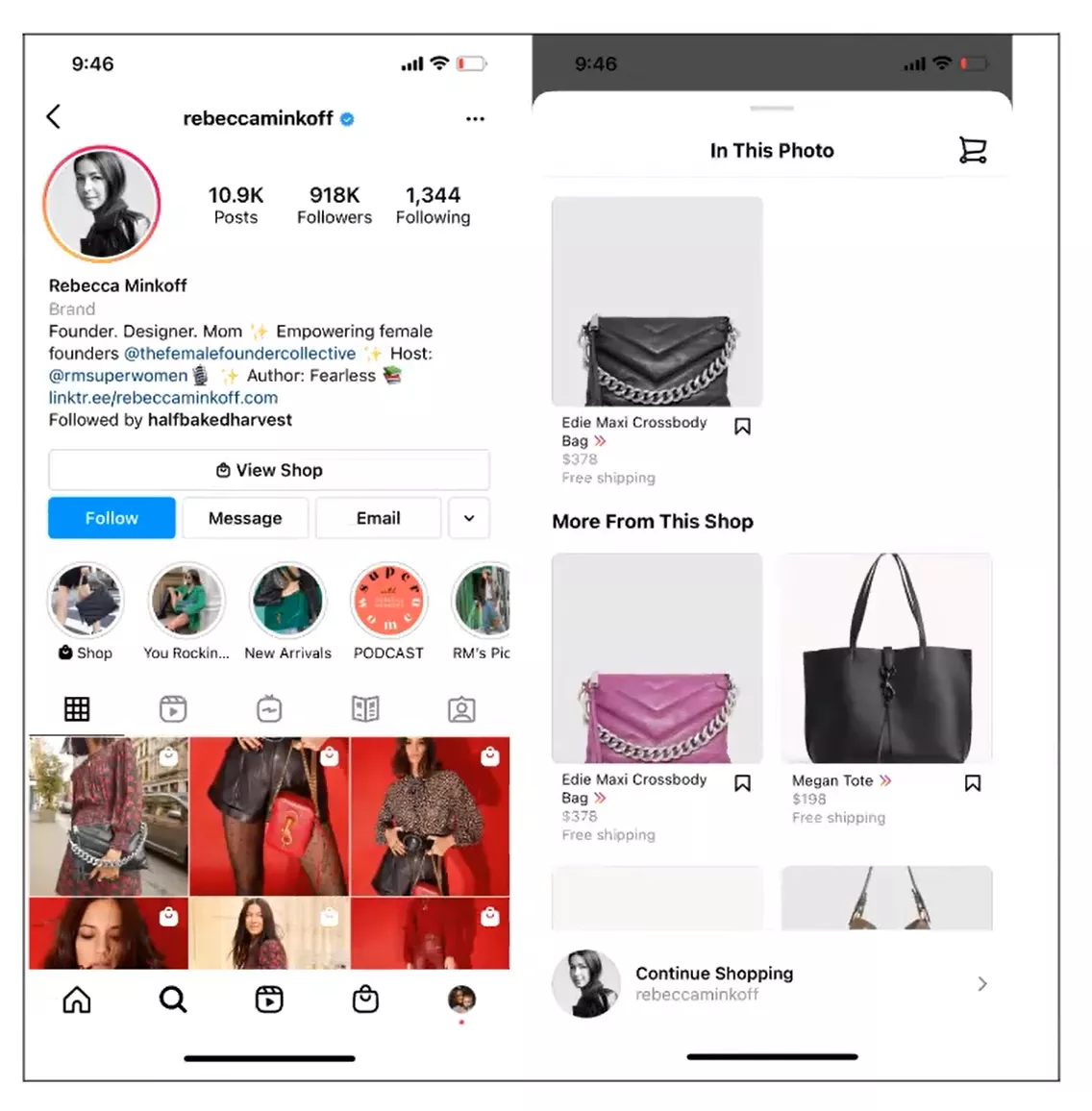
If you’re a founder, and you’re not active on social media — do it in 2024.
You only need two things: you need to be consistent, and you need to be on brand. That’s it. Results will automatically follow, I promise you.
Do a good job with pictures — quality of pictures — and you don’t need an agency. You don’t need to hire somebody for it. Just do it yourself. And if you have a young one at home, give it to them — I’m sure they’ll do a killer job.
Content in the Form of Videos
Which brings us to content — in the form of videos.
Videos have already taken over our lives. Maybe open your phone settings and take a look at screen time — take a look at TikTok, take a look at Instagram — I think you’ll know what I mean. But aside from that, your audience is watching videos. Forget about what you’re doing — your audience is watching videos.
There is a hierarchy in which humans consume content:
One-on-one interaction (meeting our family, people we like)
Video
Pictures
Audio
Text
That’s the hierarchy people follow. So don’t rely on pictures alone.
Not only should you start with video creation — start with your phone, start with your marketing team’s phones — find a way to have some strategy around it.
Here are a couple of pieces of advice:
Start doing DIYs or how-tos. For example, if you’re selling bags — do a nice video of the bag opening up, what the pockets look like inside, etc.
Pictures are not going to cut it.
If you’re selling T-shirts or clothing, put them on someone. It’s completely fine if that video looks like it was made in a living room — as long as the resolution is high and it delivers the message of product quality.
The fundamental value prop you’re trying to communicate — once that’s delivered — your job is done.
If you are a slightly higher-level brand — like we work with some brands that have large teams, massive revenues — generally about 10 to 20% of their products drive a lion’s share of their revenue, 90% or more. The Pareto principle applies everywhere.
We recommend hiring a professional video agency to push your video content even further.
Once you have done that — purpose that content everywhere:
In your emails
On your social media
On your website — different pages:
Something different for the product page
Something else for homepage
Something else for categories
For example:
If I’m selling fashion — on the homepage, I could have videos that people engage with.
Those videos can take me to product pages — which could then have explainer videos for products — and so on.
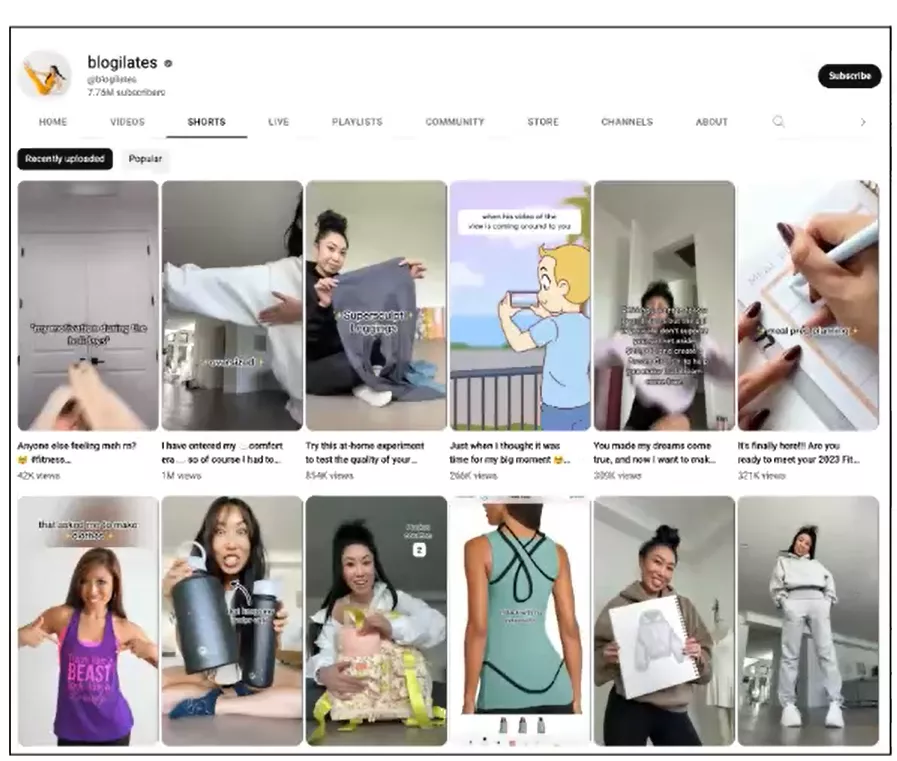
The other thing that most people don’t try and do is also leverage videos effectively in the form of a funnel. So the third point that we say here is a step-by… actually, I mean, this is a strategy of making a video — which is, you could say “three reasons why you should do this,” and just: reason one, reason two, reason three.
But I have another idea — which is, you could actually create a funnel with your video content.
So your first video ad could be talking about the product and brand.
Second one could be the founder, you know, advocating about the story — it could be the fact that you are environment conscious or something on those lines.
The third one can be trust — which is, you know, your actual customers using the product, maybe testimonials from them, anything on those lines.
And this is a funnel.
People who have seen the first see the second.
People who have seen the second see the third.
And that’s how you… you essentially farm your customers.
You farm clicks using an ad strategy like that.
So think about it. I think if you put that problem in front of your agency, I’m sure they’ll be happy to do that.
Mobile first, Desktop second
The reason we added this point is because we were done with the responsive sites.
You know, generally speaking, when you pick a theme — I’ve seen people picking Shopify or website themes or working with designers — they’re all looking at it on their laptops and their computers.
Forget about it. Put your laptop back in your bag when you’re making decisions about how your site looks.
You can look at your own analytics — that’s where your traffic is.
That’s where you are losing customers the most.
Your mobile conversion rate is inarguably at least half or even a third of your desktop conversion rate.
I’m not saying you’ll be able to change that — your mobile conversion rate will probably not cross your desktop conversion ever, unless of course you build like this amazing mobile-first experience which is off the charts.
But generally speaking, the bias for desktop has to go away completely. So I very strongly advise on building for ease and building your website like an app. So that people find it extremely easy and they prefer, in fact, to interact with your brand on the mobile compared to on the desktop.
Think about it.
Work with micro influencers
So I think this is a very straightforward concept. The only thing is the effort has to go into discovering these influencers.
I would hire a young intern — maybe, I don’t know, a cousin or something on those lines — and treat them to a couple of beers, maybe a burger, and ask them to do a four- or five-hour job of just sitting and finding micro influencers that you can engage with.
There are actually platforms that can help you do that — but they’ll charge a hefty commission on the money that actually reaches the influencer.
This is La Creuset — I think we all know about La Creuset — but they’re especially known for going and working with smaller influencers. Like in this case, they’re doing a giveaway with a vegan influencer.
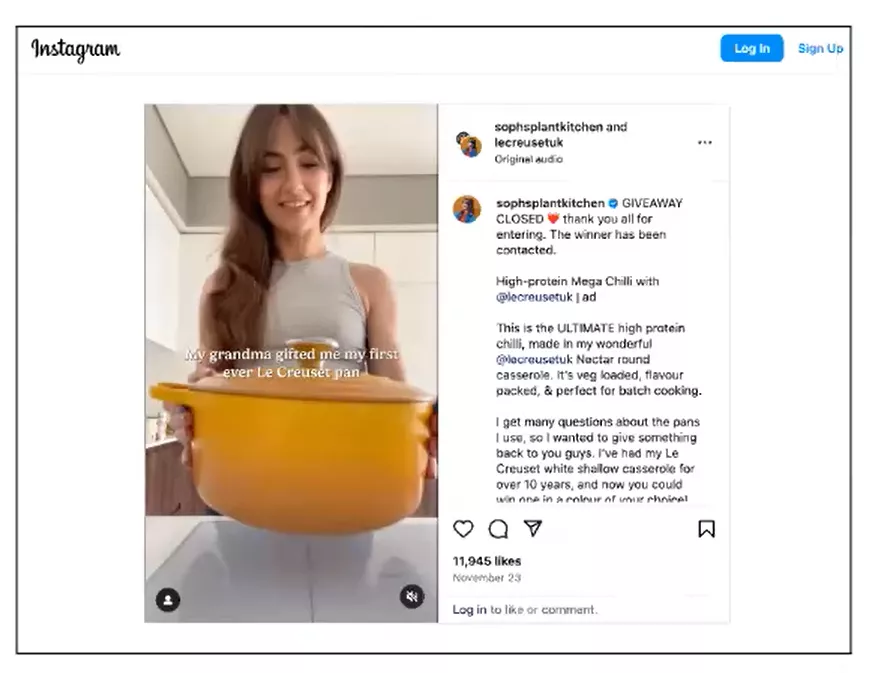
I think the whole idea behind using micro influencers is that they are smaller, their audience is more engaged, and they carry a lot more trust.
So somebody who has just 20,000 followers has probably more of a community than followers. And it’s extremely easy to convince a community compared to influencing like a 2-million-followers, extremely produced content, not that natural, not that easy to relate to.
So that’s obviously there. So micro influencers should be on your strategy for 2024.
I think we’ve written a lot about this. If we’ve not, we’ll send some content over on how you could crack your influencer strategy for eCommerce.
Choose SUSTAINABILITY
Choose sustainability for two reasons. I’ll give you the capitalistic reason first — and I mean, I’ll be honest — which is that people love it. People prefer brands… there’s tons of data around it. There’s tons of proof that people prefer brands that are sustainable, that are environment-friendly.
If you are a brand that sells leather bags, for example — I know you cannot do that, I know it’s hard for you to claim something like that — but there are ways to still do it.
So the first reason is that it’s more customer-friendly.
Second is — your kids are probably going to thank you for it.
So do it. I think it’s an important step every business needs to slowly take.
And the easy way to do that for a brand that doesn’t need to go and change their product or change the way they do things is: think about packaging. You could always tell your customers that your packaging is carbon neutral. You could always talk about how you could reduce your carbon footprint of the shipping.
In fact, you could ask people to choose slower shipping because it’s more carbon friendly. You could — in fact you could justify slower shipping: “We only do 3-day shipping because it’s carbon friendly.”
So I’m just kind of giving you some off-the-top-of-my-head sort of ideas — but these are things that brands do to make things that are not that nice to look at… nice to look at.
Also, there’s no harm in finding products that you can catalog that are more carbon friendly. Of course right?
You could create recycling policies.
You could figure out a way to ask your customers if they want to kind of send products back — like, we’ve seen a client run a campaign where they would collect the packaging for your previous order with the next order.
They figured it out with their shipping provider. They were a high-frequency product — so if that’s relevant for you, you could definitely try and do that.
Invite customers to create with you
This is actually another interesting one. I hope this picture was bigger — but essentially, what you’re doing is you’re inviting your customers to create with you. This is actually hard to do. In the marketing world we call this user-generated content.
The easiest way to get it done is: ask customers for reviews. But in this case, you know, the company CEO is essentially asking people to become partners and to come and design and curate products with them.
If this is not possible for your brand — find what customers are already creating for you. Often, for our brand, our customers are already creating content but we fail to recognize it.
For example — again, I’ll take the bag example — you sold a bag to a customer. That customer never posted about you. But you know who they are, maybe from their Instagram handle, and they’re using the bag. You could give them a shout-out, share them on your page.
So there are many ways of doing that.
I don’t know how many of us are aware about the Stanley — the thermos brand. They do thermos and mugs and that kind of stuff.
And an interesting story happened — unfortunate yet interesting.
There was this lady who was driving — she had a Stanley, a big one — and she had her iced drink in it. And for some reason, her car caught fire. So she ran for her life — the car got completely destroyed. I would recommend you look it up because it’s a very recent story.
The car completely got destroyed. And then what she does is she wants to, for insurance, come back and video the car. She took her phone out and she’s walking towards the car: “You know what, my car got destroyed, everything’s gone, everything is finished.” She opens the car door of this completely charred car — and the Stanley thermos is standing in the middle.
And she says “Oh okay.” She picks it up — and she can still hear the ice inside the thermos.
And that video reached Stanley, the company that manufactured that thermos — and they were blown away. Of course that video went viral. Because Stanley’s CEO then made a video saying:
“Hey, we are extremely sorry that you lost your car. But we are thrilled to see that our product was able to survive that test. So we’re going to do something — just this one time — we are probably never going to do it again — we’re going to buy you a new car.”
Okay. So now Stanley is a large company — I think we all know about it — but it was mind-blowing, right?
So that’s essentially the customer creating content without the brand motivating them to create the content — and the brand leveraging it in a massive way.
Find a way to engage your customers in this way. You could create a product with them — this is the example that I gave you first — but there are other ways. They’re probably already using your product somewhere, posting about it, they might have good things to say about it.
In fact, I have another founder friend of mine — and I was asking him: “Hey, what is the best way to get an NPS from your customers? I’m not able to do that. We have feedback from our customers but we don’t have NPS — which is Net Promoter Score.”
So they said, “Hey, you know what — I just have somebody who comes in on Fridays, just for 6 hours, and they call customers and say: ‘Hey, I’m calling from the CEO’s office. He actually wanted me to reach out to you. He’s a big fan of the work you’re doing. We wanted to know what you think about us.’”
And they’re able to do that.
So they’re not using their customer support team, no popups, no emails — nothing. They’re just directly making calls and reaching these people behind the scenes.
Showcase “behind the scenes”
So we did a webinar the last time talking about how brands can tie together stories, and this is probably the easiest way to do that. Talk about where your product is coming from. Even if you’re sourcing it from somewhere — it’s fine, it’s okay — but you’ve got to tell people the story from which your product is originating.
So, whether it’s the place it comes from, the material you use, the people who work on it, the choice of materials, why you did it, the reason you started the company, whatever it is — don’t tuck it away in an About Us page.
People love people.
People follow people.
And people buy from people.
So the more you emphasize on your story, the more it will help you. Where to do this — I’m saying don’t tuck it in the About Us page — why not your product page? It’s probably the most underrated page. That’s where you’re driving most of your paid traffic. So do a better job of telling people a story. See how you can involve this.
I think this is something you can start as early as yesterday. It’s extremely easy.
And only the founder can run this project — I’m going to tell you this straight away. If you let the marketer run this project — of course, if they’re a well thought-out, first-principles thinker — they’ll be able to put together an actual story.
But, the founder is the one who’s passionate about it, and he’s probably got a good story to tell. So that’s what I would prefer you do.
Showcase non-profit efforts
Show nonprofit or environment, or conscious campaigns. Peak Design — these people are amazing.
The products are amazing. The bags are amazing.
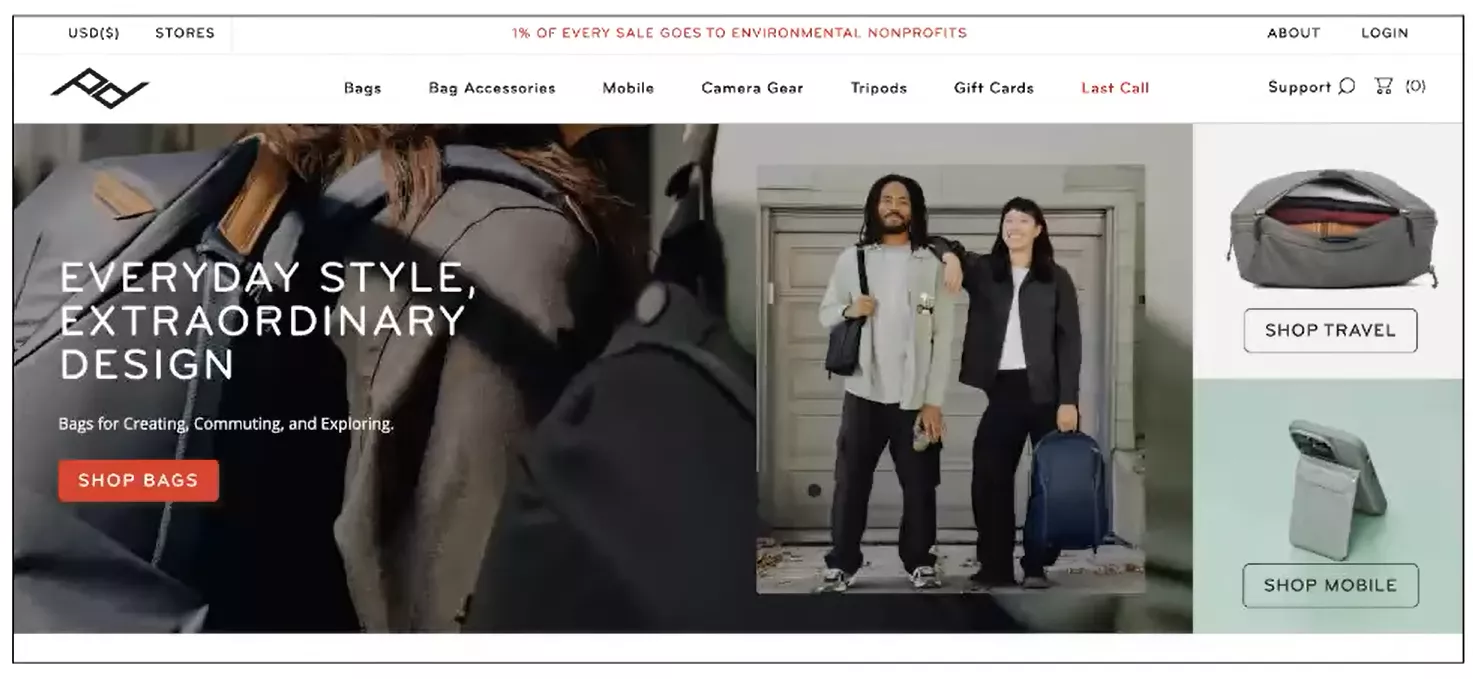
I love them. And, you know, an underlying reason for that is also because they are fully carbon neutral. The material design, the reason they choose the zips they choose, the kind of products they launch — everything is 100% carbon neutral.
They have published their ethos around it several times. I know it might not be possible for everyone to do this, but I feel there’s a lot to learn here. There’s a lot to learn why they did this and how they did it.
Integrate online - offline
I think this is another pretty straightforward idea. If you are an omni-channel brand who has products positioned offline somewhere, figure out a way to integrate that. Very simple. Very easy.
In fact, brands that are omni-channel or are offline available — even if I’m shopping from New York and you have an offline store in, I don’t know, Minnesota somewhere — I would still trust you more than a brand that’s fully online.
This is also — I’m quoting this from a research — and the reason is because, you know, if you have an actual store, that means you are a physical entity. You are more trustworthy — or real people again. So that always goes a long way.
Showcase customer stories
Moving on. Customer stories. So, I think I’ve already given you the Stanley example. Birkenstock does a fantastic job in this case.
They take the example that I mentioned earlier — people are just posting or just walking on a holiday with their product — and they’ve created a gallery with that.
So I think, generally, Birkenstock exchanges a 20% off coupon if you send them back a picture of yourself using their product with a nice picture — and the best ones get selected, and they are the ones who get some gift.
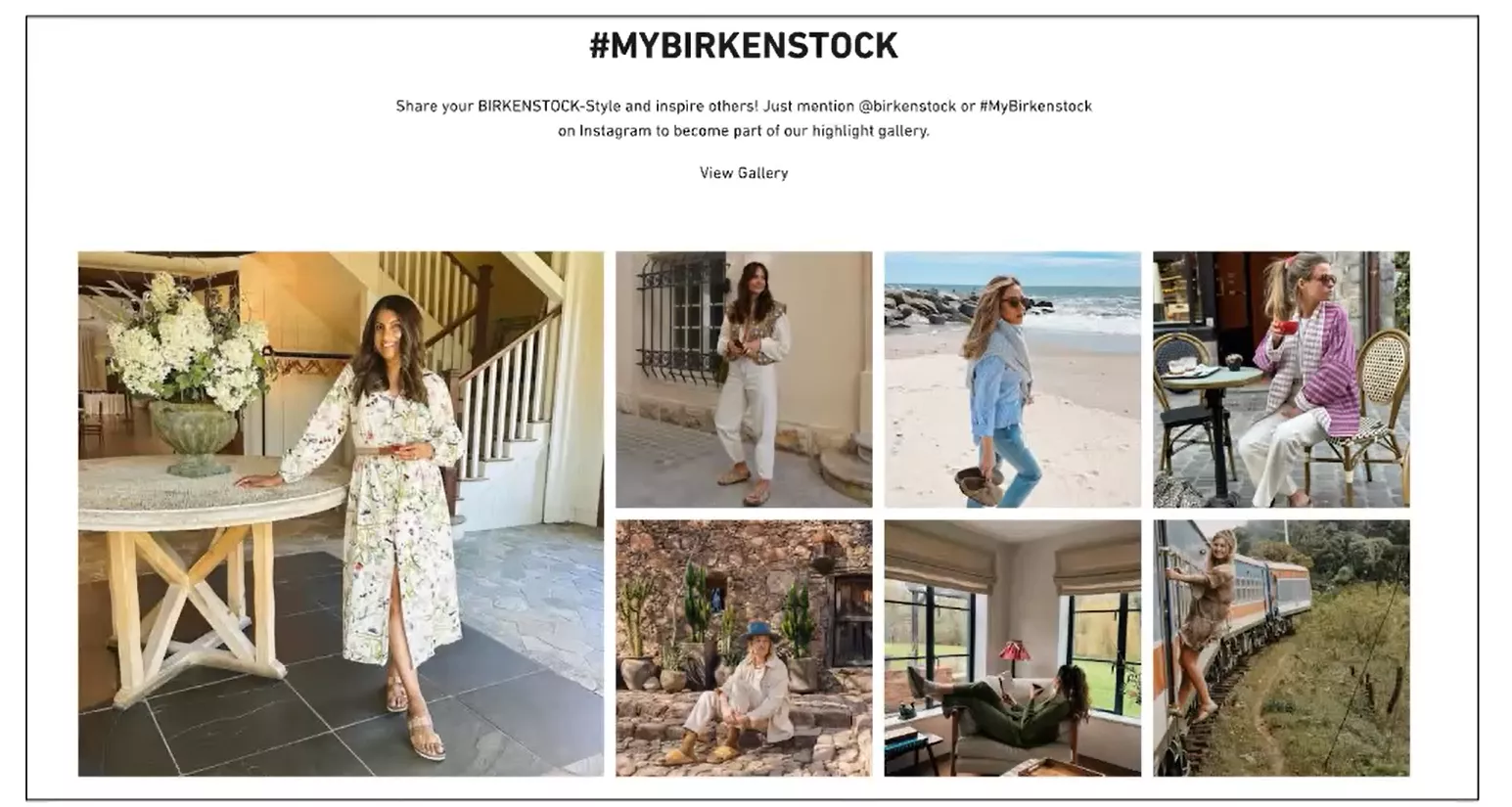
So see if you can implement that in some way. It’s some legwork, but it’s worth the effort.
If your website has pictures of 500 customers using your product on the homepage — real people — it creates trust like nothing else. That’s the best way, most visual, direct way of creating trust.
Take social proof to the next level
So what we are essentially doing is we are taking the previous example to the next level. In this case, The Plufl, which is this dog bed, essentially asks their customer to give them a shout out.
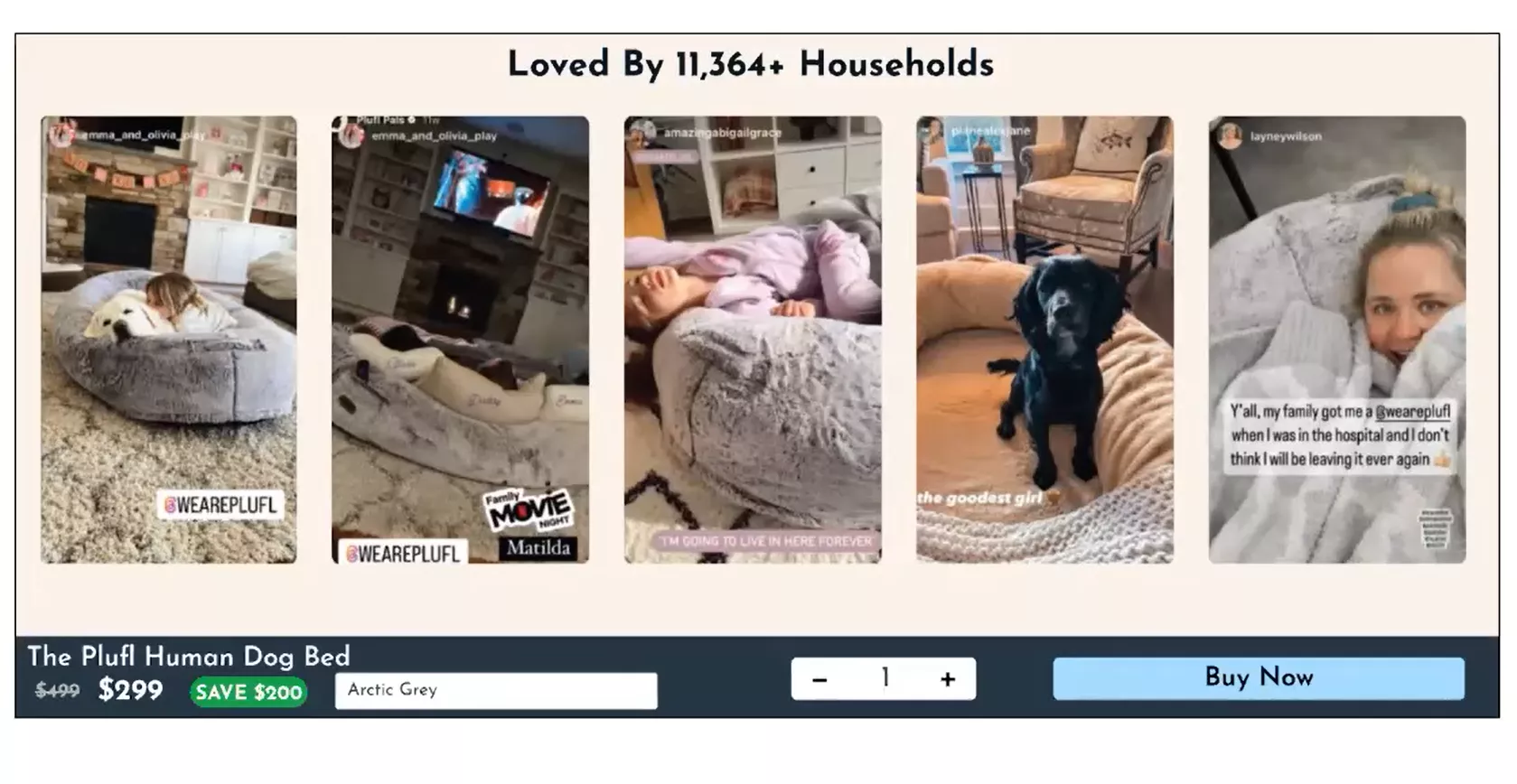
And people have created TikToks etc. And in this case it kind of becomes a lot more wholesome because you’ve got dogs in it — so, of course, who doesn’t love dogs?
But it kind of takes it to the next level.
Get actual quotes from your customers and see if you can leverage them.
So if you’re unable to find a lot of user content, encourage them to make it in some way or form.
👉 DELIVER AMAZING CUSTOMER EXPERIENCES
Okay, so that’s the first part. I’m going to keep going in interest of time and interest of continuing to keep the intensity and speed that I have.
If you have any questions or if you want me to slow down, please let me know. I’m just going to keep rolling because we’ve got about… we’re only halfway, and we’re exactly at half the time. So just going to make sure I keep going.
So now the next few examples that I have touch upon the ethos of your company as much as they are executable ideas.
While helping customers, go the extra mile
You know, for example — the best, most amazing customer experienced business to ever exist is Zappos.
And they have the story of Zappos’s founder and another person, you know, catching up for drinks one night after a sneaker, you know, conference of some kind.
And they are in the hotel room, and they say, “Hey, you know what — we’ve done such a good job with our customer support setup that I challenge you to call my customer service and ask them for anything you want.”
So actually they were hungry. They were trying to order pizza.
They weren’t able to find any numbers. So what they did is they called Zappos customer service and said,
“Hey, I’m here, I need to order a pizza, can you tell me where the… what… what…”
He said — you know — they said, “Of course, you know, I’m sorry, I might not be able to help you with this, but I’ll see what I can do. And, you know, if I get back to you I’ll let you know.” And then they disconnected the call.
They said, probably they’re not going to be able to help us — obviously, because you’re calling the customer service of an online store that sells shoes.
But what that turned into is that they got a call back a minute later with the top five places and which ones are going to be open. And they asked if they wanted them to place the order as well.
That’s mind-blowing, right? Of course, I’m not asking you to start ordering pizzas for your customers.
What I’m asking you to do is: find a way to go that extra mile.
Like in this case, Uniqlo — we saw that when we asked them, you know, for some unique features of the product, they actually attached screenshots from the website and then responded. This is actually pretty epic. I’ve never seen this happen.
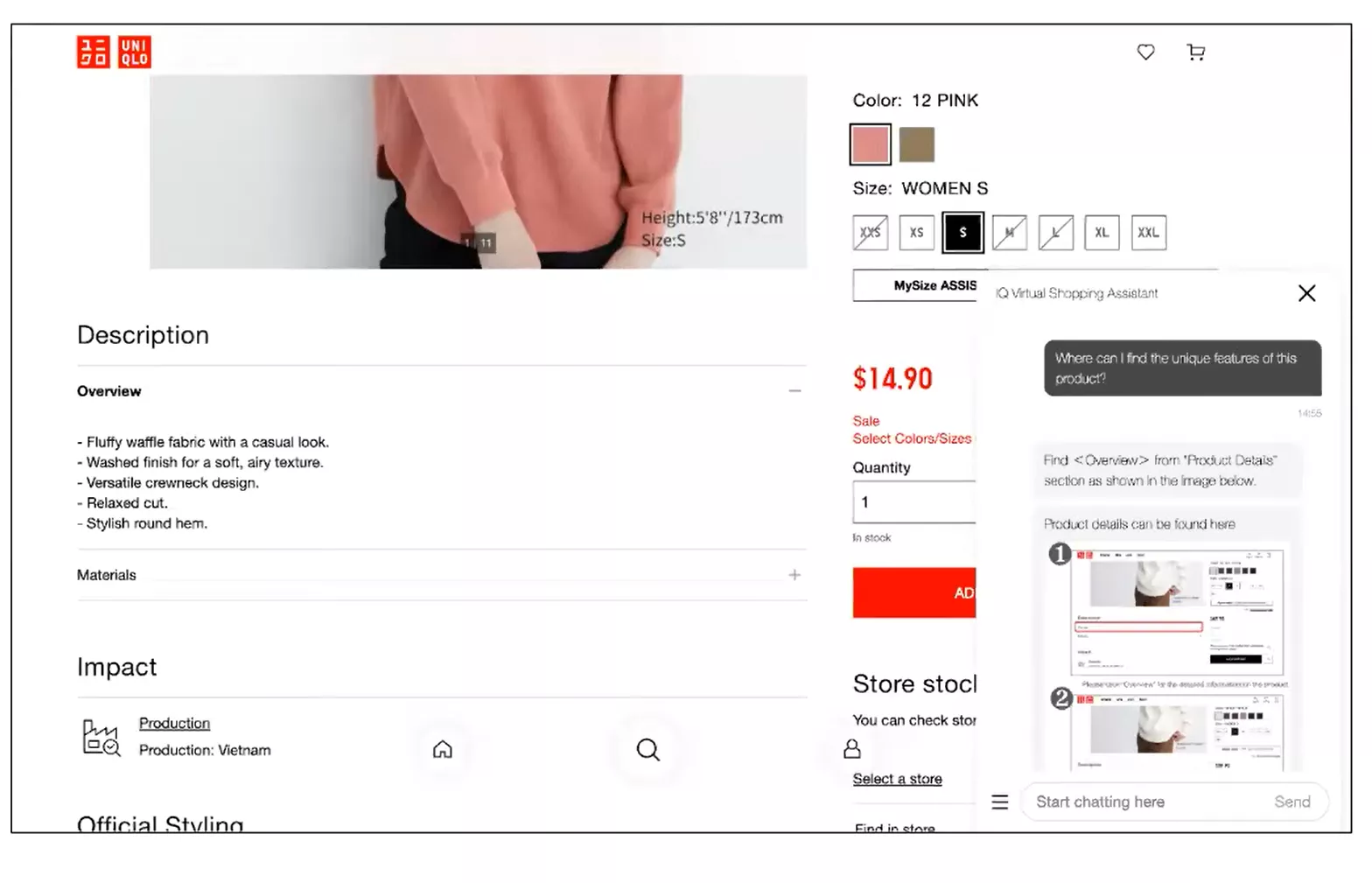
And generally speaking, chat has really, really just… you know… it’s really reactive.
And it’s not interesting.
And at other times, nudge customers to take the next step
Chat can also be leveraged to kind of take people to the next step. Like in this case — chat is acting as a product discovery widget. And what essentially is happening here is you’re asking the customer what they need help with instantly, and you’re giving them four options.
So you’re not saying: “Hi, how can I help you?” and just disappearing with that annoying popup.
You’re giving them a next step.
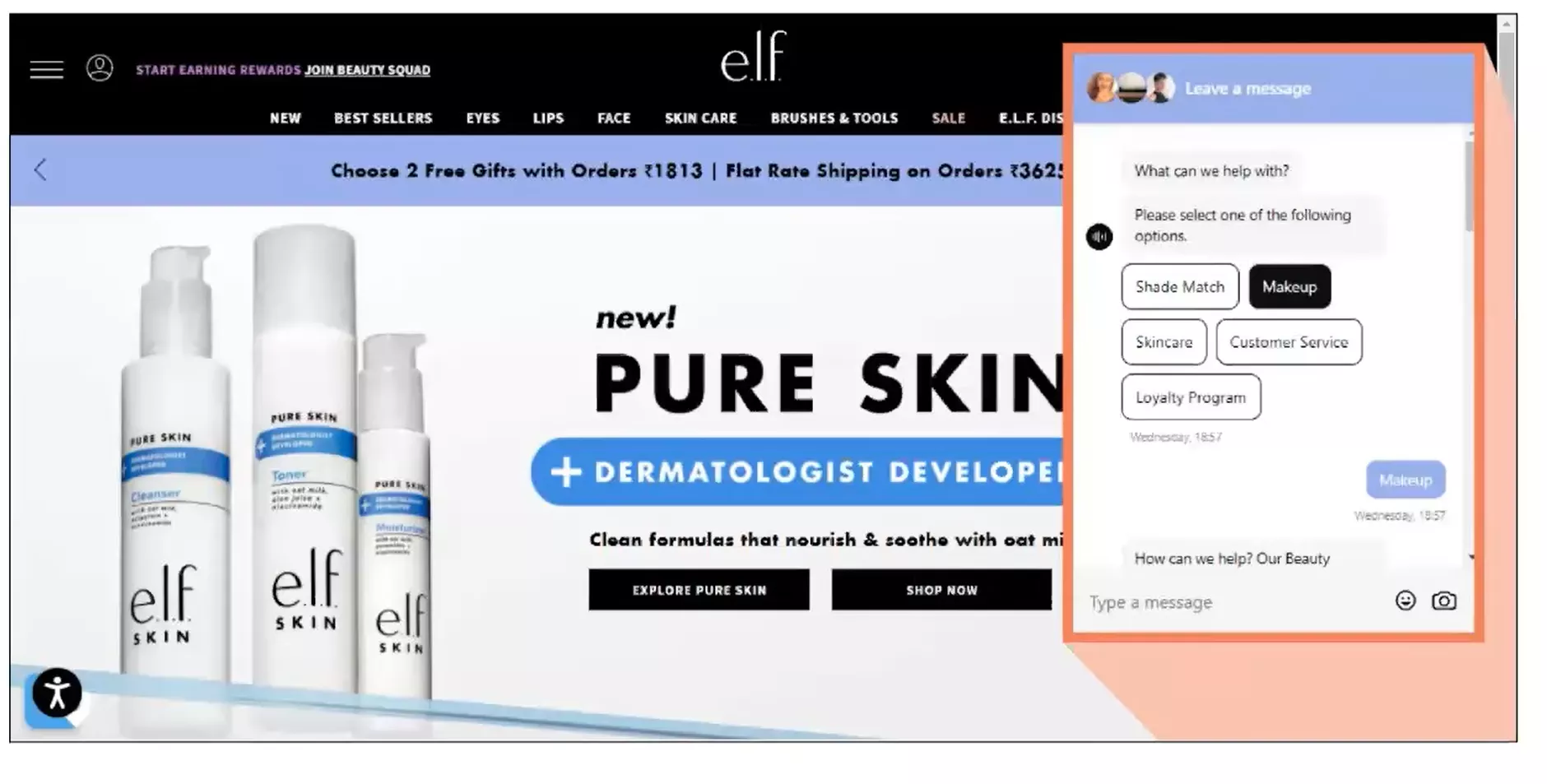
This is one obviously interesting way to do that. But I think the point to drive home here is nudging customers. Especially for products that have a lot of description, a lot to read, a lot to take a look at — your customers sometimes could go into analysis paralysis.
So you want to nudge them to take the next step. Ask them if they need help. This is an interesting implementation of that.
Don’t forget to go beyond just chat
This again takes it further — which is, why should your customers only have chat?
In fact, you know, very recently we reached out to a business and when they got on a call — the person from the sales team on our end who had reached out told me that this person was extremely hard to find and reach.
And I told them this — I said, “Hey, you know what, you don’t have a LinkedIn profile, I couldn’t find you on LinkedIn, and it was super hard for me to find you.”
We couldn’t find any coordinates for you. We called your line and we said we want to talk to you but nobody would… I mean of course that was a purely customer support line so there was no chance of that happening.
How does someone reach you?
If you’re the business owner and somebody has something to say about the product — do they just…?
And the only way to reach — they had no address on their website, no phone number, no chat. The only thing they had was a very inhuman support@abcd.com. Right? So that’s the only way you could reach them.
I think oftentimes we… I know we are an online business, but we ignore the fact that if we were on the customer side, we would need probably more doors to get into — more ways in which we could talk to the business. So I think businesses don’t generally do that.
In this case — the example you see here — you could talk to a diamond expert, you could book an appointment, you could chat with them. If you want a repair, we can help you with that.
Once you’ve done this — brag about it — saying:
“We have 24×7 customer support. We’re based out of the USA (or wherever you are). We are always available.”
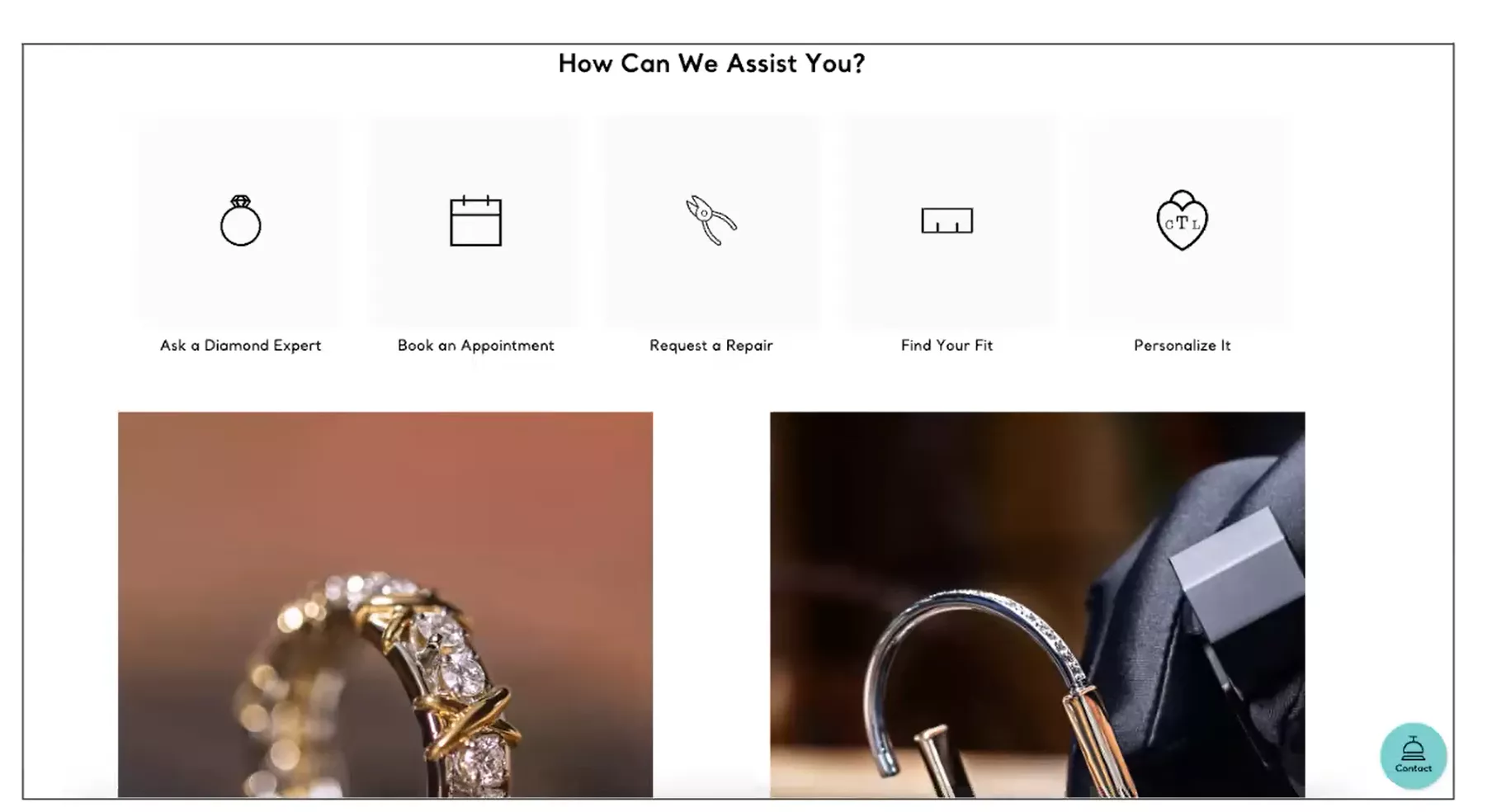
This is how you give your customers more control.
Give shoppers more control when they shop
I’m going to talk a little bit more about this in the following ideas as well — how you can give your customers more control when they’re shopping.
In this case — you have a product catalog — and you’re running filters based on what’s most important for you as a customer:
- “I want a product that’s long-range”
- “I want something that’s portable”
- “I want something that’s all-terrain”
Make discovery extremely easy. And I think most often than not, it’s extremely ignored.
For example, here’s a quick example of a wizard that we implemented for a customer. In this case you could go into Apple → Apple iPhone 12 and just get lost in a sea of different phone replacement parts they do. Or you could take this primary journey — a wizard that was built out and AB tested rigorously — “I’m looking for a screen for my Apple iPhone 13 Pro,” for example — and it would take you straight to the product.
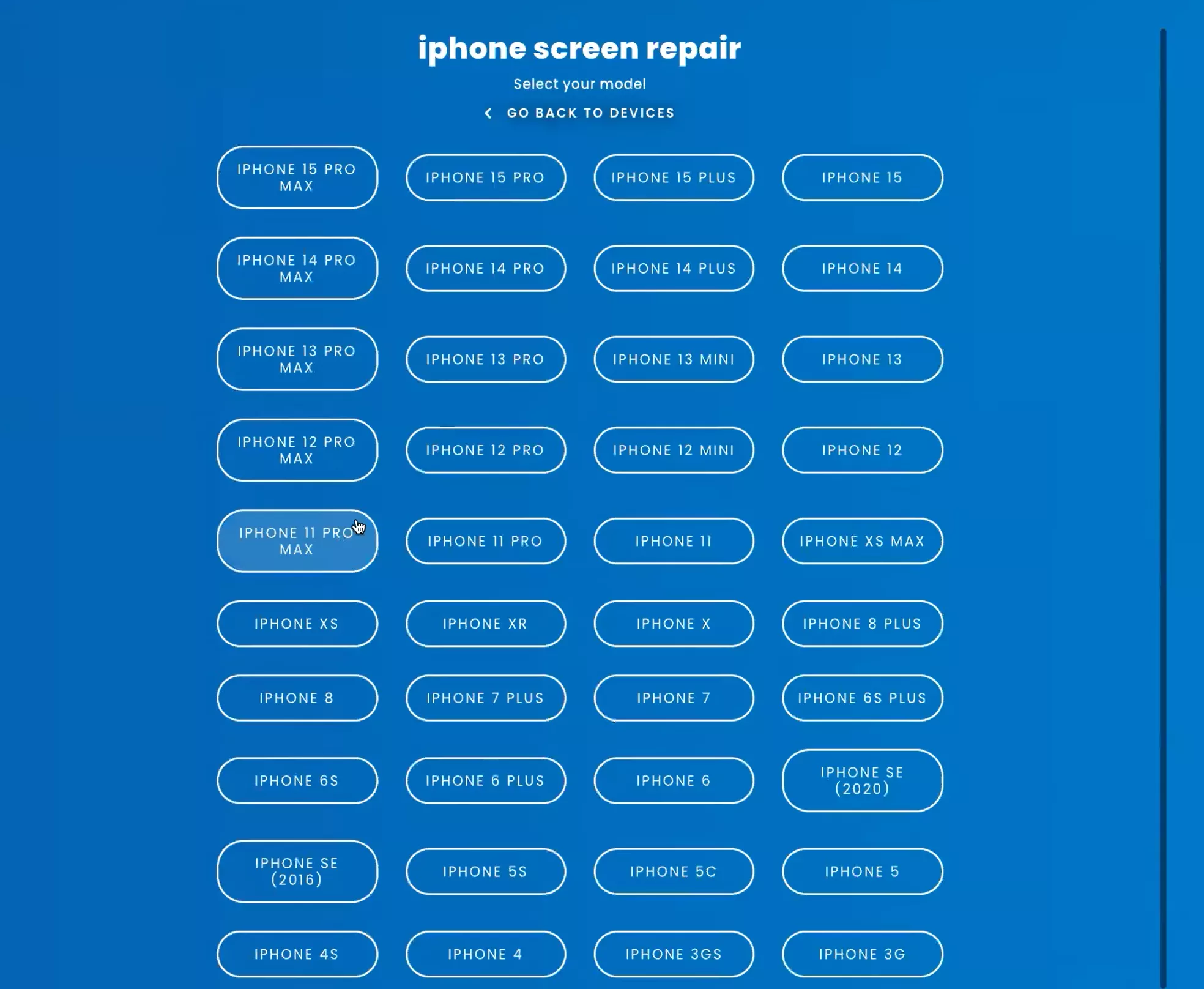
This is when you are giving customer control.
This is a prime example of something like that.
Keep reassuring customers
Reassurances. I think it’s underrated how important returns are and how important delivery information is. It’s not repeated enough. And that’s a very simple idea — repeat it 5,000 times across your website, everywhere possible. Give people visibility on:
- How does delivery work?
- How do payments work?
- How do returns work?
- What if I’m unhappy?
Everything that they need to know.
And then you could also craft your messaging around it — like I spoke about:
- If you have a really slow delivery, you could defend it by saying it’s more carbon friendly.
- If you are able to ship orders the same day, you could essentially try and push people to order the product within working hours.
So,maybe run a timer and say:
“Hey, if you order in the next 2 hours, we’ll ship it the same day because we’re still working till 5:00 today.”
Something along those lines. So you’ve got to over-inform them on shipping, on delivery, on everything else.
Even your offers can come with options
We also have — this is another interesting implementation. I say this again — give more control to your customers. This is something that… I don’t remember who said it — but:
There’s a three gives and one take rule in marketing. You give three things before you ask for one.
With your customer.
So when brands — for example, we are a B2B company — so when we try and give, this is our way of giving, right? Free ideas. And we publish content, we reach out to people, and we even do very detailed website audits. We do website and email strategy audits. So that’s our way of giving. They are free of cost. They’re 30 to 40 minutes long. And they are a brutal teardown of your website or your email strategy. Okay?
So we know we are good at it. That’s something we give away for free. In fact, Convertcart this year has done upwards of $1,500 in the entire year. Should be that much, I’m sure.
But the bottom line is — that’s your way of giving.
In this case — instead of just saying:
“Hey, give me your email ID, and I’ll give you an offer or a discount,”
You’re asking the customer — you’re at least giving them a good role:
- “I’m looking for a gift”
- “I’m expecting and I’m shopping for my own baby”
- “I’m appearing to be shopping for my child”
And this also helps you craft the experience at the next step.
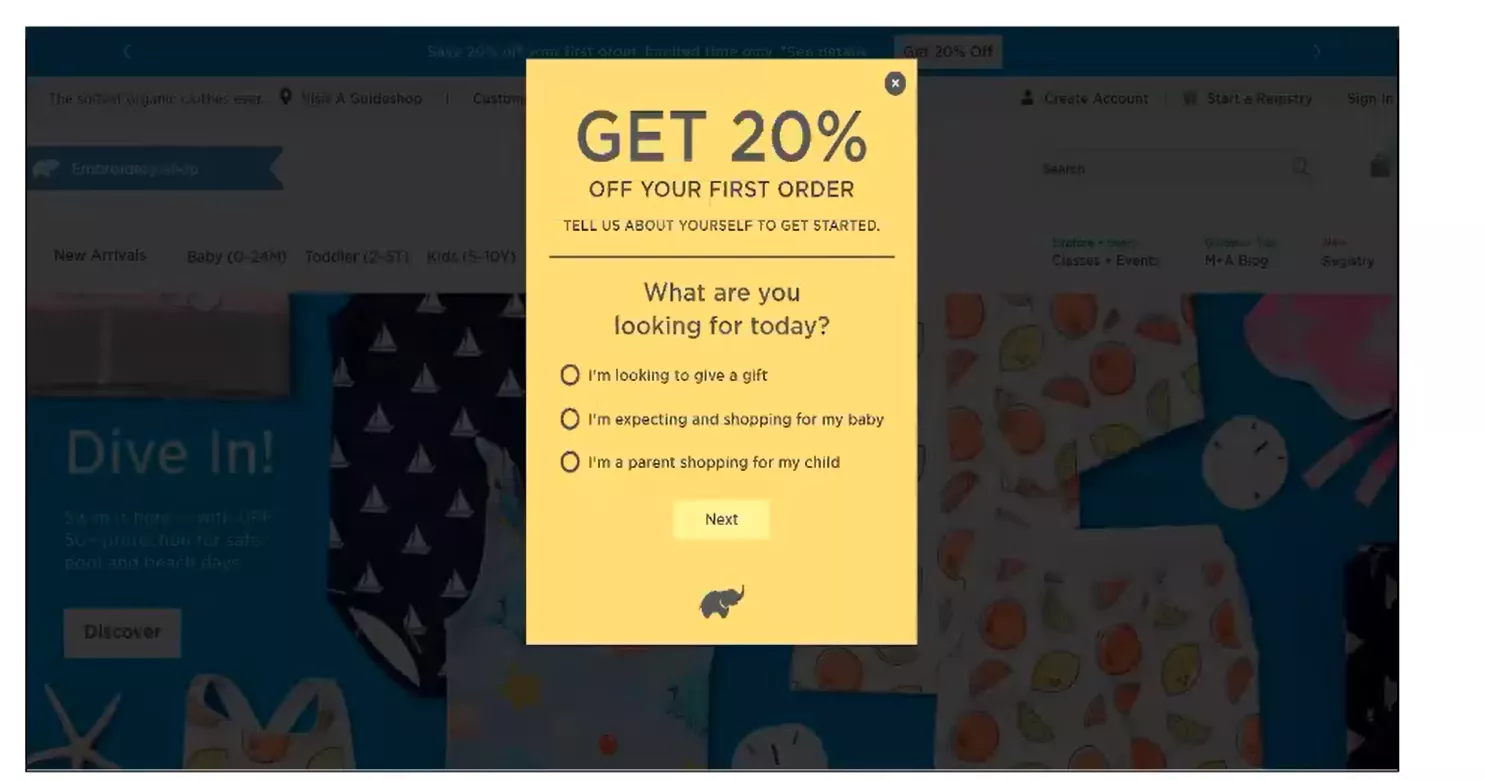
So there’s a lot of value there.
Ask for feedback
Surveys is… okay, I’ll just put it out there:
If you’re not doing a survey, you don’t know your customers.
And the reason we say this is — we run surveys for almost all of our clients, and that’s one of the first things we try and implement on the website. And there’s a lot of resistance each time where they say:
“Hey, I don’t want to run this. I don’t know who’s even going to fill this form.”
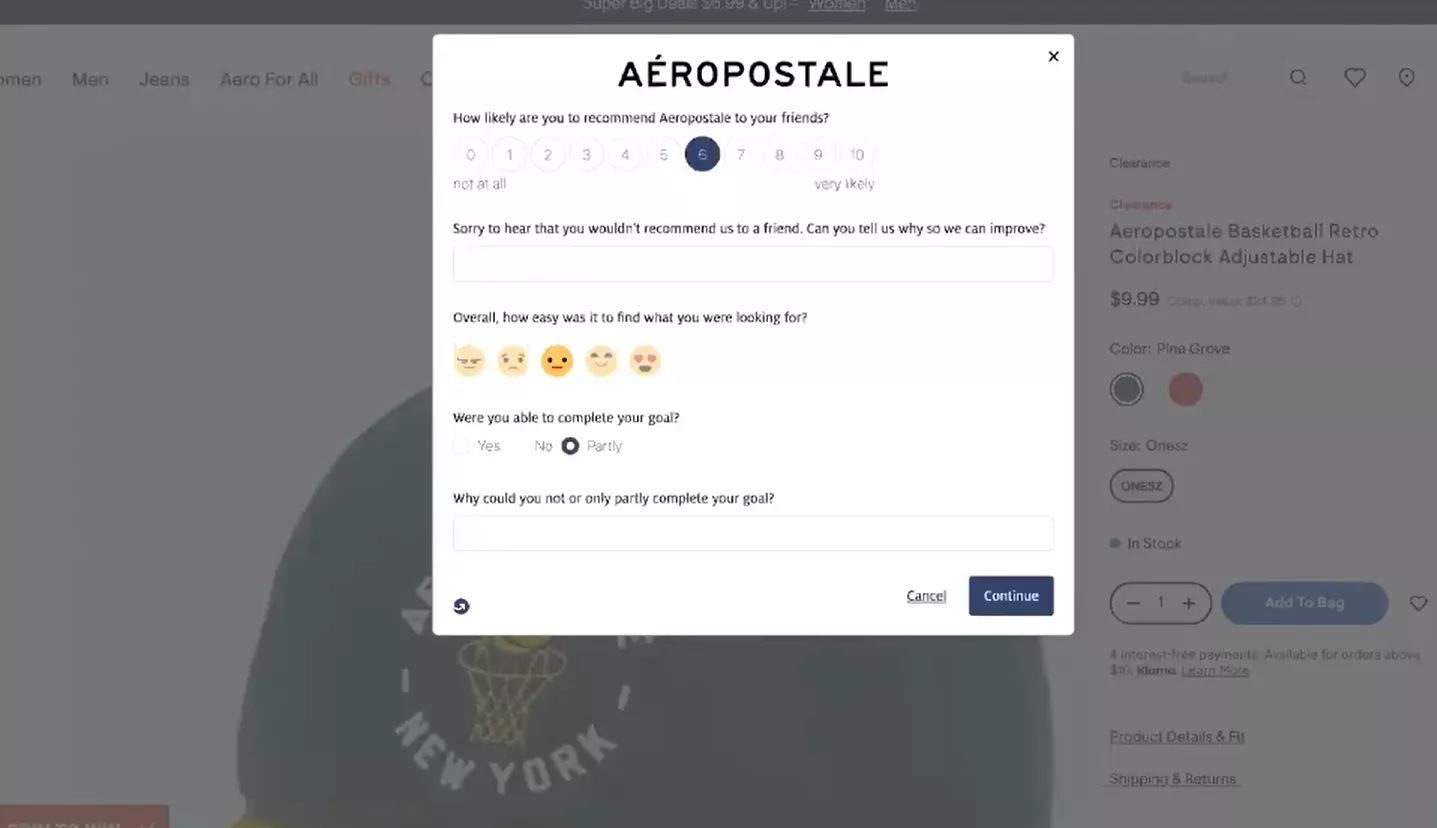
I’ll tell you what happens:
People who are healthy skeptics — which means people who are spending in excess of 1 or 2 minutes on your site, who truly are looking at your site — not the top of the funnel, not people who are just glancing through it — those people, and people who are bottom of the funnel, people who are browsing the site…
1% to 2% of that audience will fill this survey.
And they will sometimes give you insights that will completely change the way you think about how you are looked at by your customers.
Insight is the atom of truth. It is the most important thing relevant to you as a brand.
So if you are able to find these insights through doing something as simple as this — why not?
Also — I think the experience essentially gets lost sometimes between doing discounts and just selling products. So it’s like “sell, sell, sell.” It’s not really… you don’t really take a step towards the customer. Instead, you want them to take the steps towards you all the time.
So this kind of turns it around upside down and asks the customer:
“Hey, if we could do something better, what would it be?”
Maybe this one is like four fields — I would in fact do something as simple as a single multiple-choice question.
For example: When somebody’s trying to exit, you could pop the survey up as an exit intent popup saying:
“Hey, why is it that you decided not to shop with us today?”
- Prices are too high
- Shipping is too expensive
- Couldn’t find what I liked
- Not sure about the specifications
- Did not understand the product
- Etc.
Whatever options are relevant to the business — craft the survey well.
But definitely do it.
Create gift cards for everyone
So, gift cards are extremely underrated. I think if you are from the US, you know how gift cards are part of everyday life.
This was an amazing example we really liked — which is a gift card in Braille.
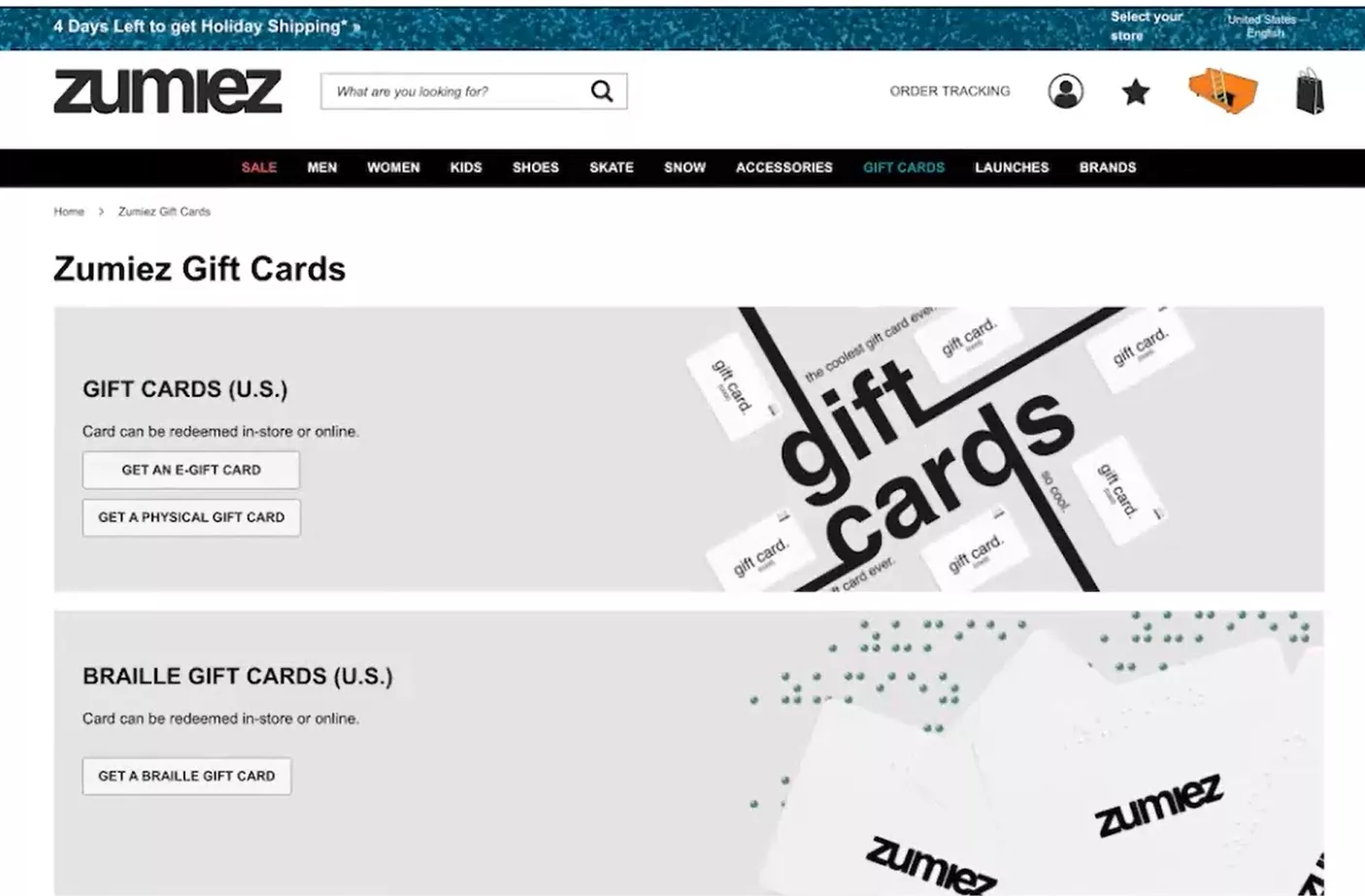
So I mean, I think that’s another thing — you’ve got to be inclusive, you can’t leave any part of the society out. With that said, you have to take a look at your ADA compliance. If you’re not — think about this:
2024 could be the year where you make sure that happens before they come and tell you that you need to be ADA compliant…fine you for it…file a complaint
There’s a long story there — I’m not going to get into the ADA business — but that’s one step towards it.
But with gift cards, you could actually theme your gift cards to make them more relevant to who you’re giving them to. This is one such example which, of course, looks extremely wholesome.
👉 USE EMAILS TO BUILD YOUR BRAND
Emails. I have five more points. I guarantee you that the way you think about emails will change. If they don’t, I don’t know… I don’t know what the guarantee is. You know what — we’ll anyway give you the free audit. So we’re going to do a free teardown of your emails, we’re going to do a free teardown of your website. And we’ll walk you through everything.
In fact, we’ll also do a teardown of your Google Analytics if that’s needed. We’ll have an analyst sit down, take a look at your data, and tell you why you lose customers and where. This is my guarantee.
Let’s get into emails.
So the reason I’m also speaking so passionately about this is because generally speaking emails are this — you know, if you have a hammer the whole world looks like a nail — that’s what people are doing with emails. If you have an email product, you know, if you have an email marketing software, every inbox looks like a place you could spam.
So it’s kind of insensitive sometimes, because you just… all of the emails are generally not… people generally skip through the long stuff, the long text. Even if you’re writing like a nice story inside of it, people are probably going to skip it — unless you do it specifically for the story.
Anyways, let me show you the examples I have and maybe we’re able to change it.
Take a break from selling
The first example is: forget about selling for a second — just engage and educate your customers.
If you have a product and it has three things you feel you want everyone to feel about your product — just do that. You don’t even need a CTA on that email. The email itself could be a CTA for sure — you can allow people to click — but you could just talk about it.
I spoke about how you could be more environment conscious and so on — why not just communicate that in a gentle way to your customer base? Just take a moment and send an email saying:
“Here’s the New Year resolution my brand is taking.
Here’s what I’m doing.”
It could be anything.
It could be — “we’re going to deliver every order on time from next time.”
It could be anything, right?
But at least communicate something that’s not asking customers for something — it’s giving them something. That would really elevate the experience.
Gamify — make the email fun
Gamify. Now, the reason I think we added this example — the spin the wheel — is because everybody hates them. Every time I’ve spoken to an ecommerce founder about a spin the wheel, they’ve said:
“Okay I hate this — I’m not on Alibaba.com — I’m not going to do a spin wheel.”
But look at how well this is designed. It is almost… you know… it’s too hard not to spin.
And I think that’s the thing about spin wheels.
Generally, pop-up opt-in rates range between:
- 2% to 4%
- 5% if you’re lucky
With the kind of popups I’ve seen — and I don’t want to plug — but with the kind of stuff we are doing for our customers — we see:
- 7% to 15% of the new traffic that you’re getting
So you can really take your pop-up to the next level.
But also — within your emails — you could gamify your email itself.
Why are you only limiting the spin wheels to your site experience?
Forget about adding products to it — just try and engage with your list.
This is your owned asset — right? You don’t need to pay Google or Facebook to reach the 10 / 50 / 100 / 200 thousand people you have in an email list. You can reach out to them without a doubt — without justifying it to anybody.
And that’s why you’ve got to make it even more meaningful, because these people want to hear from you. So you’ve got to spend that effort in making sure that you hear from them.
Make shoppers feel special Make shoppers feel special.
The next two ideas are about this.
In this case, Allbirds thanked their customers when they reached the million. And that’s kind of interesting. Not a lot of brands do things like this. They had a phenomenal open rate here. And this makes you feel like you’re still a community.
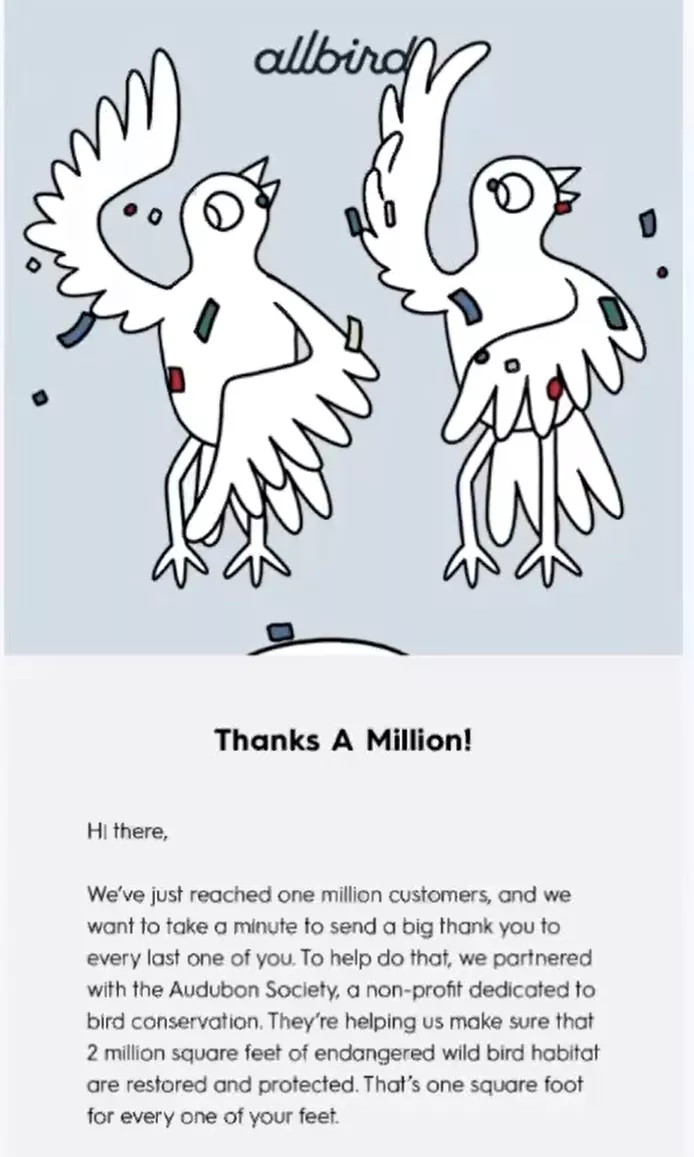
I’m sure a lot of the people joining us are in the first 5 million dollar revenue range — some of us are higher — I know the kind of people that are joining so I can tell you that for sure. But you can be a community.
Patagonia, for example, is a brand that is still a community in some sense. And we all know that it’s a great product — but when you’re buying Patagonia, you know what you’re buying.
This kind of communication handles that for you.
So you’ve got to craft messaging around it. And I think it’s a strong way to position yourself.
Appreciate your subscribers
This is probably the nicest email I’ve seen in a long time. And we wanted to show you this.
I don’t know if anybody here would have ever thought of doing an email that looks like this for their business. I’m sure — if you’ve already seen something like this: congratulations — but I’m guaranteeing you that I’m guessing your way of thinking about emails changes with this.
Really simple, right?
And you would definitely click on it.
The designer did a good job on this.
The strategist did a good job on this.
And it delivers the most important thing an email should deliver — curiosity.
“Hey, you look good.”
That’s it. Nothing else.
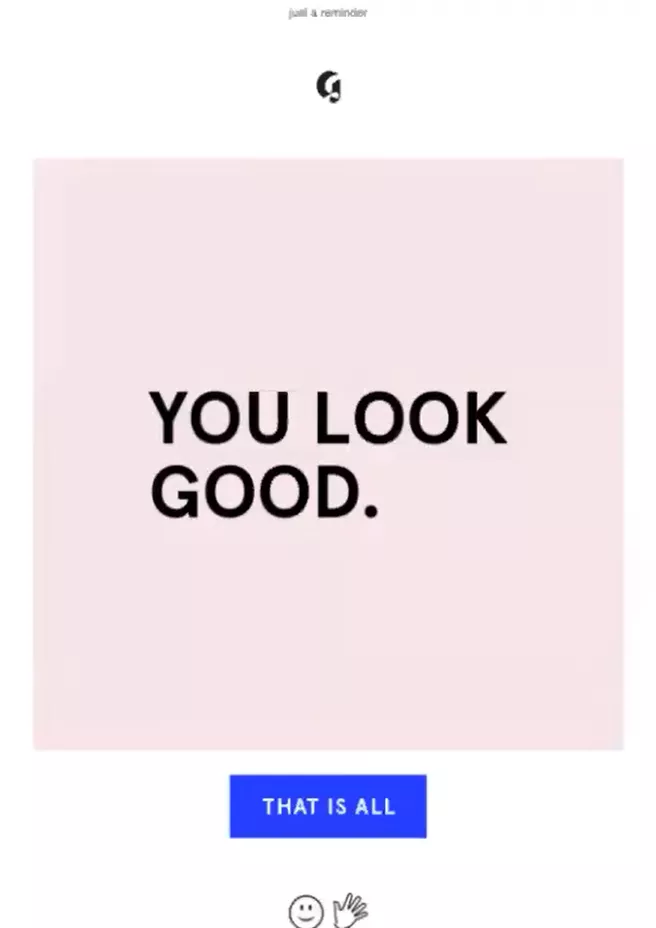
And I’m sure everybody will click on this because you would just get curious and say:
“Hey, what’s happening? Let me just see what’s happening.”
Yeah. And the subject line for this was just:
“Just a reminder”
So the chances of people opening is really, really high.
That’s actually a pro tip:
Subject lines of anywhere between 2 to 3 words perform significantly better, than those really long subject lines your agency is writing with five emojis at the end of it.
Those are not going to work as well.
Smart CTAs — let them self-select
And this is the final idea — final email idea. People overuse Shop Now, Add to Cart, Buy Now buttons.
Here’s an interesting way to do CTAs in an email:
“You’re just one click away. Choose the kind of dog you have.”
0–20 lbs
20–50 lbs
50+ lbs
Very interesting, right?
You’re not saying:
“Go and see the collection. See the goodies you can buy.”
You’re picking the dog you have. You almost… and look at the dogs — they look amazing.
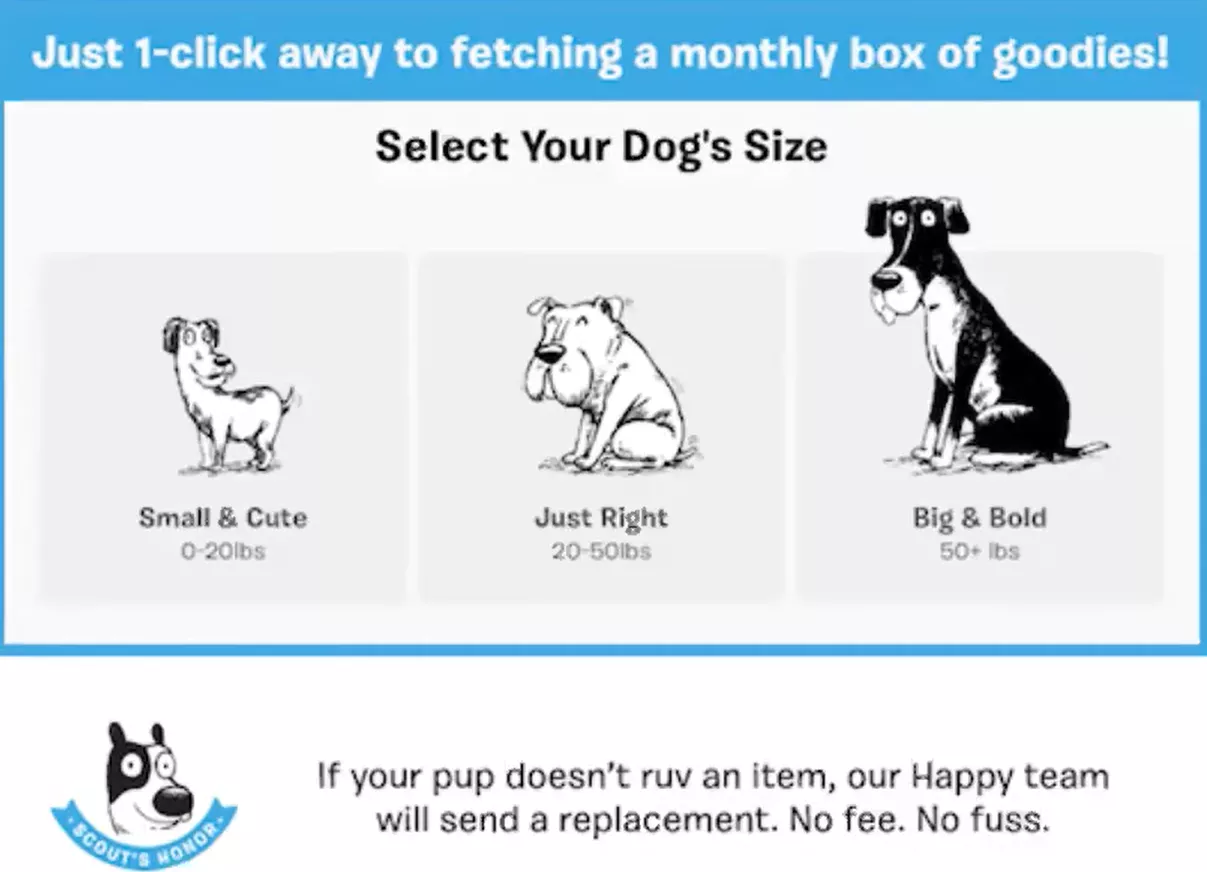
So you would intuitively want to click on any one of those dogs. And you would instantly start taking…
So I have a big and bold one — I would definitely click on that big guy there — and I would just want to kind of go and see what they’re talking about. Right?
So I really hope that I’ve changed the way you want to approach 2024.
Before I take questions… I just wanted to let you know that the whole goal of this is to get you into the AOP mode — the Annual Operating Plan:
- Put something in place
- Set some goals
- Set some milestones
I really hope 2024 is super exciting.
I’m happy to take questions.
If you have any questions, please put them in the chat. Otherwise, I’m happy to give back about 10 minutes back to all of you.
Q&A
Chat still works, and I think I have a couple of people sending me direct messages. I’ll just reply.
Okay, I know… I think the content was pretty much self-explanatory.
Okay, there you go —
👉 What chat or email tools do you suggest companies use?
There’s a… there’s a business — so I mean emails — Engage by Convertcart is extremely powerful. We guarantee you will see 30–35% of your revenue purely from emails within the first three months. So happy to talk to you. We’ll reach out and just take a look.
For chat — there’s another one called… I think it’s called Persu — I’ll just… I’ll just ping you the name of the company and I’ll be in touch about that.
Andrew: Wonderful insights, thank you. Thank you so much.
R: Thanks for joining us.
Alright, folks, I don’t see any more questions. Thanks so much for joining us. I hope you have an amazing 2024 and… okay there’s another one in Q&A, just a second.
Question:
👉 Slow delivery is not really a thing in the market. How do we say that we get delayed?
That’s true. You’ve got to be able to… so I’ll tell you what — you’ve got to stop looking at it as slow delivery. I’m happy to take a look at the kind of products you’re doing. I’ll give you a kind of really interesting idea.
So if you are a product that is generally handmade, or if you are somebody who goes out of stock a lot… actually, we did this for a brand — what we did is, they had products that go out of stock a lot, and we did something really simple: we never let them go out of stock.
But on the website, what we did is we just kept changing the messaging based on the stock. So if they were low on stock or if they ran out of stock, we said:
“Hey, we’re still taking orders, but the orders are taking slightly longer to fulfill because of excessive demand or extremely high demand.”
Right?
So you’ve attached social proof.
You’ve not gone out of stock. They’ve not stopped taking orders. And you’re making yourself look good.
Okay, there you go — I think that’s because of my… that’s because of this, the balloons.
So I’m just saying — it’s not a problem of whether your delivery is slow — but the messaging is really what will change the game for you.
So I’m happy to take a look at your site, I’m happy to suggest something that’s relevant to you — and I won’t charge for it for sure.
👉 Should I offer free shipping on my Shopify so that I can actually compete with Amazon FBA?
If you can afford it — if you can afford free shipping — always do it.
There’s nothing more delightful than that.
I would give you an even better insight:
Don’t just do free shipping.
Do a free shipping coupon.
So that people who find the coupon can avail it.
People who are anyway going to be paying for shipping — they’re happy to pay for it. Let them pay for it. It’s completely fine.
We did an experiment with a client where in their cart, if somebody’s trying to exit the cart, we would do a popup saying:
“Hey, why are you leaving? Here’s a 50% off on shipping.”
So we would just not let them leave. And that insight came from a survey we ran on the cart — where we said:
“Hey why are you leaving? Please choose a reason.”
Everybody said:
“I’m not going to pay… they were selling magazines… I’m not going to pay $3 to get a $9 magazine delivered.
It doesn’t make any sense.
I’m just going to go down to the magazine stand and buy it.”
So yeah — I hope that answers your question.
By the way — the reason you cannot see the question is because every time somebody’s typing these in, they’re marking Host and Panelists only — so only I am able to see the questions in the chat. So I request you to please pick “Everyone” when you are starting the chat.
Closing Remarks
Okay folks — I think… I really hope I was able to add value — that’s most important. I hope you’re able to take at least two things away from this and implement in 2024. And I really hope you double — maybe triple — your business in 2024.
If we can play any role in it, we would love to.
We know what we are… we are amazing with conversion rate optimization and email marketing. So just let us know — we’ll do the teardowns for you — and we’re more than happy to go in as much detail as you’d like.
Thanks so much.
Have a fantastic day, afternoon, evening — and have a fantastic New Year.
Merry Christmas.
Get Fresh ideas to boost your conversion rate
(stuff that works for hundreds of stores)
Request a Free Site Audit"Convertcart’s Audit Report was deep and insightful. We never thought they would spend so much time in building and sharing such insightful content, free of cost."


Logan Christopher
Lost Empire Herbs