On-Demand
Pricing Strategies For Improving Conversions (And Growing Profit Margins)
70% of shoppers say competitive pricing is the most important factor when choosing a product.
No surprise that all ecomm stores use discounting as a strategy to grow sales.
But, there’s a lot at stake.
❌ You don’t want to come across as a brand that only resorts to discounting
❌ You don’t want to hurt your profit margins by offering excessive discount
There is a clear need to strike a balance between your brand reputation and discounting strategies.
And this is what we’ll talk about in this live session:
✅ Pricing strategies that improve conversions (without making you look like a cheap brand)
✅ Proven ways to improve your gross margin (reducing shipping costs, offering conditional free shipping, and more)


About the speaker

Shekhar Kapoor
VP, Marketing
Convertcart
Shekhar Kapoor (VP at Convertcart) has worked with 500+ online brands, including Squatty Potty, Prep Expert, and USA Hockey Assn., and helped them boost sales exponentially.
Shekhar Kapoor
VP, Marketing
Convertcart
SESSION REPLAY – PRICING STRATEGIES FOR IMPROVING CONVERSIONS (AND GROWING PROFIT MARGINS)
I'm really excited about what I'm going to walk you through today.
Folks, welcome once again.
This is becoming a ritual. I'm extremely happy with the discipline with which we've been able to do this, and I take absolutely no credit for it.
All of that credit goes to Harsh, our Head of Content.
He's just phenomenal because this is one of the key drivers of engagement for us with the list we've built with all of you. Thank you so much for the turnout we have today. It's amazing.
What we’re going to cover today
What we want to cover today is pricing. I promise there's a lot of insights here.
We've essentially—the reason we are doing this, the reason we want to talk about pricing strategies—is because every time we had a webinar, we had questions about shipping, shipping costs, how to discount in the right way, and doing discounts so that you don't lose too much money.
We see this happening a lot with our customers.
There's just so much that eats into the margin you have that month after month, especially if you are less than a couple of million dollars in annual sales, you tend to feel,
“Hey, you know what?
I know this is how much profit I have left, but I imagined it to be higher.
Why is the $100K revenue not translating into $30K or $20K,”
depending on the gross margin of your industry?
So we felt we should talk about pricing.
I have content—stuff to walk you through. I added a few things just before this. This is why you always do documents, so that we can keep adding ideas till the very end. I've added a couple of things just five or ten minutes ago.
The importance of pricing in the marketing mix
The fundamental reason I felt pricing is extremely important is because, when I was passing out of business school, we were taught the four Ps of marketing. Those used to be four.
Now there are seven… even nine Ps of marketing.
There's Price, Place, Promotion, Process, Product, People, Physical Evidence.
There's just so much that goes into running a tight ship—a tight business ship, that is.
When we see how this pans out, and what works and doesn't work, price sits at the top.
You can go wrong and still survive if you go wrong with something like a promotion. Your copy might not have worked, your audience might not have worked.
Naturally, product and price are the two things that are fatal if you get them wrong, and correcting them will always cause more pain.
If you were selling at a high price earlier and felt it’s too high for your customers and want to bring it down, it hurts the brand.
If you were selling at a low price earlier and your margins don’t work out, and you want to increase the price, that’s even harder.
You can always launch a higher-priced product first and then launch a lower-priced product later, but doing it the other way around is very hard.
It’s similar to how Ford cannot sell a luxury car. It’s extremely hard for them to position it and make people believe it.
Similar to Lexus. People know Lexus for the reliability, but at the back of your mind, you know Toyota is the brand that sells Lexus.
If you walk into a dealership today, you could easily get 20% off the sticker price and walk away with a reliable car, but it won’t be “one of those things.”
That’s also why Elon Musk with Tesla—they always, in fact, all smart electric car makers—all launch an extremely high-priced product first and then launch everything else.
Higher-priced products have higher margins. A company that is innovating needs a lot of money to go into R&D, and they need that margin because there has to be a margin for error.
We have an electric scooter company whose office is very close to where I live.
I remember very recently, the founder telling a group of people—I was a part of that—that when they launched their first scooter, it cost them twice what they were selling it for. That’s insane, because they wanted to capture market.
It sounds incredible to me, given that we as e-commerce business owners are running a completely different business.
Jumping right in. Three parts.
👉 Pricing strategies that boost conversions
Jumping right in, let's first get some unconventional stuff out of the way.
Generally, when I see people optimizing conversions, this is what they're doing:
They're sitting with the designer and asking them to move things around the website. Right?
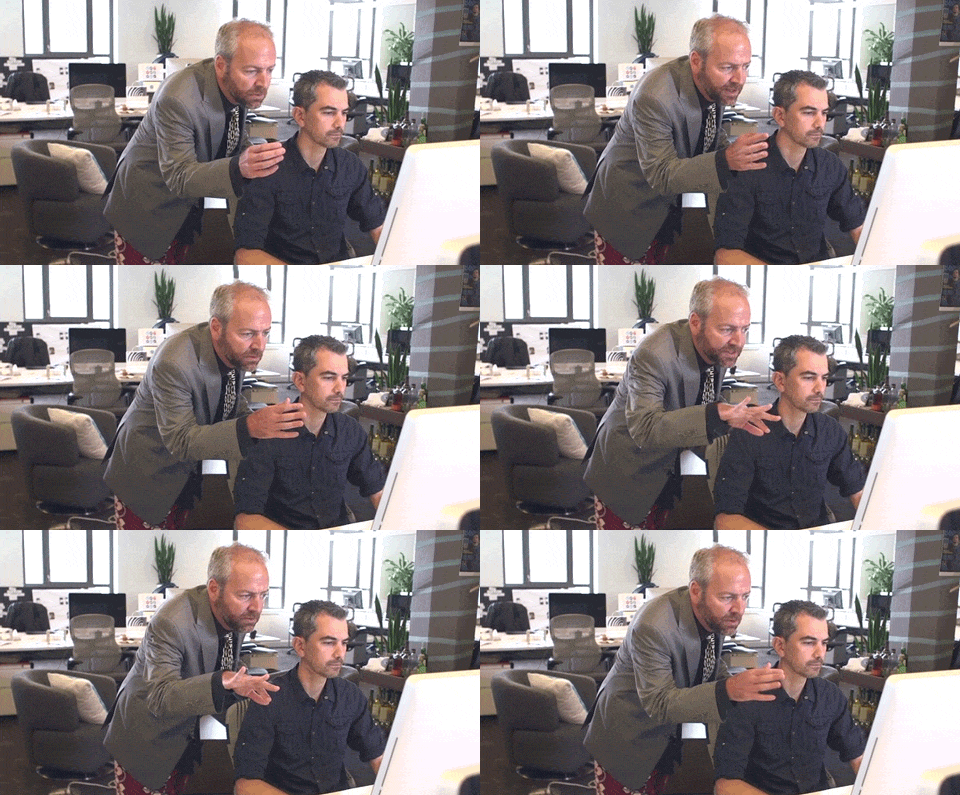
So today, we're not going to talk about any of that.
We'll just focus on pricing, discounting, and related stuff, and I'll try to give you all the insights we have after working with thousands of e-commerce businesses.
I've personally seen more than a thousand Google Analytics accounts, so you can trust me that almost everything I'm speaking about is not scripted.
It's coming straight out of my own mind, from my own experience. So I have confidence that I'll be able to add value.
1. Discount lower-priced products
One of the interesting things I see businesses do a lot is: they don't want to discount their lower-priced products.
And that's counterintuitive because there's hours and hours of research available on the internet that tells you that the moment you discount your high-ticket items, demand will shift to low-ticket items.
Because you're bringing a premium product closer to a not-so-premium product.
Whereas, if you discount your lower-priced items more, the demand for your overall products remains the same.
You've got to think about the products you're discounting on the website and how that shifts demand between products.
If you're making a thousand transactions a month, I don't think businesses track how transactions shift from one product to another because of running a discount or a clearance sale.
We normally just do it and think, “Hey, you know what, Easter is coming up,” or some festival is coming up, or back-to-school will come up in some time, and we just want to go all in.
I think if you can just go back to your data from whenever you ran a sale last time, you'll see how demand was shifting between products when you were discounting.
Think about this. It could be different for you. The behavior could be different. For example, there's a type of product called Veblen goods. It's pretty famous.
Rolls-Royce vehicles are called Veblen products. It's a concept in economics where, as the price of the product goes up, the demand also goes up.
So Rolls-Royce is suffering from success, as they say. They're a Veblen product.
I’m confident—I've seen the list of people registered, although it was a big list, so I haven't seen every website—but I'm confident we don't have a lot of Veblen products here.
2. Place an expensive product on the left
The other interesting thing is: always place a higher-value product on the left side.
This is a very basic, almost stupid piece of advice, but it works because you're setting expectations.
Imagine if I were sitting on this webinar right now wearing a suit — your expectation from the webinar would be completely different.
My intention with how we do webinars, for example, is to keep it candid and conversational.
But the intention of saying this is: generally speaking, people consume content from left to right, and you want to set the expectation first.
Then everything seems cheaper after that.
I don't know if you've noticed this, but Amazon does this really well.
They have this across most categories. I would recommend you check this out. It's a really simple hack.
3. Smaller font sizes for prices
Also, this is one I’ll just skip through—but I’ll mention it because it depends on the kind of brand you're building.
Generally speaking, a smaller font for prices… this is psychological research.
It's not something we've experimented with a lot, but we've seen this across different brands. We've worked with luxury handbag makers. Check out all of the massive luxury brands. If they have online shops, check out Bulgari and Chanel.
You’ll see the smallest font they use is for the price — always.
Something very simple. I’ll just skip through this. We have more interesting advice coming.
Now we go to some proven strategies on how you could do discounting in a way that boosts conversions without you having to lose a lot of money.
Here’s generally one of the things that goes wrong with tiered discounting, or discounting in general: customers assume it will stay forever.
4. Introduce time-bound tiered discounts
When we're running a sale, we often run a timer. But for example, there's a website called slickwraps.com. They do wrapping—these skins for your laptop or your mobile.
If you open it right now, they'll be running a timer. They've been running that timer for five years. I've seen them for five years now. They've had a timer on the site forever.
That completely destroys the urgency that the timer creates, and your customers just take it for granted.
So in this example, you're limiting the discount to just a day.
You're declaring it.
You're making it clear that the discount ends Thursday. After that, discounts get tiered down, and that's how it's going to work.
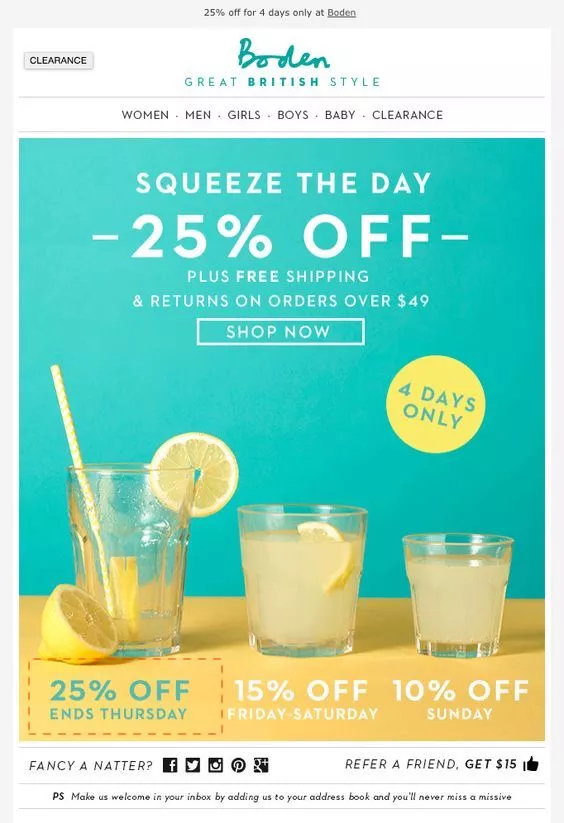
It's important that you keep it that way. Don’t let your discounts become commodity. Then they’re not exciting. They’re not interesting.
That’s the reason why, sometimes Black Friday… increasingly, retailers have tried to go overboard with discounting
They now always have to, when they have to do Black Friday sales, go overboard in discounting at least two or three products.
They look at that as acquisition cost because Black Friday became this period of the year where it was assumed that prices would be lower — but only on products that are previous generation, which is also true for the rest of the year.
So if you go to Best Buy, and you’re trying to buy a set of headphones on Black Friday, it’s possible you’d find that deal at some other time during the year.
So it’s extremely important that you look at your discounts in a more serious way.
5. Combine value-based tiered discounts with a countdown timer
You can also create value-based tiers. In this case, there's so much happening. Depending on how much money you're spending, your discount goes up. Also, there's a timer running.
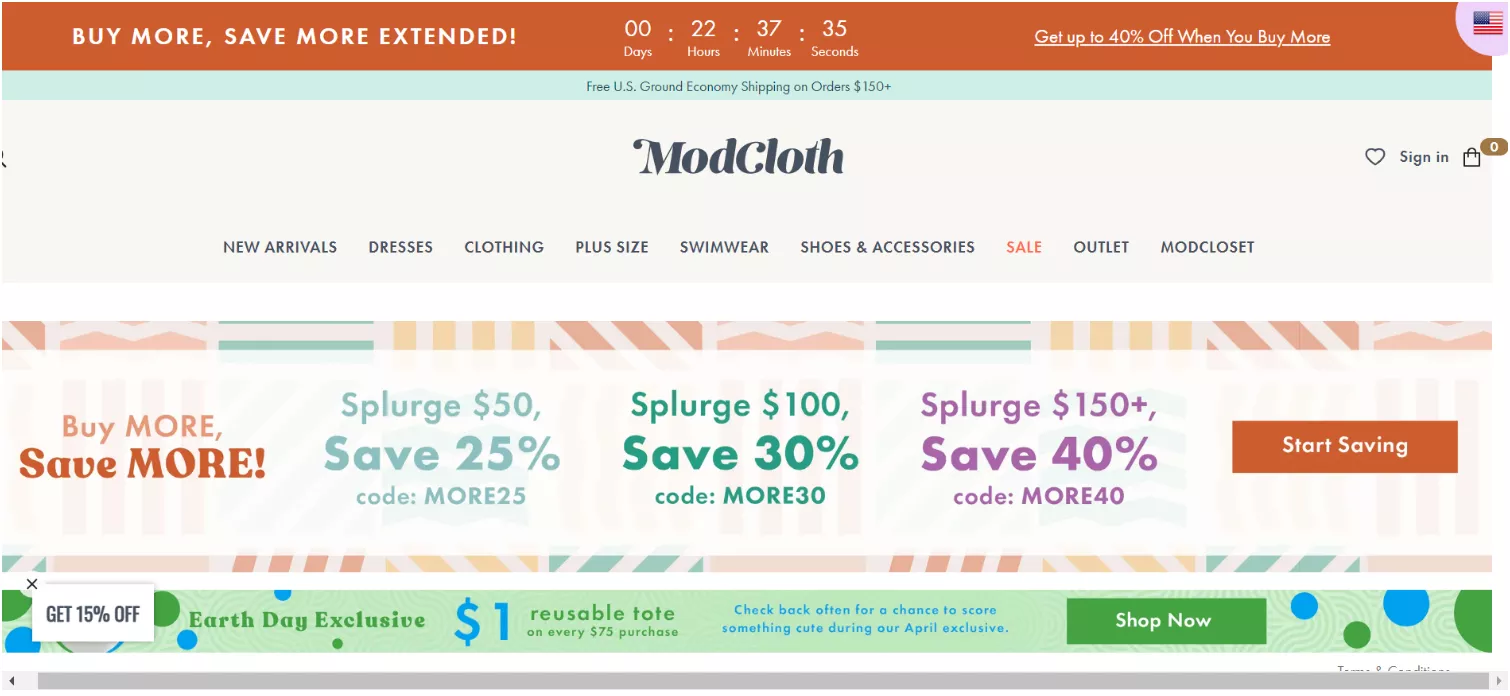
I’m going to show you a lot of examples. Some of this will fit your brand; some will not.
What I can tell you: if these timers and popups irritate you as a customer, they irritate everybody. That’s true.
But you have to be smart in the way you execute it because that’s where aesthetics matter.
Right? I showed you that GIF where this person is standing with the designer, trying to edit the website and get the conversion to go up.
It’s not the aesthetics that will make it happen for you. Aesthetics will help you look better and be perceived as a larger brand. And I'm going to talk about that as we keep going.
But it’s the price, the product, and the pitch that drive conversions. Discounting is part of the price, and that's why I’m emphasizing it so much.
6. Combine free shipping with tiered discounts
You can also club free shipping into those value-based tiers. So if you buy this, if you buy that, if you do $100 or more, there's free shipping.
Free shipping is one of the most interesting benefits you can give to your customers. The number one reason is—believe it or not—you are competing with Amazon.
Every time you expect somebody to buy something from you, you're motivating them to trust you with a purchase and make a transaction that is not the norm.
For example:
How much time do you take to decide to buy something on Amazon?
Versus
When you're buying from a white-label Shopify store?
It’s almost three times. Because it’s taking you that much time to decide if you really want to go for it.
You've done it far too many times on Amazon, and it has worked half the time. There's too much dropshipping, too many things happening.
Which is why it's important that free shipping stays on top of our conversation today.
I'm going to talk a lot about that as we keep going. But adding it as a tier-based discount works out.
7. Promote higher AOV via psychological pricing
This is another really obvious one. You know, the price for two is less than the price for one, and then three is even less.
So this is something really obvious. We've all seen this.
But I’m surprised how many people don't do it.
I've given this example before in a webinar as well, where we were working with a footwear brand, and they were trying to drive their conversion rate.
And the insight that came out was that instead of driving conversions, they should actually drive order value.
And the way they did that is very interesting.
They figured that about 60 to 70% of their visitors were men, because their advertising pointed towards men was working drastically better than all of the advertising they were doing towards, you know, kind of targeted towards women.
So what they did — which is really smart — is they encouraged the men to also buy a gift for their loved one on the way out.
And then they did a bundling, and they did a club discount.
What that did is it doubled their average order value.
Because if you're buying — and I don't know if you know about the brand called Atoms, I'm not talking about Atoms here — but the product is very similar, very commoditized, simple-looking shoe.
One of those Japanese-style kinds of shoes which you can quickly pick up for your wife, and you’ll not be, you’ll not be worried about how it fits and all those things. Kind of a slipper.
So there is a lot of value in finding if you want to…
8. First-order discounts (and why they often lose you money)
So a first order discount is something that I think we all lose a lot of money on.
A $10 off or a 10% off, or a 30% off if you give us your email, and then you kind of go through that journey.
But too much money is lost in this.
The other thing that this does is all of these discount-scouting sites come, and take your coupon code, and then list it somewhere.
So often people are using this coupon and it's listed on Honey or one of those apps which can just give you the discount away.
It’s thoughtful to use this wisely and not let people game it — but also have a threshold.
In this case, only if you order for $100 is when you get a 25% off.
So it's a huge discount.
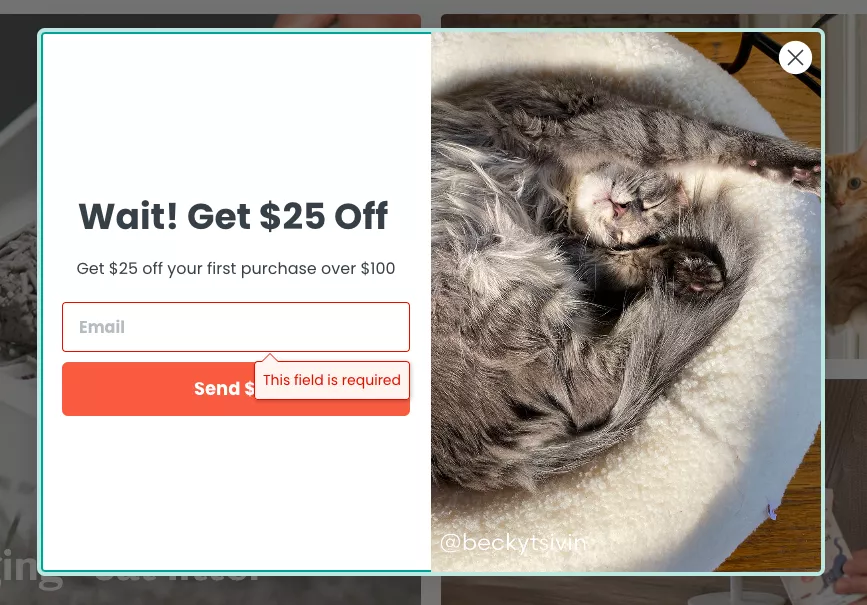
It's a significant incentive to go that far, but also, you have to have a collection of products that can take the customer there.
So it has to be reasonable. I'll allow you to do that math on your own and figure it out.
9. Promote subscriptions via extra discounts
Subscriptions — and I'll talk about that as we keep going.
I'll just say something really simple about subscriptions.
I think while we are all entrepreneurs and running a store, we are also consumers.
So here's a simple statement I want to make about subscriptions:
If your customer buys from you once, and you're only allowing them to do that, then the responsibility of reminding the customer to buy again — and this is a very capitalistic statement…
…But the responsibility of reminding the customer to buy again is yours as an entrepreneur.
You are going to hit them with emails and SMS and find a way to convince them to buy again.
But if the customer subscribes, then the responsibility of forgetting to purchase is on the customer.
Isn’t it? It’s up to them to cancel it. It’s up to them. Because then the rest of it is automated. The card gets charged. The shipping goes out. The whole thing is there.
There are many subscription-related payment apps available, which are dirt cheap.
There is one called Loop Subscriptions — they’re based out of Delhi, India.
Fantastic team. Great product. Highly recommend them. I know the founder myself.
But there are many others. Recharge, there's a lot of them. You can use any.
But the point is: consider if you can do a subscription for any of the products you sell.
10. Make your prices ultra specific (break down what they’re paying for)
Also, making your prices specific makes them look real.
And it also — you know — you’re engaging the customer.
If you're selling anything which is configurable, for example, or if there is a case for them to get a tiered pricing…
For example, sometimes if you can articulate what your price is made up of — if you're selling a $50 or $100 or a $500 product — what goes in it? All the things that are included.
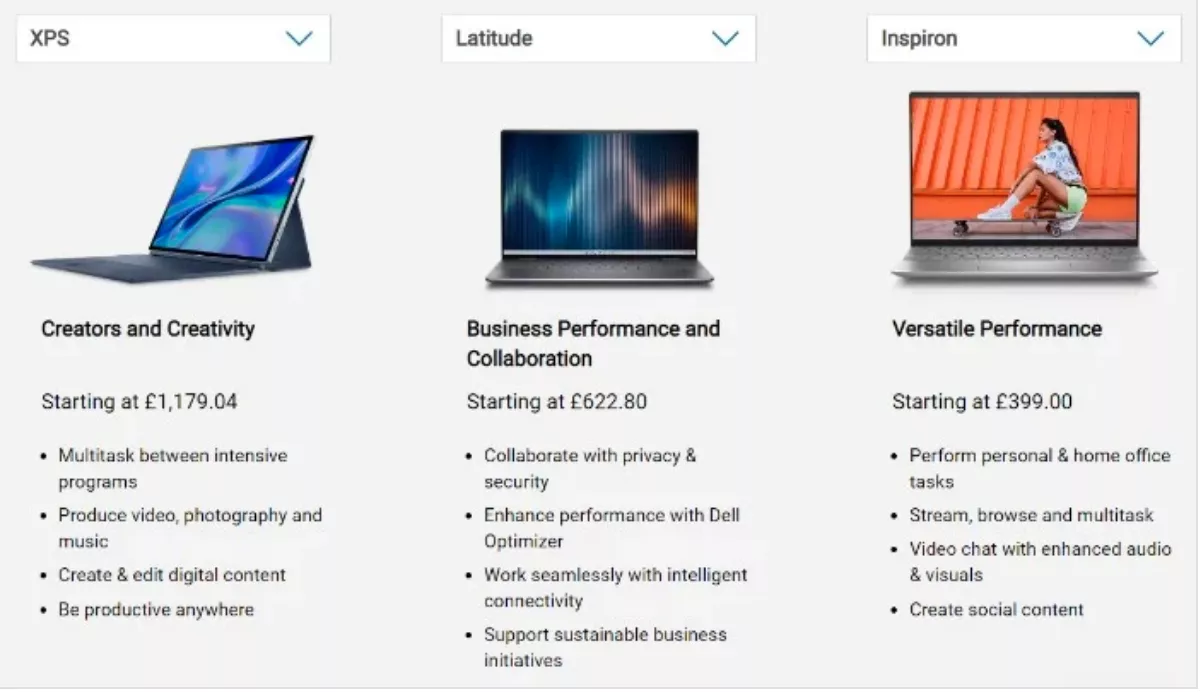
Like Apple, when they were selling… when cell phone buying experience used to be mind-blowing.
I don't know if you all remember the Nokia era. I remember we bought a Nokia N90 phone. It used to open.
It was a clamshell which used to turn around, and you could do a bunch of things.
That phone box came with the phone itself, a set of headphones, a headset, it came with three types of wires, it had a cover for the phone — it had so much.
So when I'm paying 500 bucks for a phone like that, it also lists behind the box everything that I'm getting. And I feel like, “Oh, this is an amazing deal.”
So is there a case for you to do that?
To justify your price a little bit better?
It would go long.
11. Take full price on one (and X% off on the rest of the order)
The other thing here — I think some obvious ideas of course are: you know, buy one item and then the second one is going to have a discount.
That’s why you're not losing money on the one purchase that you get, and also the customer has an incentive on picking up the second one.
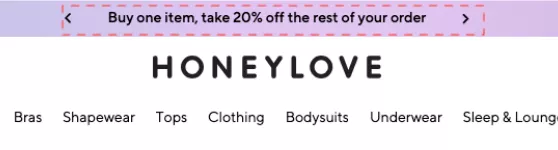
You would see this in supermarkets a lot — those juices or beverages where, if you buy three bottles together, you get a discount.
I’ll talk about that as we keep going.
12. Display perceived value alongside pricing (and bundles, ofc)
This again is interesting. It's a very obvious way, but I have a split opinion on this, to be honest.
They have — it's a bundle, it's 48 bucks, but the value is $61. It’s very easy to do something like this if you're selling a bundle.
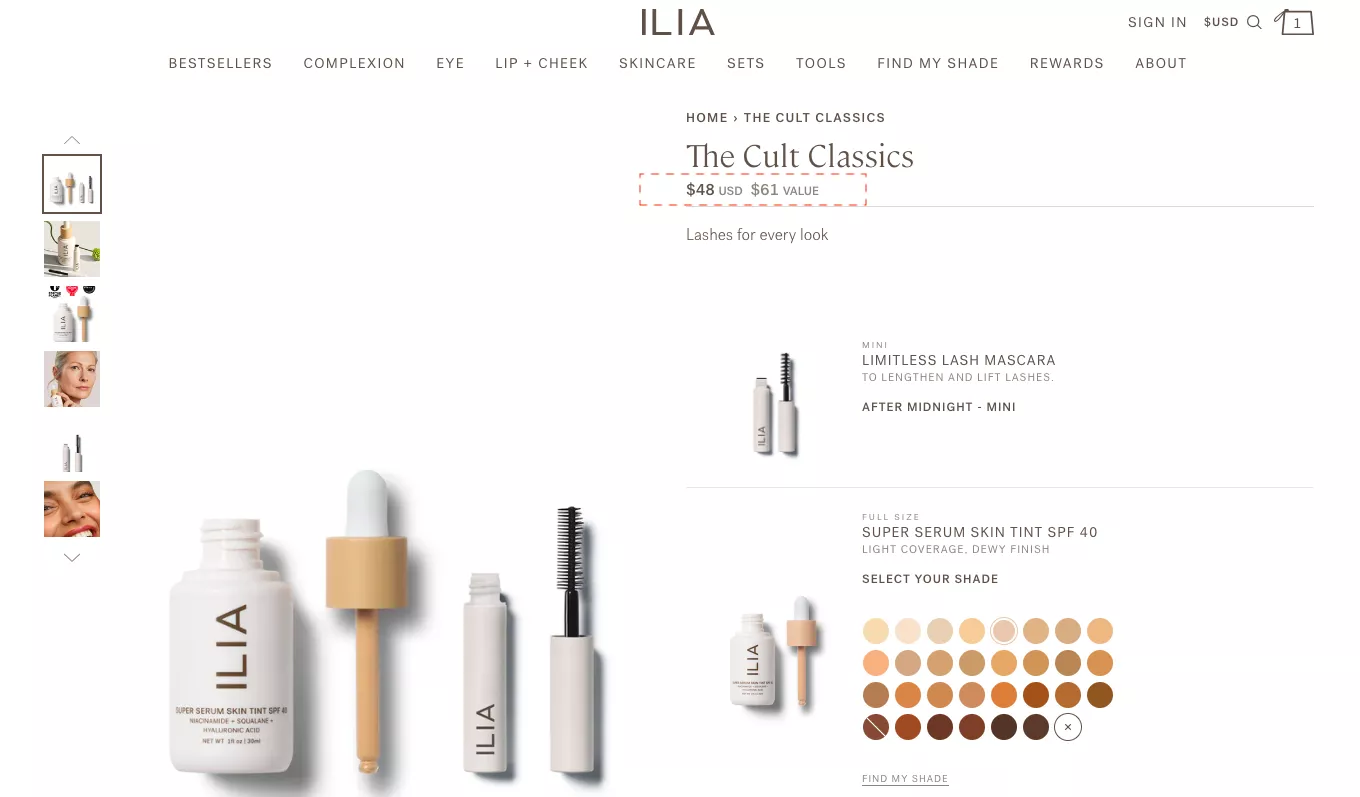
By the way: sell a bundle.
Find a way to bundle your products with something.
Bundles work really well.
They give the customer a feeling of making a complete purchase.
We were out buying… interestingly, my wife has a conference she's supposed to be in next week.
She wanted my help picking something because she's speaking there.
We were out to buy some stuff and we saw a jacket but didn't like the trousers. Then we went to another place, saw pants but didn't like the jackets. See? We were making broken purchases — and none of those stores got conversions.
Nobody got the bundle right.
If you can bundle, it is beautiful. It’s the easiest way to convince a customer that there's a complete value prop they're buying into.
In this case, you're buying a $48 product and you're getting $61 in value.
I’ll give you an example.
I did see that Chuck had registered for this webinar.
I don't know if he's joined us yet.
But Chuck runs a store called Mission Mercantile. They have fantastic bags — leather bags, handmade — and they have a lifetime handshake. Which means that if anything ever happens to the bag — the stitching comes apart, something breaks — they will either repair it for you or replace the bag for you.
No questions asked.
He calls it the mythical customer service.
So that's a phenomenal value prop.
Those bags are expensive — $400, $500, $600 bags. They have cheaper options as well.
But interestingly, if you've bought that bag once, you are essentially not going to buy a bag for the next 20 years.
Or maybe 10 years. So the value there is insane. It’s incredible.
Versus a Samsonite, which, you know, in three years is going to lose its shape because you're going to throw it around like you don't care for it.
Either way, perceived value has a lot of hidden meaning.
As a matter of fact, I'll just—you know—Convertcart being a SaaS company also uses this.
So when our sales team is talking to people, we never… you know, we get the most frequently asked question: “For your conversion optimization service, how do you charge?”
And the answer is never, “Hey, this is what we will charge for your traffic level,” and, you know, the pricing has a few components.
It's built on the amount of traffic you're getting — so if you're bigger you pay more, if you're smaller you pay less.
The answer is always:
“The pricing includes everything.”
It includes the platform that has all of these features that will help you optimize conversions.
It has experimentation.
It has search.
And it will come with a team of experts that are going to help you run the show.”
So there is an entire spiel before we… and you know, for all of this, all we charge is this much per month. And that’s it.
The intention of doing that is to have the perceived value sit up front, and that’s when you go to the next step.
👉 Improve profit margin through on-site changes
Profit margin — I think this is the number one problem that plagues e-commerce today.
At the end of the day, we sometimes forget that the fundamental flywheel that most of our e-commerce businesses run on is plowing a part of the profit back into acquisition of customers. That’s really the business we are in.
We spend some money, run ads, bring customers, they buy our products, the profit goes back into acquiring customers, and that cycle continues.
So the only way to grow this business incrementally — there are only two ways to do it:
- Acquire customers for free (and I’ll tell you how to do that)
- Improve your profit margin (so you have more money to reinvest in acquisition)
Which is by improving your profit or even marginally improving it every year or every six months.
That's also why businesses are rewarded for increasing profit margins when they’re listed on Wall Street. Generally speaking, if your profit margin goes up by 3%, that's rewarded significantly more compared to your revenue going up by 3%.
The other way is acquiring customers for free — which is impossible.
The only way to do that is if you become a social media influencer yourself and go and do that.
Or — you can “acquire customers for free” by making your existing customers buy more from you.
So that’s the other way of improving it.
13. Make your bestsellers prominent around the year
Jumping into some of the advice here: bestsellers.
This is the most basic advice. I’ll quickly go through this.
One of the things I’ve seen people do is they promote their bestsellers, but they don’t do it properly. They probably do it for a short time, or they're using an app that doesn’t do it well enough. Too many broken parts.
Put it front and center.
Eighty percent of your revenue comes from 10–20% of your products.
The principle applies every year.
So I would say: stop trying to sell those five products that you wish people bought.
It doesn’t matter what you wish. People like something you’re selling — double down on it.
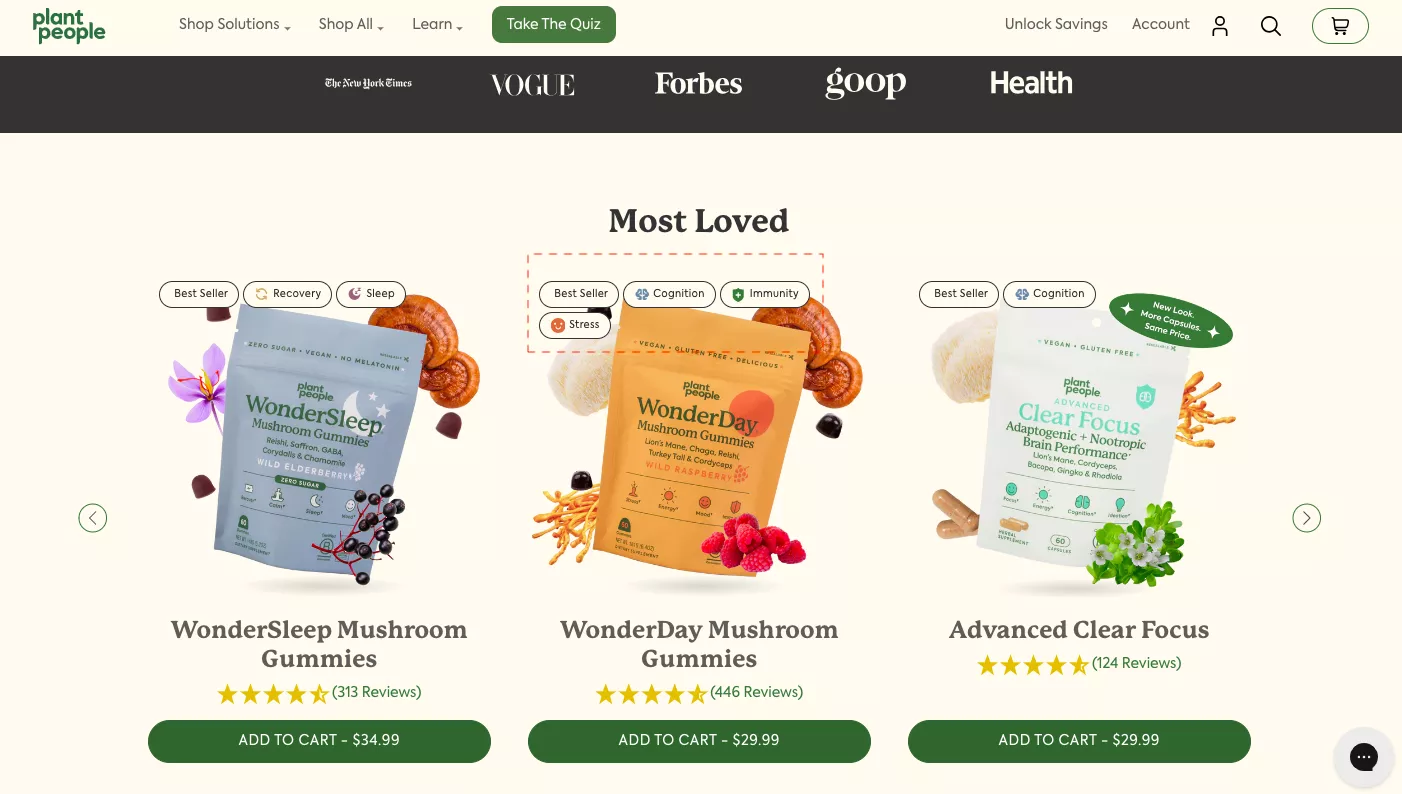
Go all out acquiring customers for it and getting repeat business for those products.
14. Feature an upgrade (across more products)
Upgrades work really, really well.
How can you make sure your product specifications — the stuff that’s going in — that itself should feel like an upgrade?
And can you also show them alternatives and take them to the next level?
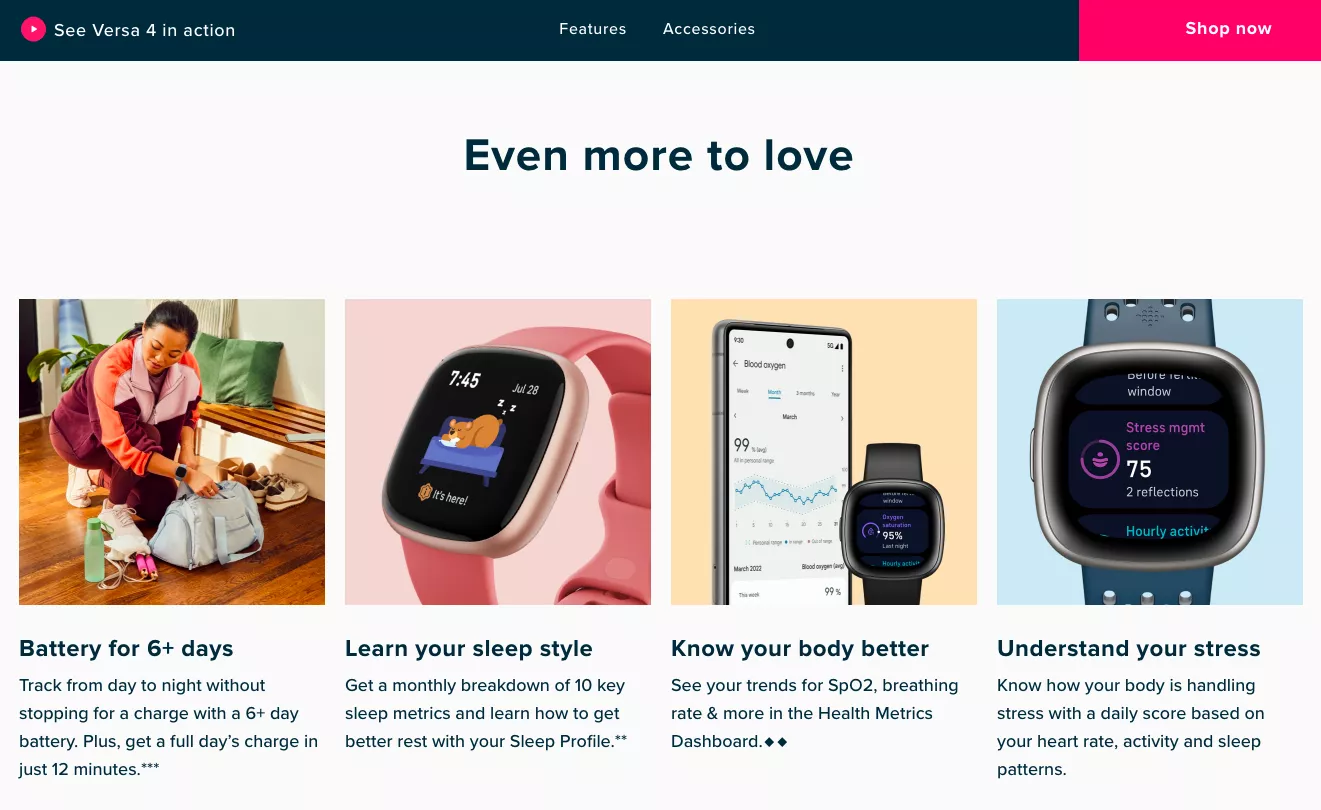
That’s going to fly extremely well.
15. Promote subscriptions
Subscriptions — I think I've already spoken about it.
I've also spoken about the logic behind it.
This one stands out because it's a combination of two things I've already spoken about: bundling and subscription.
Extremely hard to pull off, but if you were to make this happen, it would instantly help you with customer lifetime value.
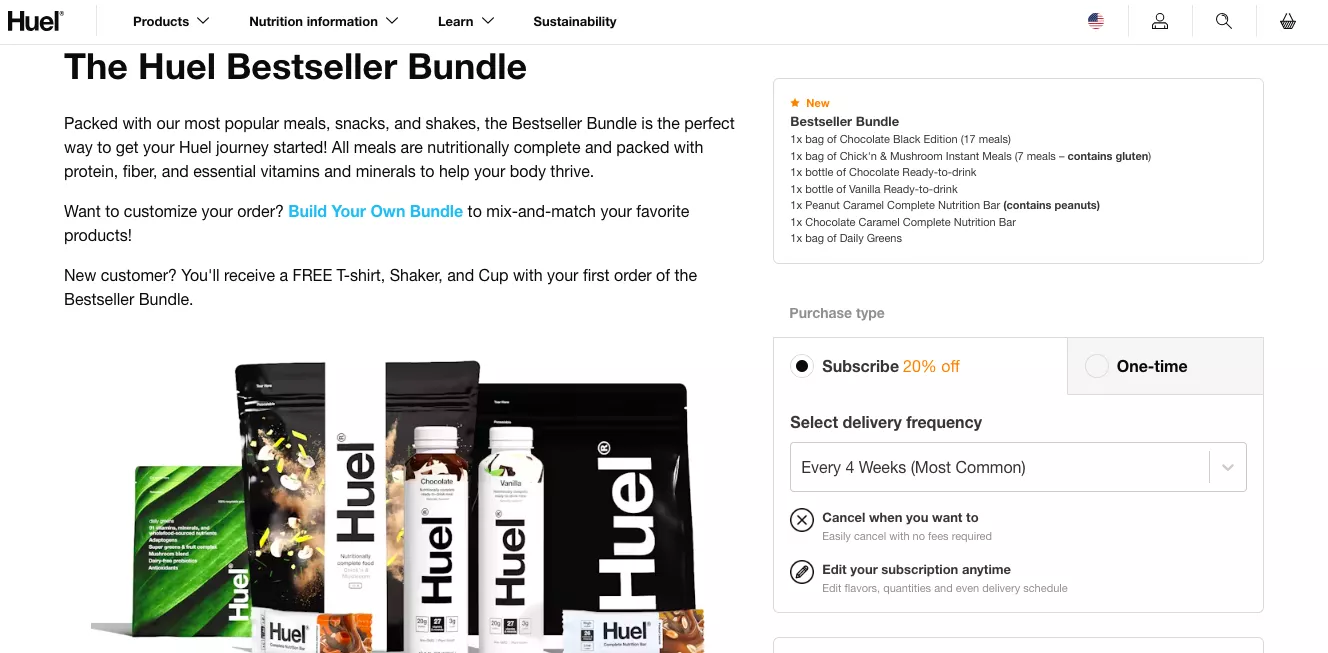
And I'm going to go to customer lifetime value in just a bit.
16. Improve brand perception
Improving brand perception — so let's talk about brand for a second.
That's one of the other things I see businesses do a lot.
If you look at any of those repetitive, exactly-the-same videos on YouTube where a kid is trying to teach you dropshipping — I’m sure everybody has seen them at least once — there is one thing common across all of those videos:
“Go and hire someone who can build you a landing page.”
But unfortunately, I don’t see working e-commerce businesses investing money in creating really convincing product pages.
Adding entire sections into your product page that convince the customer that your brand is worth the time, the product is worth the money, and essentially strengthen the price.
That’s what I call shrinking the price. Entirely coined by me — there’s no science behind that term — but what I mean is:
Make the price look small with every second somebody spends with you.
In a lot of cases, there’s an assumption that customers are convinced they want to buy from you. And it's fatal.
If you're adding extra information and people don't go through it, that's okay.
But if you're not adding information — it's a crime.
So I request you to go all out and find a way to convince the customer.
In this case, you know, there's so much that's going in — all of the ingredients, why it works, how many people trust it.
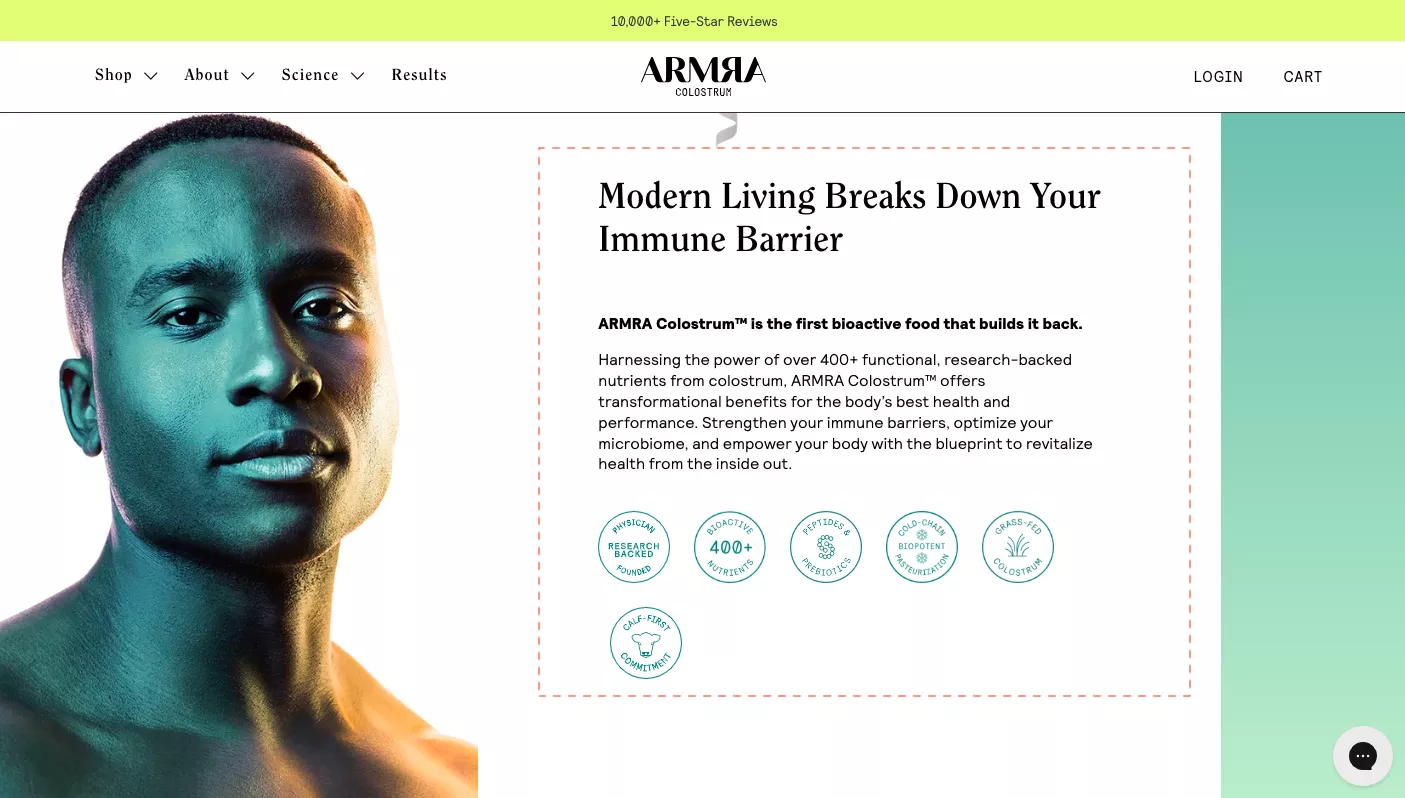
There's a specific point about trust later on, but it goes a long way if you can talk about your brand. And I'll actually give you a few suggestions on how you can do that.
The most easy way — the number one easiest way — of building a brand is telling your story.
Right? If you're selling something that’s… irrespective of what you're selling, there are two or three things that can easily help you tell a story.
The first and the most interesting one is the origin of your product.
It could be:
- the quality of cloth you use,
- the people that build the product,
- the region that it's built in,
- the way it is packaged,
- and the way it reaches the customer.
So it could be: world-class linen made in the USA by army veterans, and, you know, there’s a 20% off for people who are associated with the military.
There are so many ways in which you can connect that story together, depending on the kind of product you're selling.
And that’s something that I feel is overlooked.
So I would want you to take a step back, look at your product hard, for a decent amount of time, and find a story inside it. I’m sure it’s there.
If it's not there — reply to the email that I sent you after this webinar.
I’m happy to help you find that story. Just send the product to me and say, “Here’s my product, do you think there's a story I can tell?” I’ll just do it as a mental exercise. I’d love to take a look at it.
17. Bundling: The more, the better
Bundling ideas — the more bundling ideas, the better.
In this case, for example, there's so much happening.
There's a bars pack, there’s a kickstart bundle, there’s a starter bundle, there's a variety pack. So there are a bunch of ways in which bundling is working.
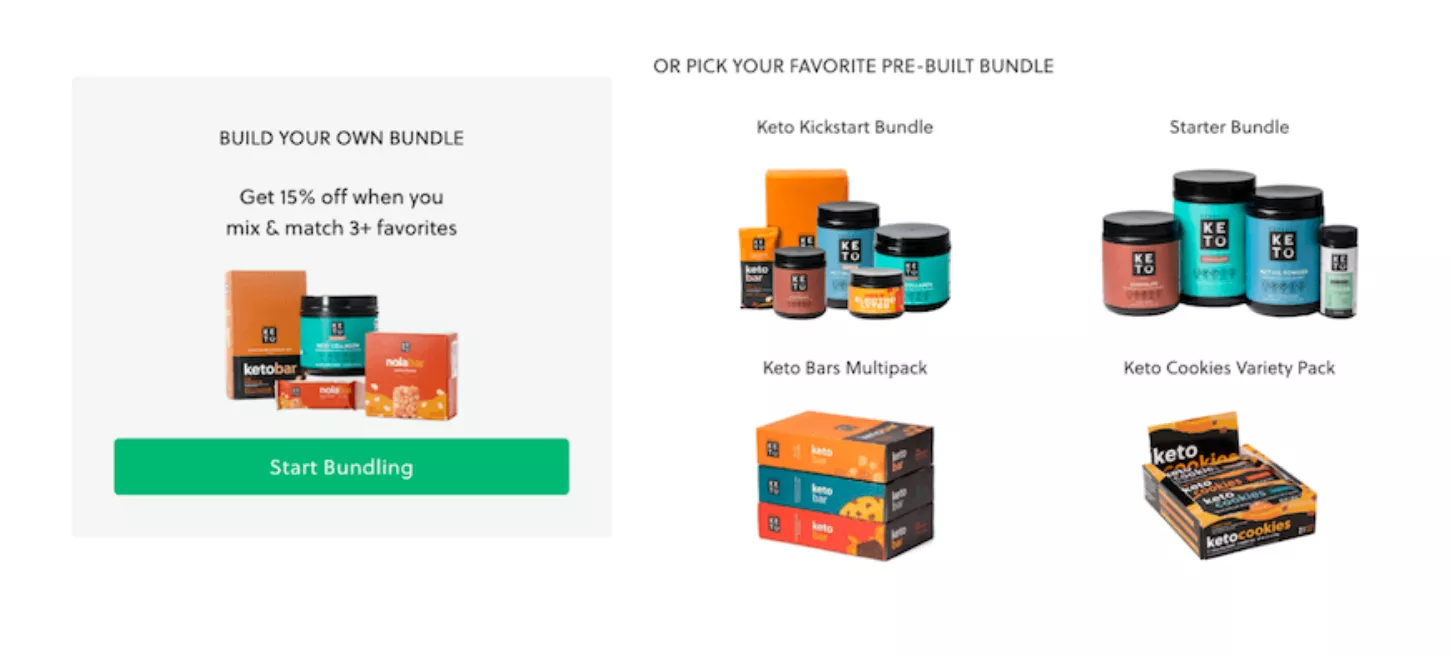
I don't want to talk about bundling anymore — I've already stressed it enough — but the intention of putting this here was so that you also start thinking of bundling in more than one way.
Can you give them more than one reason to buy?
18. More buying options = more chances of a sale
It says “more buying options.”
I would call it more buying reasons.
And the reason I say that is: sometimes your customers need that extra reason, that extra kind of push.
I'll give you the most amazing example.
The most selling chocolate in India — because that’s where I come from — is Cadbury Dairy Milk. And for the longest time, Cadbury Dairy Milk was promoted for its amazing taste. They used to do that for the longest time.
Then people slowly started to realize chocolates are unhealthy.
That’s not the natural form of sweet for the country.
There are tons of amazing desserts you can have which are indigenous — and you'd be mind-blown with how good they are. I don't want to brag, but I welcome you to try some of them, and I can give you recommendations.
But generally speaking, what Cadbury did instead is:
They completely transformed their advertising once they realized what people were thinking. They shifted to gifting chocolates to others.
All of the advertising became: gifting a chocolate to your teacher, gifting a chocolate to your friend, gifting it to your mother for Mother's Day, gifting it for Diwali, gifting it for Christmas.
So that completely changed the reason people were buying chocolate.
In this case: I can buy this seed bread for myself, or I can gift it to someone.
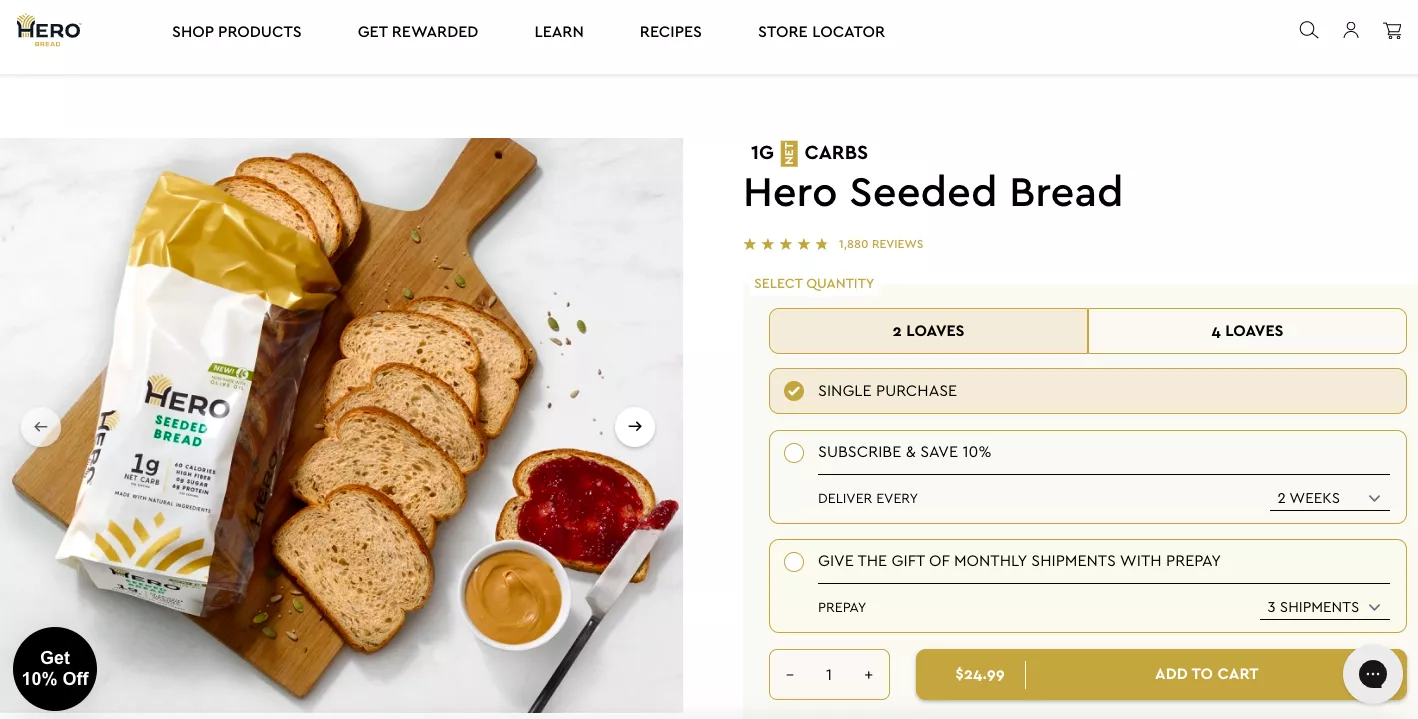
And I’m prepaying for three shipments. It’s actually a really thoughtful gift when you think about it.
I get three shipments once a month for something that I didn’t really sign up for.
The other thing you're doing is: you're seeding the person who is getting those shipments to come back and subscribe.
Because now you've already formed a habit.
It’s a really interesting idea, isn’t it?
19. Promote add-ons
Promoting add-ons — really obvious. Easiest way to drive average order value.
Focus on… in this case, for example, these add-ons are interesting.
The product they're selling — there's an assembly plan, and then there's a protection plan.
I would want you to just Google “actuarial science.”
These are the people that create business models and pricing for insurance companies.
They tell insurance companies how much they should price the insurance so that if 100 insurance plans are sold and three people fall sick, they still make their margins after paying the bills for the three people.
That will essentially tell you how much you can charge for a guarantee or a warranty on top of your product if you want to charge for it.
How much would it cost for you to replenish in case people were to claim that guarantee? What percentage of people actually ask to claim that guarantee?
And then you have a business there as well. So something to think about.
20. Foster loyalty – give shoppers plenty of options to earn rewards
Loyalty — there are tons of apps available on the app store depending on the platform you're on.
If you're on a custom platform or something like that, it's important to consider hiring someone to do this.
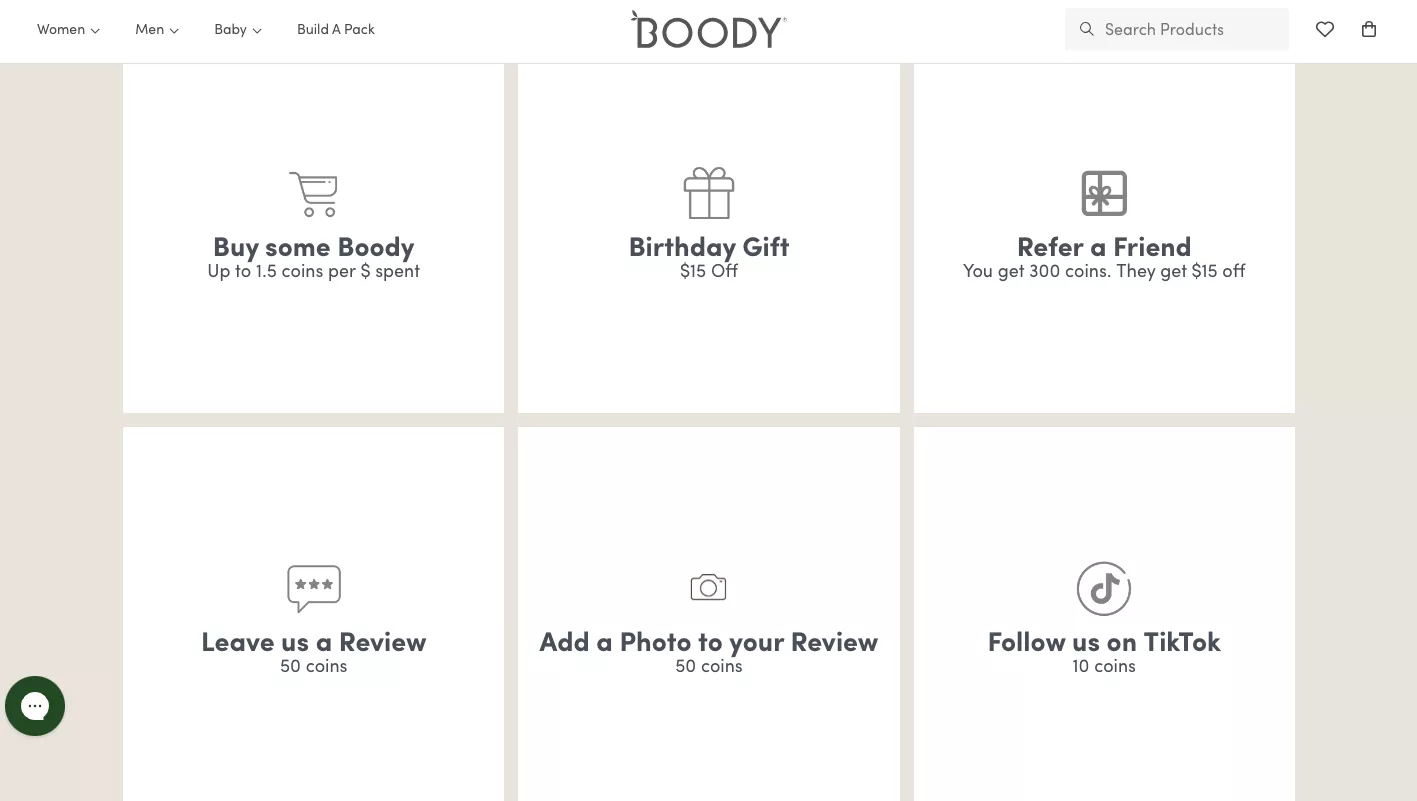
But if you're a business that can try this, I would definitely recommend a loyalty or rewards app or system on your website, so that your most frequent or repeat customers get something in return for being so loyal to you.
21. Make your store more trustworthy
Trust is—I'll tell you straight away—the single biggest reason people will convert, apart from the fundamentals of the product being right, the price being right.
But if you want to justify your price, there is no bigger trust or social proof than real, actual people saying they like your product.
So this is also a solid user-generated content opportunity.
Reward your customers to give you great reviews, send you pictures using the product, post it on Instagram. Sometimes too much—people don't do that generally—but ask them to send you the picture of them using your product.
Their dog sleeping on the dog bed you're selling, or something on those lines.
And put all of that on the website.
That’s going to go a really, really long way in justifying the price you're setting.
22. Promote pre-orders using urgency
This is another interesting one: pre-orders.
Pre-orders are something I've seen businesses overlook.
When you're launching a product, you don't need to launch a product and then send an email saying it’s launched. You can actually experiment.
If you feel you have a base of customers — an email list of anything above 20,000 that has opted in to hear from you — if you're someone who's already investing that effort… it will add a lot of value if you pre-launch products.
See the kind of demand you get, acquire stock that way, and also try and discount and see what price people are willing to pay for it.
I think it's an underrated strategy.
If used well, it can go a long way.
23. Customer CLV Based Discounting
Now, a couple of the ideas that I added just 10 minutes before the webinar started.
First is customer lifetime value–based discounting.
We often come up with discounts on the basis of the first transaction, which means: if your customers are likely to buy from you four times in a year or three times in a year, you can look at the data for the last three years and determine that.
So if your product is $100, and they’re buying three times in a year, they're going to spend $300 with you in the first year. Assuming your gross margin is 40%, you have about $120 in margin from that $300 customer.
Now… that means: how much money are you willing to spend to acquire that $300 customer?
That’s the way to think of it.
Normally, businesses think:
“I’m acquiring a $100 customer because that's the first transaction value. I'm going to make $40 on it, and I can only give $10 off to acquire that customer.”
But essentially, what you were acquiring was $120 of profits over a period of a year.
I hope I'm making sense.
Please ask me questions if I'm not. I know there could be communication gaps or maybe I'm not as clear as you'd like me to be. But I hope this makes sense.
Look at your customer lifetime value:
Is there a case for you to discount even more for acquiring a customer because it would be worth the while — because that customer is likely to have a 50% chance of buying twice a year?
You could do the math and an Excel sheet will help you.
24. Try automated price matching
The other thing is: there are tons of apps, tons of software available that can help you price match. If this is relevant to your business, I strongly recommend it.
There are also apps that are really expensive — so I recommend those for businesses above $2 or $3 million a year in revenue. But generally, they also edit your price.
You can set a price range — say $60 to $70 is where you want to sell it — and depending on what price the rest of the internet is selling it at, it would automatically adjust your price and find you the best mix of conversions and margins.
I think it’s pretty smart.
I would use it if I was a large store.
👉 How to offer free shipping without going broke
I'm going to speed up in the interest of time because I want to take as many questions as possible.
Free shipping is a huge differentiator.
The reason that's true is because it's also one of the biggest reasons people don't buy directly from Shopify stores and so on.
Because somebody has to pay for that.
The shipping is not free — fundamentally speaking. There's somebody skateboarding through New York City delivering your package, and somebody has to pay for that.
So either the customer pays or you pay.
If you have to pay for it, it has to be worth it.
If the customer pays for it, they have to be convinced and they have to love the product enough to pay for it.
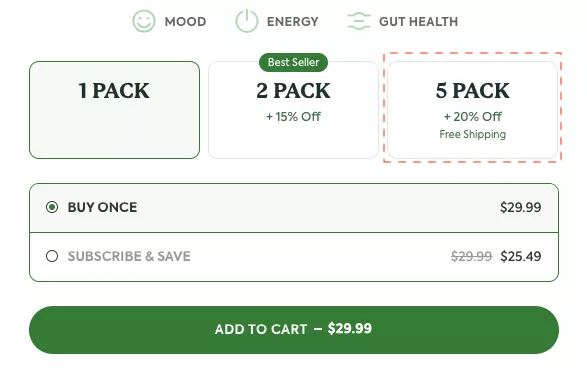
25. Offer free shipping only for high AOV
The first simplest idea is: make them buy more and make sure that they…
I'm going to repeat this three times, three different ways, because I have three different examples of it.
In this case, it's the same product.
You're selling a higher volume.
So if you buy a 5-pack, you get a 20% off or free shipping.
26. Articulate what goes into the shipping cost
In general, if you are a product that sells… that involves things like freight, etc., one of the things you can do is articulate what goes into the shipping.
For example, we have a lot of jewelry customers that obviously have to charge for shipping.
But then we add a lot of messaging inside the shipping cost to make it worth it for the customer.
For example:
- “extra secure,”
- “not going to break,”
- “bubble wrap,” this and that.
So just articulate how you're going to ship it.
27. Make shipping “worth it” through sustainability
The other way of making sure shipping is worth the customer’s while is by making it environment-friendly.
And I know this is true for me — I’m sure it’s true for most of us on the call.
We will pay a couple of dollars extra, we will pay a certain percentage extra, if something was environment-friendly.
You know, the paper straws — as horrible as they taste — they have less guilt associated with them.
There is psychological guilt associated with a single-use plastic straw. You cannot beat it.
Even if you're anti that, you will still have at least a 2%… at least that thought crosses your mind saying:
“Hey, I’m going to use this plastic straw, but I know it's going to end up in a landfill or in the sea.”
So my recommendation is: can you make your shipping 50% environment-friendly?
60%? Not entirely, but at least a part of it environment-friendly?
Mention that.
Say: “Hey, our shipping is 10 bucks, but it’s 100% environment-friendly packaging.”
It adds more value to the money you're expecting people to pay.
28. Nudge shoppers to add more products - to get free shipping
In this case, you're again nudging shoppers to add more products.
You're doing this whole thing in the cart.
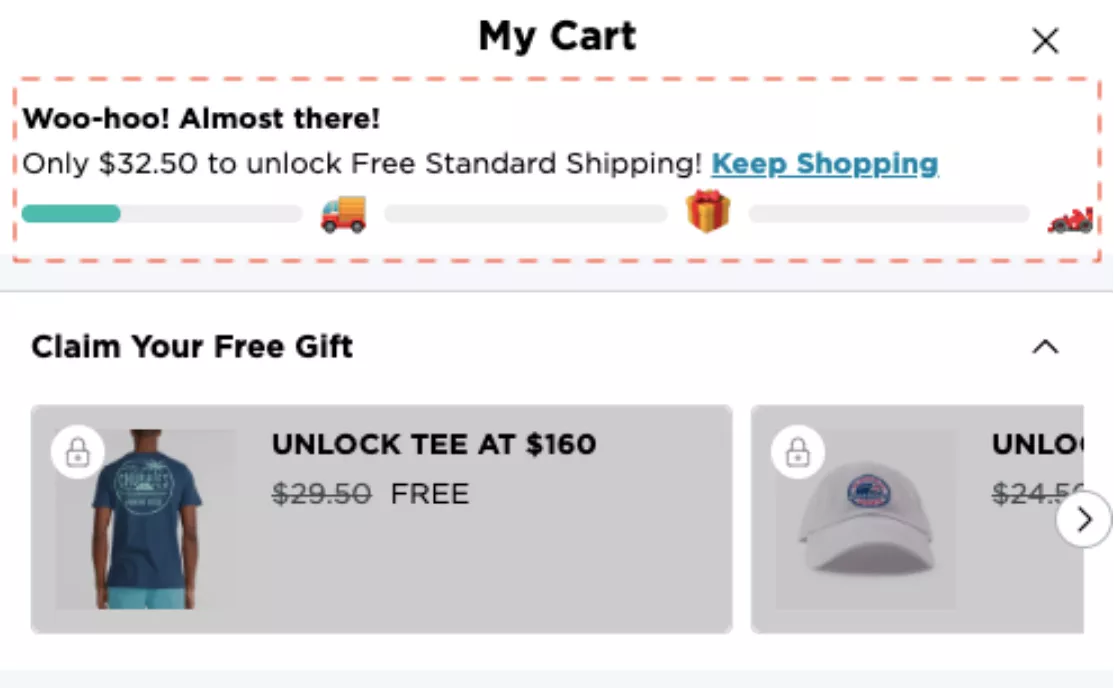
In addition to that, you can also encourage them to buy more.
In this case, it's a fast-moving product, so you can ask them to stock up in a big way — similar to the first example that I shared.
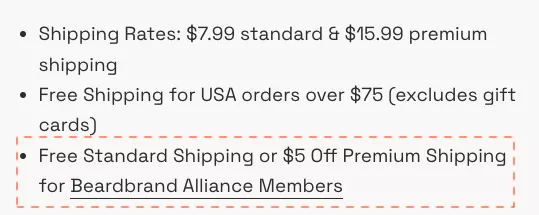
29. Offer free shipping & discounted premium shipping only to members
In this case — again — I will connect this to the rewards and membership option I spoke about earlier.
If you can get that going, you can get this going as well.
So you can offer free shipping to members…
Or allow them to:
- pay shipping for the first transaction,
- then if they become a member with the first one,
- they don’t pay shipping for the next one.
30. Replace “$10 off” with “free shipping”
I think that’s what I want to talk about here.
The other thing is: instead of giving that $10 or $20 off on the first order and collecting emails, it's significantly better if you exchange it for free shipping.
We've seen this work really well in a couple of A/B tests that we've done — the customer, instead of getting $10–$20 off, gets free shipping. And the chances of them actually using that coupon and transacting were a lot higher.
31. Free shipping on peak selling days (to offset margin loss)
Another thing is: tying free shipping with peak selling days.
This ensures your top line offsets any shipping related trouble.
If you’re doing free shipping on the five orders you get on a Tuesday, it's not worth it — because your top line (and gross margin) is not at the level it needs to be.
Whereas on any other day — a sale day — you might sell $20,000 worth of product or $10,000 worth of product in a few hours, and you’ll make $2,000 or $3,000 in gross margin on that. So if you lose $300 on free shipping, that's fine. You can afford it. You're also boosting your conversion rate.
⚠ Warning: Don’t go too far with free shipping
Generally speaking, I also want to leave this thought with everyone:
I've seen businesses go too far with free shipping.
Sometimes businesses run free shipping and lose money on it in the hopes that transactions will skyrocket.
It doesn't happen.
If your product is good enough, people should be willing to pay a small amount for shipping.
There’s an interesting way to test this:
- Run it for a day.
- Lose money for a day.
- See if it actually helps you.
Or maybe, run it for a week. See if it helps you. Then backtrack on it.
It’s completely fine.
Depending on the kind of traffic you're getting, it might actually make a difference or it might not.
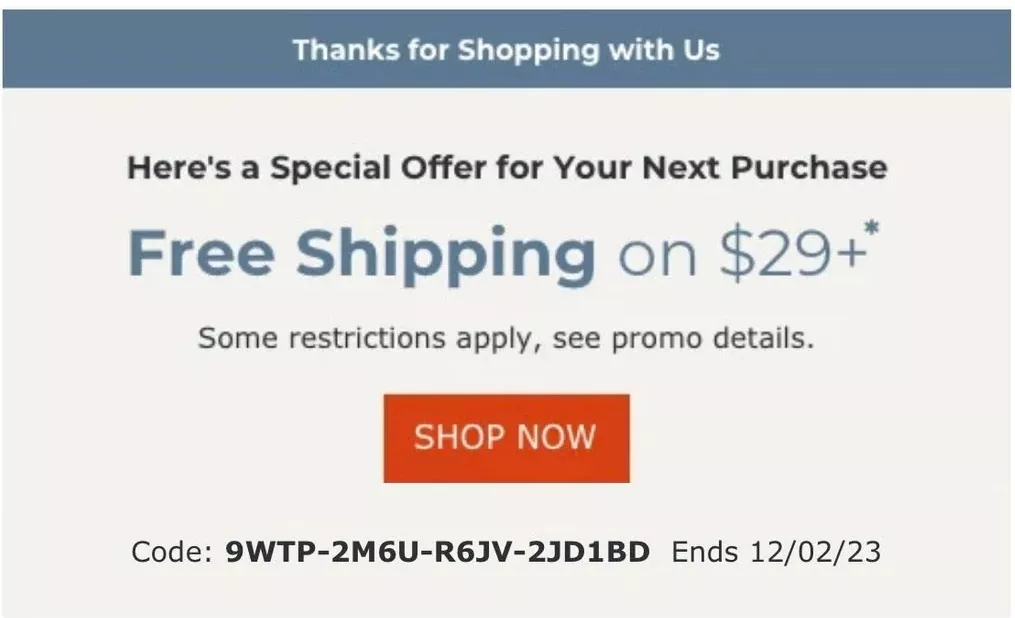
32. Use free shipping as a hook for driving repeat sales
Repeat sales — I've already spoken about it.
You could offer free shipping on the next purchase.
33. Offer free shipping only to cart abandoners
You can also — this is another A/B test we ran for a business that's a magazine site.
In their case, we saw a very high cart abandonment. So we said: everyone who has a cart value of more than $20 and is abandoning the cart — that came down to around 800 people a month — we will offer them 50% off on shipping.
So the moment they were exiting, with an exit-intent popup, we offered them 50% off on shipping alone.
We were able to recover a lot of those abandoned carts.
Even if we recover 10% of them — which is 80 recoveries out of the 800 abandonments — and at $30 per cart, you’re doing a solid job of bringing in some cash for them. And they were happy to pay for half of the shipping for those customers because at least they were getting the customer.
34. Apply free shipping only to chosen locations
Then you can also make it location-specific.
I mean, again, there is some development or app-related effort that might go into making this happen. But again, it makes more sense for you to at least charge the customer on the basis of actuals.
I know a lot of us use shipping-provider integrations to come up with the price for the customer. But there is still a strong case for doing this.
You’re also making it highly transparent, so the customer knows that shipping is at cost — the company isn't making money on it.
We used to work with a business which shut down later because of cash-related issues, but they were a $0 store.
One of those dropshipping stores — all the products were $1 or $0, and shipping was $10. Everything was being routed from China.
They had these really interesting kids' toys and were selling everything for $1.
To Sum it all up
Yeah, this is what I wanted to cover today.
I don't know if you've… but I'm slightly lower energy today. But generally speaking, the intention was to focus on pricing.
Some of the key takeaways being:
- make the price smaller for your customers,
- make it worth their while,
- pitch extremely well,
- spend time on calculating your customer lifetime value,
- focus on acquiring customers with the right cost,
- and also — don't force people into buying with huge discounts.
Because sometimes, when you discount too heavily in order to acquire customers, you end up acquiring customers that have very low intent. And then you have a lot of what we call RTO — return to origin — and you have a lot of returns because they were just trying it out, and you have a very lenient return policy, so you have too many returns because you discounted too heavily.
So you have to find the right balance. And the answer almost always is in the data.
Yeah.
Q&A
I'm open to questions.
We have another 9 minutes.
I'm glad I was able to finish at least… to some level.
But I'm open to questions. I'm going to stick around for a few minutes.
I think Chuck — I just saw you join.
Welcome to another webinar.
Interestingly, I actually gave an example for Mission Mercantile recently, so I hope somebody from the webinar today comes and buys one of your products. You already know I'm a fan.
But… yeah.
So I have a few questions already.
👉 “Do you have any tips on trying out different prices? For example, I put out an ad for earrings — $20, $27, $30 — and found $27 got clicked more often.”
So, generally speaking, odd numbers are better. Okay? This is really psychological.
I've run so, so many ads that I generally know odd numbers are more convincing for people. So that’s probably why 27 worked for you.
But please do that.
It's extremely important to experiment with your price.
If you're selling a product where you have the luxury to experiment with the price — why not?
Most people are not. Their gross margins are so thin because they know a similar product… or a similar…
We used to work with a company that used to sell baby carriers which were really expensive. They knew they were at the top of it. But they were making it handmade with linen, and there was all kinds of stuff going into the product.
They were not at the liberty to try out a lower price. They said: “If we were to experiment, we will only experiment with a higher price.”
One of the things we do when we launch a new product: we give it to customers and we ask them what they would want to pay for it.
Maybe that's another way for you to find how you could do that.
👉 “Do odd numbers convert better?”
Yes — so odd numbers don’t “convert better,” they are more trustworthy.
When I say, “Hey, you know what, I went to the park two times,” versus “Hey, I think I’ve been to the park five times this week,” chances are higher you will trust me in the second one. So they're more trustworthy.
Chuck says: “I think—Chuck, don’t forget to pick ‘Everyone’ when you're typing — but he says we end all our pricing in fives and nines.”
See — that's proof from a really successful e-commerce entrepreneur.
👉 “Do customers perceive prices without zeros as less expensive?”
I don't have the psychological research on that, but it's possible.
Font is definitely one of those factors — but that’s something to think about.
👉 “I have too many problems with discounts in Facebook and Instagram shops. Any tips for dealing with that? Is there a way to turn off discounts being auto-applied to FB shops?”
I will have to take a look at why that happens.
It's really odd. Generally, they pick up information from your store — the product feed that’s going to FB shops has some wrong information, or it's something else.
Could be a shop feed integration issue.
I can’t answer that without looking at the data.
👉 “Any formula on what threshold to offer free shipping based on AOV? I offer free shipping when spending over $50.”
Interesting question.
I think this is a good advice to us — we’ll probably do this math and create a calculator, and launch it.
The factor to look at is gross margin.
Do a gross margin calculation of your product, and plot that across scale.
Meaning: if you sell 100 vs 200 vs 400, does that gross margin scale because of economies of scale?
That will tell you how much money you can give away to customers for free shipping if you were to acquire them.
👉 “How long should the discount run?”
Because earlier I recommended not keeping discounts running forever — they lose meaning.
Your customers are tracking your emails.
I don't think — after being in e-commerce — I don't think… if it's not one of the four types of purchases:
- urgent/emergency (medical),
- daily needs (groceries),
- planned purchases (travel),
- impulse purchases (wants, not needs),
…your customers are watching your emails.
They know you run a 50% off every two months.
The smart ones do. Your customers are smart.
For discretionary purchases like bags or things I don't need, I almost always abandon the cart before I buy. Almost always. Because I know within a day of abandoning the cart, I'll buy that same product for half the price or 20–30% lower.
So… there’s no fixed answer.
It depends on what you’re selling and how seriously customers take discounts.
Also, yeah, I think a calculator to calculate the best cart value to offer free shipping based on gross margin.
I think there might be some maths we can do there; so, Amanda, we'll work on that, and we'll find a way to calculate it.
👉 “Bigger price font vs smaller price font?”
“There’s usability research that says bigger price font works better. What’s your take?”
The answer — for all of these kinds of questions — is always:
A/B test.
That’s the only real answer.
I also categorically mentioned earlier: psychological research is often backed by private entities.
Like if you Google “Is Diet Coke good for me?” it says it's harmless. But we all know if it’s sweet and it’s not sugar, it’s chemical.
So I don’t know how far you can trust this research.
First principles come in handy.
Do your own tests.
Chuck said it right:
Experiment, experiment, experiment. Your business is a lab.
Okay, I don’t see any other questions.
Folks, thanks so much for joining us again.
I'm glad we’re able to have this turnout month after month — couple of weeks after couple of weeks — and that we are able to come up with stuff that’s meaningful for you to talk about.
But yeah.
Thanks so much.
I hope the information was useful and it helps you drive sales, conversions, and add more value to the world.
Thank you.
Alright, bye-bye. Have a fantastic weekend.
Thank you. Thanks Alex, Amanda, Chuck.
Get Fresh ideas to boost your conversion rate
(stuff that works for hundreds of stores)
Request a Free Site Audit"Convertcart’s Audit Report was deep and insightful. We never thought they would spend so much time in building and sharing such insightful content, free of cost."


Logan Christopher
Lost Empire Herbs