As an eCommerce founder, are you aware of the latest trends separating the winners from the losers? Things like why shopping should ideally feel less like browsing a store and more like having a conversation with it?
We spent three weeks interviewing our CRO team and pulling data from our latest eCommerce audits to figure out what moves the needle for eCommerce founders in 2026.
And here’s what’s actually happening, what the numbers say, and what your brand needs to do about it before your competitors figure it out first.
The eCommerce Trends That Are Actually Moving The Needle Right Now
Before diving in, here’s a map of where every major trend lands in 2026 and what it demands from your brand.
The shift
What your brand must do now
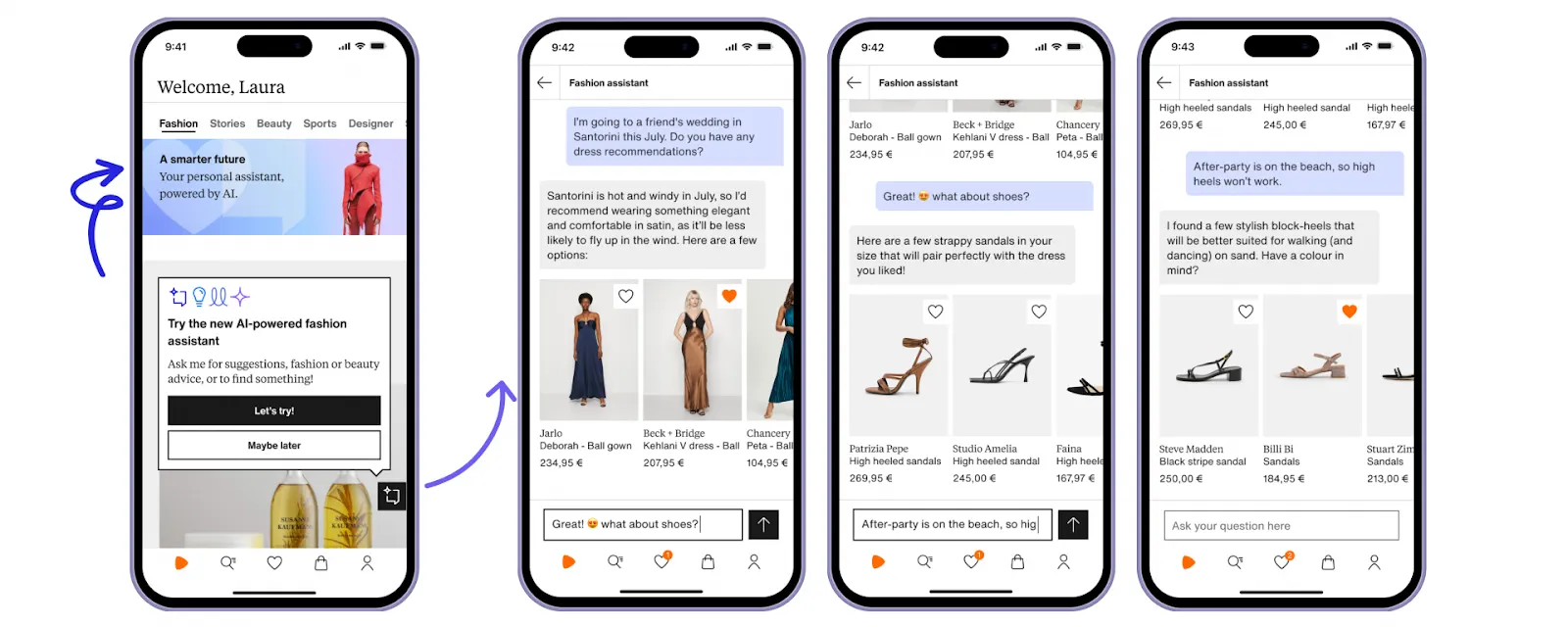
Shoppers are asking, not typing
Rewrite product pages as answers to real customer questions; add structured FAQs to every category page
AI is shopping on their behalf
Audit every product attribute for completeness; implement schema markup so AI agents can read and buy from your catalog
The chatbot finally got smart
Deploy a catalog-trained chatbot; feed it your top 50 support tickets so it handles real objections
"Made locally" is now a conversion trigger
Add origin details above the fold on product pages; frame limited inventory as curation, not scarcity
The expert took the influencer's job
Build 3 to 5 long-term expert partnerships around co-creation, not one-off endorsements
The checkout page is becoming optional
Treat your product feed as a storefront; every field, spec, and policy needs to be machine-readable
The thumb scroll replaced the search bar
Remove everything above the fold on mobile that isn't the image, headline, price, or CTA
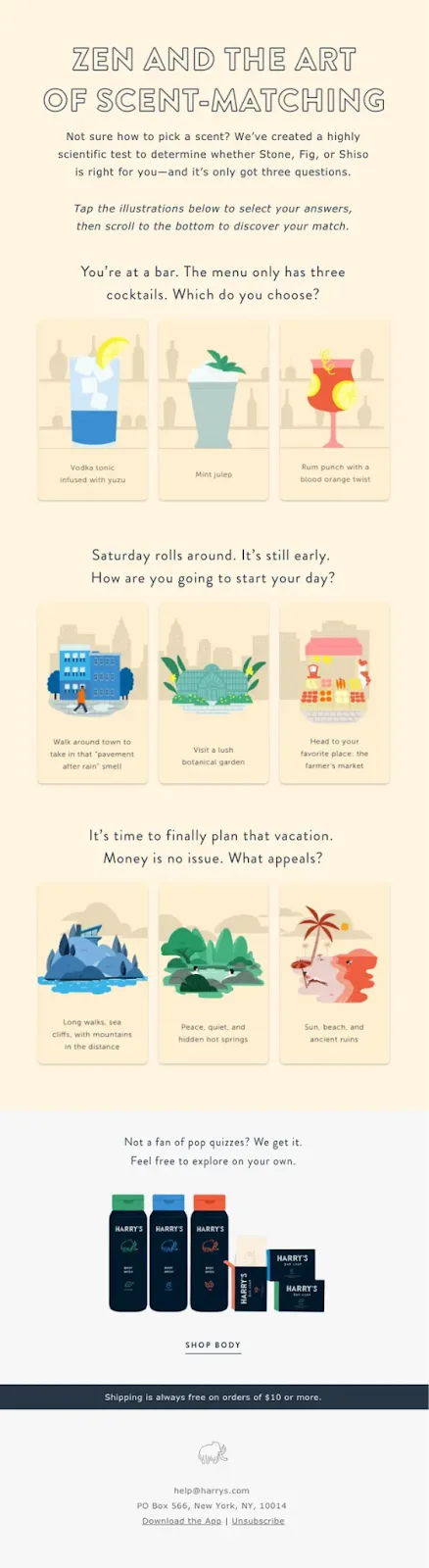
Customers will tell you what they want — if you ask
Add a 3 to 5 question preference quiz to your post-abandonment email sequence
Imperfection is outselling polish
Give founders and team members permission to create raw content; measure it against campaign creative
The community became the sales team
Build identity-matched testimonials on product pages; tie loyalty programs to community participation
TikTok Shop became a storefront
Set up TikTok Shop; run one live shopping event per month and track conversion against email
Omnichannel had a backend problem
Audit whether your POS, eCommerce platform, and CRM share real-time data or still operate in silos
Shoppers want to see it before they buy it
Test a 3D viewer or AR feature in your highest-return product category first
1. Shoppers Are Not Searching Anymore, They Are Asking Questions
For decades, people typed short, awkward fragments into search bars and hoped for the best. That era is ending faster than anyone predicted.
When OpenAI launched shopping research inside ChatGPT in November 2025, it crystallized something that had been building quietly: people now talk to search the way they talk to a knowledgeable friend.
Instead of typing "wool duvet," someone asks: "What kind of wool duvet works best if I overheat at night and live somewhere humid?"
What this means for your brand:
AI does not think in keywords. It thinks in terms of intent, context, problems, and outcomes.
Product pages and blog content built around stiff keyword phrases are becoming invisible to AI-driven discovery.
According to Adobe Digital Insights, traffic from AI engines to retail sites grew 4,700% year-on-year as of July 2025.
The brands winning right now write content that answers real customer questions, not content stuffed with search terms.
What to do now:
Audit your top 20 product pages and rewrite descriptions as answers to natural-language questions — starting with highly persuasive product descriptions that speak to intent, not just features.
Add a structured FAQ section to every major category and product landing page.
Build blog content around "problem-first" queries: "best running shoe for flat feet and long distances" rather than "running shoes."
2. Agentic Commerce, AI That Shops For You
This one sounds like science fiction right up until the moment it does not. Agentic commerce refers to AI systems that do not just suggest products but actively research, compare, negotiate, and complete purchases on behalf of a customer.
No checkout page required. No browsing required. The agent handles it.
In September 2025, Google introduced the Agent Payments Protocol (AP2), an open standard that lets AI shopping agents complete transactions inside a conversation. Shortly after, ChatGPT began rolling out Instant Checkout.
These are not experiments. They are infrastructure.
What the numbers say:
Nearly one in three US shoppers say they have already used ChatGPT to assist a purchase decision, according to Akeneo's 2025 consumer research.
About one-third of consumers say they would let AI make a purchase entirely on their behalf.
Exploding Topics data shows that search interest in "AI agent" tripled in a single year.
What this means for your brand:
You are no longer only marketing to humans. You are marketing to AI algorithms that evaluate your catalog on behalf of humans.
If your product data is incomplete, inconsistently structured, or not machine-readable, AI agents skip you.
Product title optimization, attributes, specifications, shipping policies, return policies, and pricing all need to be structured so an algorithm can parse them instantly.
What to do now:
Conduct a product data audit: are attributes complete, consistent, and specific?
Implement schema markup across all product pages.
Explore agentic checkout integrations as they become available on your platform.
3. AI Shopping Assistants Customers Actually Love
Not every brand can integrate with Google's AP2 tomorrow. But every brand can deploy a smarter onsite assistant today, and the conversion numbers make a compelling argument for doing so urgently.
eCommerce sites using conversational AI see conversion rates jump by 20 to 70%, according to industry benchmarks.
Purchases complete 47% faster when assisted by AI than without it.
The key difference between a good AI assistant and the chatbot graveyard of 2019 is depth. Today's assistants are trained specifically on a brand's own catalog, reviews, and knowledge base.
What a well-trained assistant can do:
Answer "which foam type works for an RV bed?" with a specific product recommendation and the reason behind it.
Handle size, fit, compatibility, and care questions without escalating to a human.
Upsell and cross-sell based on what the shopper has already told the assistant they need.
Reduce returns by helping customers choose correctly the first time.
What to do now:
Evaluate AI assistant tools that train on your specific product catalog, not generic retail data.
Feed the assistant your most common support tickets — these are the questions it needs to answer well.
A/B test the assistant placement: product pages typically outperform homepage placement for conversion impact.
⚠️
Is your store winning in 2026 or still optimized for 2022?
Product discovery – barriers that prevent shoppers from finding items
Category/collection pages – improvements that drive deeper product exploration
Product page – what to optimize to convert 2–3x more buyers
Cart – ways to ease hesitation and speed up purchase decisions
“The report was deep and super insightful. Can’t believe it’s free.”
Logan Christopher CEO, Empire Herbs
4. The Quiet Shift Toward Local, Limited, and Reliable
Nobody put "tariff uncertainty" on their 2025 trend bingo card, and yet here we are, watching it reshape buying behavior in ways that discount strategies simply cannot address.
Volatile supply chains and economic unpredictability have made reliability a genuine differentiator.
More brands are moving toward limited inventory drops, tighter production runs, and transparent sourcing, not because it sounds virtuous, but because shoppers are actively rewarding it.
What recent data shows:
A growing segment of buyers now pays a clear premium for domestic manufacturing, local sourcing, and transparent supply chains, particularly in home goods, wellness, food, and apparel. Brands that add simple origin details to product pages, "Crafted in Texas" or "Assembled domestically," see meaningful drops in bounce rate and increases in time-on-page.
What this means for your brand:
"Support local" has graduated from a feel-good slogan to a genuine buying trigger.
Limited drops work especially well when paired with a countdown timer — they no longer feel like scarcity, they feel curated and intentional.
Shoppers in volatile markets trust stable, rooted, transparent brands. That trust converts even when wallets tighten.
What to do now:
Add origin and sourcing details to product pages for every relevant SKU.
Frame limited inventory as intentional curation, not a supply problem.
Highlight domestic manufacturing or local sourcing in your above-the-fold copy wherever it applies.
5. Experts Are the New Influencers
The influencer playbook that worked brilliantly from 2016 to 2022 is showing its age. Polished faces reading sponsored scripts no longer move shoppers the way they once did.
Recent consumer trust surveys show that people are more than three times as likely to purchase when a product is backed by a verified expert rather than a generic influencer.
When expert-led products launch, conversion rates consistently outperform standard launches by 30 to 50%.
A real example worth studying:
Lulu and Georgia built a trade program that partners directly with architects, interior designers, stagers, and realtors. These professionals source furniture at reduced rates for real projects, so the brand's products appear in actual homes, real listings, and genuine design portfolios. The result is not just visibility. It is credibility in context.
Why this matters for AI-driven discovery:
When shoppers ask AI-specific questions about materials, performance, and longevity, AI surfaces brands backed by real expertise.
Expert authority gives your brand depth that algorithms can understand and recommend with confidence.
What to do now:
Identify 3 to 5 credible experts in your category who use or could authentically endorse your products.
Structure a formal partnership around co-creation, not just endorsement — content, product development input, or educational resources.
Feature expert credentials on product pages and in category landing content.
6. Chat-to-Checkout: The Storefront Becomes Optional
The traditional eCommerce funnel assumes a customer discovers a product, visits a page, adds it to a cart, and navigates through checkout.
Each of those steps is a friction point. Each friction point loses people, and if you have ever wondered why shoppers add to cart but do not buy, friction is almost always the answer.
Chat-to-checkout collapses the entire funnel into a single conversation.
In 2025, Google's AP2 and ChatGPT's Instant Checkout made it possible to move from "tell me what you recommend" to "payment confirmed" without ever loading a product page. Early data from sites using conversational AI tools shows 20 to 40% conversion boosts.
What changes for brands:
The cart may no longer be the center of your conversion strategy.
Brands that optimize for conversation-first purchasing will capture customers who never visit their website at all.
What to do now:
Treat your product feed as a conversion asset, not a backend necessity. Every field matters.
Monitor and participate in emerging agentic commerce platforms as they open to brands.
Start thinking in conversation flows, not just page flows.
7. Design for Swipes, Not Search Bars
Mobile commerce now accounts for approximately 59% of global retail eCommerce sales. For a fast-growing segment of shoppers, the phone is not a device they use to shop. It is the store.
These shoppers do not browse category menus or use search bars.
They scroll until something stops their thumb. The decision loop is visual, emotional, and instant.
What swipe-generation shoppers respond to:
Vivid product images that communicate value in under two seconds
Tappable product cards with price and key benefit visible without clicking through
Horizontal scroll carousels for related products
Short-form video embedded directly on product pages
Fast-loading pages — Google's own data shows a 1-to-3-second load time increase raises bounce probability by 32%
What to do now:
Run your top 10 product pages through Google PageSpeed Insights on mobile.
Test horizontal scroll carousels against grid layouts for category pages.
Add short-form video to your three highest-traffic product pages and measure time-on-page impact.
Remove any elements above the fold on mobile that are not the product image, headline, price, or CTA.
8. Zero-Party Data: From Lost Carts to Real Intelligence
Third-party cookies are fading. Tracking is eroding. And the most valuable data in eCommerce right now is the kind of customers hand you directly, willingly, because you asked nicely and gave them something useful in return. That is zero-party data.
When someone abandons a cart, most brands send a generic "you forgot something" email. Smarter brands send a three-question quiz: "What stopped you? What were you looking for?
What matters most to you?" The answers are gold.
What the results look like:
Quizzes embedded in post-abandonment emails reduce bounce rates and increase conversion and lifetime value.
Personalized product recommendations based on self-declared preferences outperform behavioral recommendations because the shopper told you what they want right now, not what they browsed last Tuesday.
What to do now:
Add a 3 to 5-question preference quiz to your post-abandonment email sequence.
Embed a product-matching quiz on category pages for complex or high-consideration products.
Use quiz responses to build dynamic segments, then send content and offers that match those segments precisely.
⚠️
Is your store winning in 2026 or still optimized for 2022?
Product discovery – barriers that prevent shoppers from finding items
Category/collection pages – improvements that drive deeper product exploration
Product page – what to optimize to convert 2–3x more buyers
Cart – ways to ease hesitation and speed up purchase decisions
“The report was deep and super insightful. Can’t believe it’s free.”
Logan Christopher CEO, Empire Herbs
9. Authenticity Is Outselling Perfection
Here is an uncomfortable truth that the data keeps confirming: at the precise moment AI has made it easier than ever to produce flawless visuals and perfect copy, audiences are quietly falling out of love with polish.
The content driving the most replies, saves, and eventual purchases often looks slightly off-script. Not glamorous. Not over-produced. Real.
This is not accidental — it connects directly to the psychological triggers that actually move shoppers to buy, and authenticity sits near the top of that list.
Why imperfection converts:
AI-generated content floods every feed. Shoppers have developed a sharper radar for what feels manufactured versus what feels genuine.
When a founder talks honestly about something that went wrong, or a customer shares an unfiltered experience, it cuts through in a way that no campaign creative can replicate.
Emotional connection drives behavior. When an audience feels seen, they do not just engage — they click, explore, and buy.
What to do now:
Give your brand's real people — founders, team members, long-term customers — permission to create raw content without heavy brand oversight.
Share one "behind the scenes" or "here is what we got wrong" story per month across social channels and measure engagement against polished campaign content.
Loosen your brand voice guidelines enough to let human personality show through, especially in email and social copy.
10. Community at the Core of Conversion
Social proof used to mean a star rating and a handful of reviews. In 2026, the brands growing fastest are building something considerably more powerful: communities where people who share an identity gather around a brand and, in doing so, sell it to each other.
What this looks like in practice:
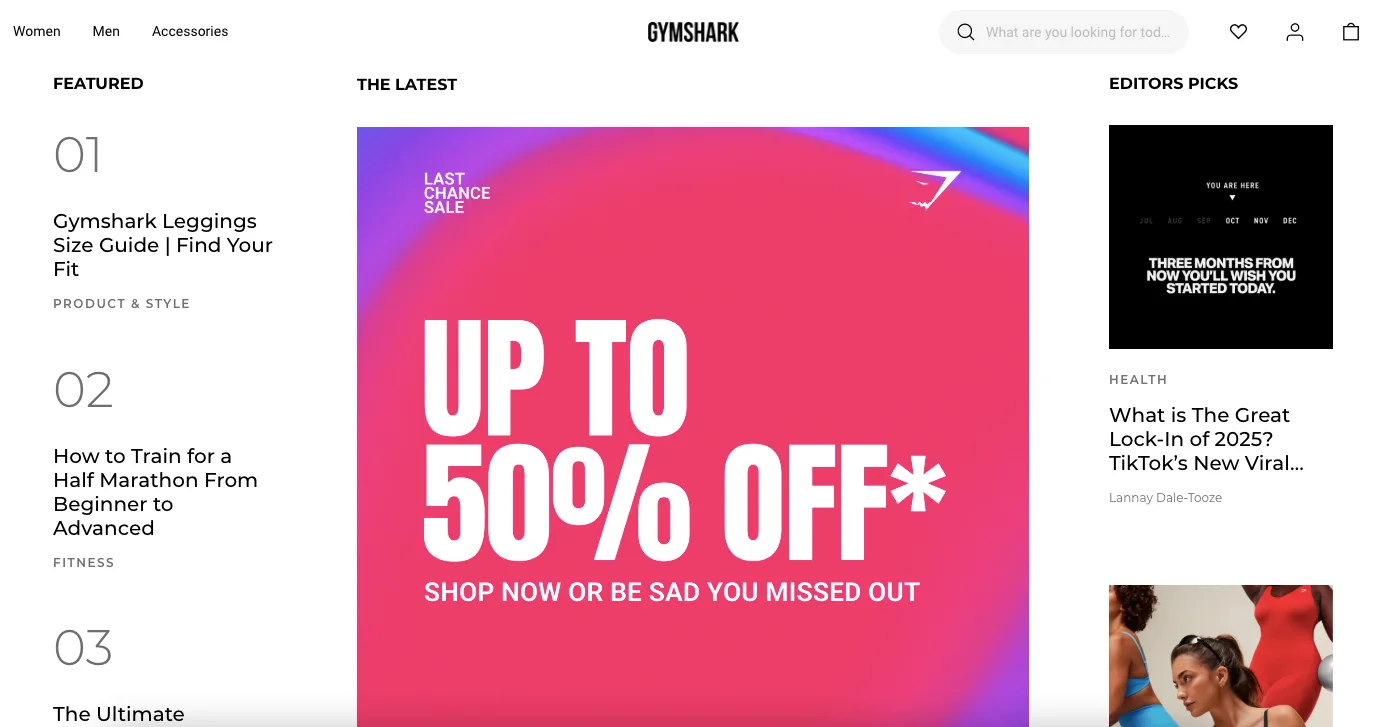
Gymshark Central cross-links rich content, community engagement, contests, loyalty programs, and email marketing into one ecosystem.
Brands using micro-communities — targeting specific sub-groups like "late-evening runners" or "minimalist home decorators" — generate identity-matched testimonials that read as: "if people exactly like me trust this, I probably should too."
Online product drops with exclusive community access create urgency without discounting.
What to do now:
Identify your two or three most active customer sub-groups and create a dedicated content space or channel for each.
Use AI to surface and display identity-matched testimonials on product pages.
Link your loyalty program to community participation, not just purchasing.
11. TikTok Shop, Livestream Shopping, and Social Commerce at Scale
Social commerce now accounts for roughly 7% of total global eCommerce, and the trajectory is steep. TikTok Shop sales grew 108% in 2025, reaching $15.82 billion.
TikTok alone is projected to have nearly 40 million buyers in the US in 2026. Among Gen Z shoppers, 43% begin their product search on TikTok — ahead of both Google and Amazon.
Livestream shopping tells a parallel story. In China it generates approximately $1.2 trillion in sales annually. The US is earlier on that curve but moving fast: livestream buyers grew more than 21% year-on-year in 2025, and industry estimates put the US market's CAGR at 47% through 2030.
What this means for your brand:
Social platforms are no longer traffic sources. They are storefronts with checkout built in.
In-app checkout on TikTok, Instagram, and YouTube means a customer can discover and buy without leaving their feed.
Live shopping events combining entertainment, product education, and exclusive offers convert at rates that static product pages cannot match.
What to do now:
Set up TikTok Shop if you sell products that photograph or demonstrate well visually — which is most products.
Run one live shopping event per month as a test. Track conversion rates against your email and paid channels.
Invest in TikTok-native analytics tools to understand which creator content is actually driving purchases, not just views.
12. Unified Commerce: One Backend for Everything
If omnichannel was the goal of the last decade, unified commerce is what actually makes it work. Omnichannel told brands to be present everywhere: in-store, online, mobile, social.
Unified commerce tells brands to connect all those channels to a single backend where inventory, pricing, customer history, and analytics are identical across every touchpoint.
The difference matters enormously in practice.
When a customer buys in-store and returns online, unified commerce makes that transaction seamless.
When inventory updates in a warehouse, it updates instantly across every sales channel.
When a customer service agent pulls up an account, they see the complete purchase history from every channel.
According to Shopify, brands that adopt a unified commerce approach increase annual sales by an average of nearly 9%.
Yet only about half of retailers with annual revenue over $150 million currently have the technology to fully support unified commerce goals, per a Bain and Company survey.
What to do now:
Audit whether your POS, eCommerce platform, warehouse management system, and CRM share real-time data or operate in silos.
Identify the single highest-friction handoff between channels in your customer journey and fix that first.
Evaluate unified commerce platforms that consolidate your tech stack rather than adding more point solutions.
13. AR, Visual Search, and Immersive Commerce
Static product photography once felt like the gold standard. In 2026, it increasingly feels like the minimum.
Augmented reality try-ons, 3D product viewers, and visual search are moving from premium features to baseline expectations, particularly for categories where fit, scale, color, and texture matter.
What the data shows:
SEMrush predicts that AI-powered visual search will overtake traditional text search as the preferred discovery method by 2028.
49% of Americans say AI recommendations, including visual AI discovery, already influence what they buy.
Brands using AR try-on features report meaningful reductions in return rates because customers choose more accurately the first time
Practical applications by category:
Apparel: Virtual try-on using a phone camera
Furniture and home goods: AR placement — see the sofa in your living room before buying
Beauty: Shade matching and virtual makeup application
Electronics: 3D product views that let customers inspect every angle
What to do now:
Start with one product category where returns are highest and test a 3D viewer or AR feature.
Enable visual search on your site so customers can upload photos and find matching products.
Optimize product images for visual AI systems: multiple angles, clean backgrounds, and accurate color representation.
Conclusion
The 2026 eCommerce landscape rewards brands that listen before they sell. Whether through AI agents, expert partnerships, community micro-groups, or honest storytelling, the thread running through every trend is the same: trust converts. Build for that, and the growth will follow.
The one thing every trend has in common
Read through every trend above and one pattern keeps surfacing: the brands that win are the ones making buying feel less like a transaction and more like a conversation. Whether that conversation happens through an AI agent completing a purchase, a community of micro-runners sharing gear recommendations, or a founder talking honestly about a product failure on TikTok — the mechanism is the same. Trust forms. Conversion follows. If 2026 has a single strategic mandate for eCommerce brands, it is this: earn trust before you ask for the sale, and make the sale feel like a natural conclusion to the relationship, not an interruption of it.
FAQs
What are the biggest eCommerce trends in 2026?
The most significant shifts in 2026 center on conversational and agentic AI changing how people discover and purchase products, TikTok Shop and livestream commerce maturing into major sales channels,
zero-party data replacing third-party tracking, and unified commerce infrastructure becoming a competitive necessity rather than a luxury.
What is agentic commerce, and why does it matter?
Agentic commerce refers to AI systems that autonomously research, compare, and complete purchases on behalf of a customer without requiring them to visit a product page or checkout.
It matters because brands now need to optimize their product data for AI agents as much as for human shoppers.
Adobe Digital Insights recorded a 4,700% year-on-year increase in AI-driven retail site traffic as of July 2025.
How is TikTok Shop changing eCommerce in 2026?
TikTok Shop reached $15.82 billion in US sales in 2025, growing 108% year-on-year.
With nearly 40 million projected US buyers in 2026 and 43% of Gen Z starting product searches on TikTok, the platform has graduated from a marketing channel to a primary storefront for a large segment of shoppers.
What is zero-party data, and how does it improve conversion?
Zero-party data is information customers share voluntarily, through quizzes, preference polls, and direct questions.
Unlike behavioral tracking data, it reflects what a shopper wants right now. Brands using post-abandonment quizzes and preference-matching tools report lower bounce rates, higher conversion rates, and stronger lifetime value than those relying purely on behavioral signals.
What is unified commerce, and how is it different from omnichannel?
Omnichannel means being present across multiple channels. Unified commerce means all those channels share a single backend system for inventory, pricing, customer data, and analytics.
The practical difference is that unified commerce eliminates the data silos that cause inconsistent experiences and operational inefficiencies.
Shopify reports that adopting unified commerce increases annual sales by nearly 9% on average.
How should brands prepare for visual and AR commerce in 2026?
Brands should start by enabling visual search, optimizing product images with multiple angles and accurate color rendering, and testing 3D viewers or AR placement tools in their highest-return product categories.
SEMrush predicts that AI-powered visual search will become the dominant discovery method by 2028, which means early movers have a genuine first-mover window right now.
How does conversational search change SEO for eCommerce brands?
When AI answers a shopper's question directly instead of serving a list of links, traditional keyword optimization loses much of its value.
Brands need to restructure content around natural-language questions, add structured FAQs to every major page, and build problem-first content that answers the specific questions their customers ask.
Adobe's data showing 4,700% growth in AI-driven retail traffic suggests this shift is not coming it is already underway.
Subscribe for more articles like this!
Thank you - we'll see you in your inbox soon!
Oops! Something went wrong while submitting the form.
Read by 5000+ ecommerce store owners
Subscribe for more articles like this!
Thank you - we'll see you in your inbox soon!
Oops! Something went wrong while submitting the form.


.png)






.avif)
.svg)


.svg)

.svg)
.svg)
