Here’s something that happens with remarkable regularity in eCommerce: a brand discovers that another brand is running a tiered discount: spend $50, save 10%; spend $75, save 20%; spend $100, save 30%, and decides, quite reasonably, to do the same thing.
They copy the structure, plug in their own numbers, and wait for revenue to climb.
It usually doesn’t
The truth is that tiered discounts are not templates. They are strategic levers, and whether they increase your average order value or erode your margins depends entirely on how deliberately you design them.
This post will show you how to design them deliberately.
Before you set a single threshold, you need a way to evaluate what you're building. Think of this as your pre-flight checklist: five questions that determine whether a tiered discount is likely to lift AOV, drive repeat purchases, or simply hand out margin for nothing.
The Dimension
Self-Audit Question
Score (1-5)
Incentive Alignment
Are thresholds based on current AOV + 15%?
/5
Cognitive Ease
Can a shopper "get" the tiers in <3 seconds?
/5
Momentum Nudges
Is there a progress bar or "You're $X away" message?
/5
AOV Stretch
Is the reward jump between tiers compelling?
/5
Retention Intent
Does it build a habit or just a one-time splurge?
/5
⚠️
Why is your conversion rate not as high as it should be?
Product discovery – barriers that prevent shoppers from finding items
Category/collection pages – improvements that drive deeper product exploration
Product page – what to optimize to convert 2–3x more buyers
Cart – ways to ease hesitation and speed up purchase decisions
“The report was deep and super insightful. Can’t believe it’s free.”
Logan Christopher CEO, Empire Herbs
The 4 Essential eCommerce Tiered Discount Structures
Not all tiered discounts work the same way. Before you choose thresholds, you need to choose a structure because the right structure depends entirely on what you sell and what behavior you're trying to create.
A. Volume-Based Tiers
Buy more units, pay less per unit. This is the classic wholesale logic applied to DTC. It works best for consumable or repeat-purchase products where customers have a natural reason to stock up. The math is simple: lower the per-unit cost at higher quantities, and buying in bulk becomes the rational choice.
B. Spend-Based Thresholds
Hit a cart total, unlock a discount. This is the most common structure in eCommerce email and on-site promotions. It works best when you want to grow average cart size across a broad product catalog. It gives customers the freedom to choose what they add, so long as they spend enough to qualify.
C. Bundle-Based Tiers
Buy a defined group of products, receive a better price.
This structure is ideal for cross-selling and product discovery; it creates natural pairings and nudges customers toward categories they might not have browsed.
The design challenge is making the bundles feel curated rather than arbitrary.
D. Progressive Unlocks
Rewards increase dynamically as customers move through tiers, often visualized as a progress bar or gamified experience.
This structure drives the highest engagement when it's built into a loyalty program or subscription flow because the tier itself becomes part of the product experience.
When to Use Tiered Discounts (and When to Walk Away)
Tiered discounts aren't universally beneficial. They're a good idea in some contexts and a quietly damaging one in others. Here is a practical decision guide.
Use tiered discounts when:
Customers purchase frequently. The more repeat purchase occasions you have, the more chances you have to build the habit of spending at or above the threshold.
Demand is elastic. If a well-designed offer can genuinely bring forward a purchase or expand a cart, there's real uplift available.
Shipping costs are low or free above a threshold. The discount combines with the shipping incentive to make the spend increase feel like an obvious win.
Avoid tiered discounts when:
Your margins are already thin. Stacking a 20% discount onto a low-margin product line is a fast road to a very clean-looking loss.
Most purchases are one-time or highly considered. Tiering works on volume and repeat behavior; for products that customers buy once every five years, the mechanism doesn't have much to grip.
Your return rate is high. A discount that inflates cart size also inflates the returns that follow. If customers habitually buy to hit a threshold and then return the extras, you're paying for the discount and absorbing the return cost.
How to Design Tiers That Actually Work
Theory is pleasant. This is the part where it becomes operational.
Step 1: Define your margin floor
Before you set any threshold, know the minimum margin you can absorb across the promoted products. This is your ceiling on discount depth — every tier needs to stay above it.
Expert Note: The Discount Dead-Zone. If your AOV is $60 and you set your first discount tier at $50, you are giving away margin to customers who were already going to buy. Scientific tiered discounting requires setting your first threshold 10-20% ABOVE your current AOV to ensure the discount is "earned" by an increase in cart size.
Step 2: Set a target AOV increase
Decide what percentage increase in average order value you're designing toward. A 15–20% AOV lift is a reasonable target for a well-constructed spend-based tier. Your thresholds should be calibrated to make that lift achievable with modest cart additions.
Step 3: Choose meaningful thresholds
Your first tier should sit 10–20% above your current AOV — close enough to be achievable, far enough to actually move the number. Each subsequent tier should require a stretch that feels proportionate to the reward. If the gap between tier two and tier three is large, the reward needs to match.
Step 4: Create strong value jumps
The perceived difference between tier one and tier three should feel significant. If tier one is 10% off and tier three is 15% off, the incremental appeal of reaching tier three is weak. If tier one is 10% off and tier three is 25% off (plus free shipping or a gift), the top tier becomes aspirational.
Step 5: Make the next tier feel achievable
At every point in the customer journey, the gap to the next tier should look small. Progress indicators, "you're $X away" messages, and product recommendations calibrated to the shortfall all do this job. The moment the next tier looks out of reach, engagement drops.
These five brands don't just run tiered discounts. Each one illustrates a distinct strategic approach and maps clearly onto the framework above.
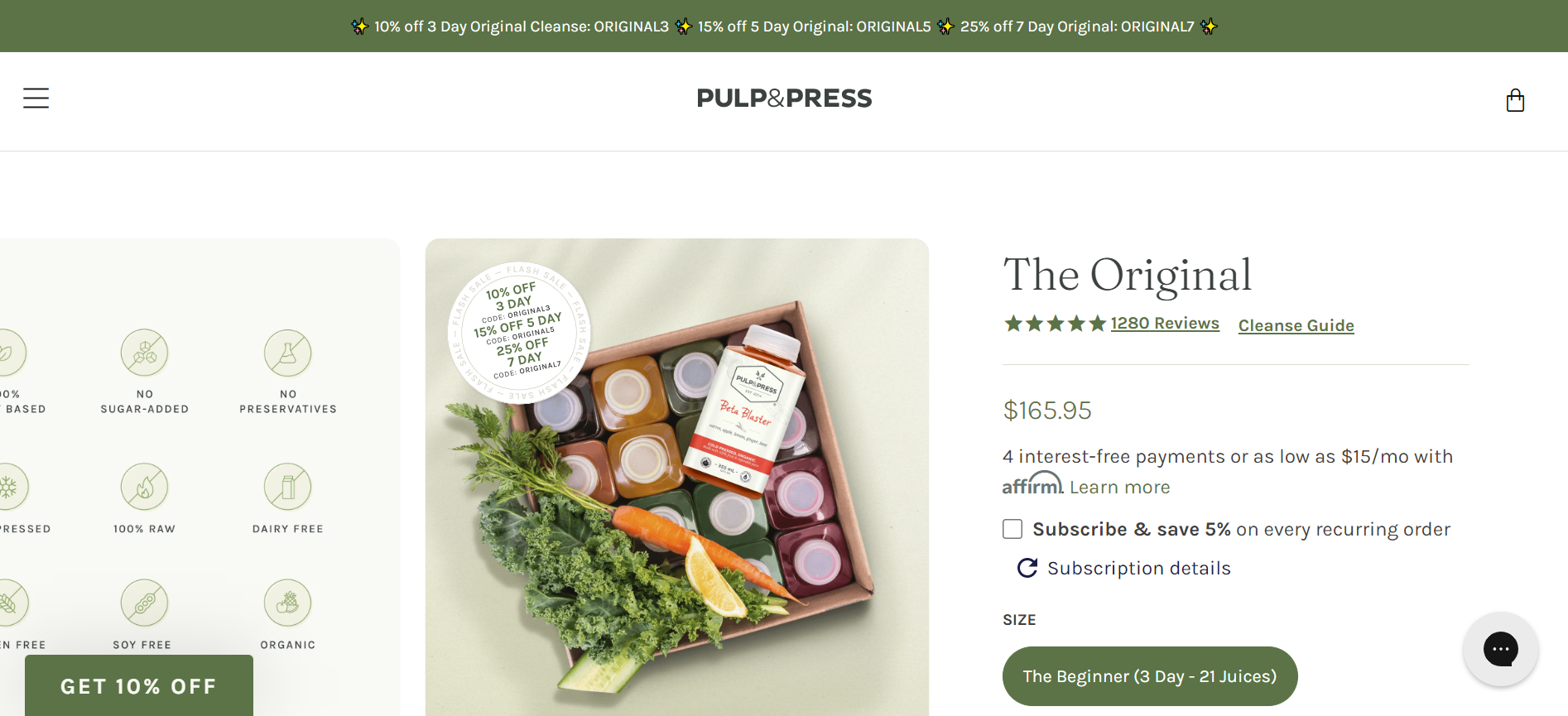
1. The Habit Formation Model — Pulp & Press
Pulp & Press sells organic juice cleanses. Their tiered discount structure uses a price per unit anchor— 10% off a 3-day pack, 15% off a 5-day, 25% off a 7-day, is designed not to move a transaction, but to move a behavior.
What they did: Each tier is named and framed as a stage of a personal journey (Beginner, Intermediate, Total Makeover), with the discount increasing in step with the commitment. The structure is displayed prominently on the landing page, with outcome-driven descriptions for each pack rather than product-led ones.
Which dimensions it nails: Retention Intent, Cognitive Ease, Momentum Nudges.
Why it works: The tiers function as a progression map. A customer who completes the 3-day pack and sees the 7-day as the logical next step is being nudged toward a habit — not just a larger cart. The discount is the incentive; the narrative is the hook. Trust signals (dairy-free, no added sugar, gluten-free) reduce the perceived risk of committing to the higher tier. Also, this type of tiered pricing works because it forces the customer to do "Value-Per-Ounce" math, making the higher tier the only rational choice.
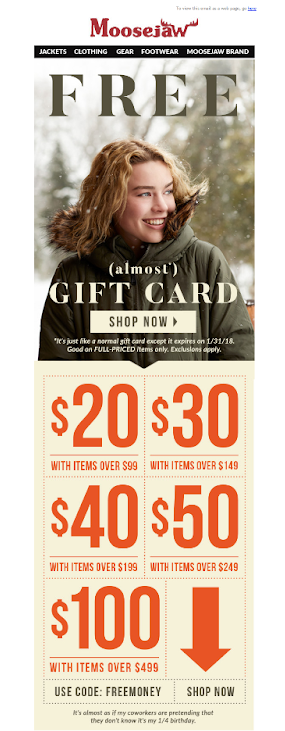
2. The Alternative Incentive Model — Moosejaw
Moosejaw, the outdoor retailer, replaces percentage discounts with gift cards as tier rewards. Spend $100, get a $10 gift card. Spend $150, get a $20 gift card.
What they did: Rather than reducing the price of the current transaction, Moosejaw structures the reward as a future purchase incentive. The gift card is only valuable if the customer comes back.
Which dimensions it nails: Retention Intent, AOV Stretch, and Incentive Alignment.
Why it works: A gift card as a tier reward is structurally different from a discount. A discount reduces the margin now. A gift card creates a future visit, and that visit typically results in spending above the card's face value. The format also avoids training customers to expect price reductions, which is one of the long-term costs of heavy discounting.
This same "pay less by committing early" logic is what makes pre-order pricing work — see our pre-order campaign playbook for real examples.
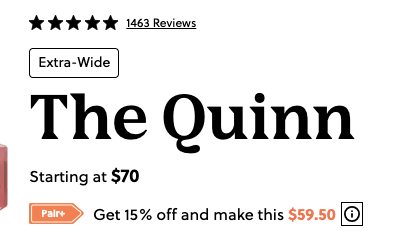
3. The Loyalty-Integrated Model — Pair Eyewear
Pair Eyewear builds its tiered discount directly into its loyalty program, creating a visible price gap between what members and non-members pay at each tier.
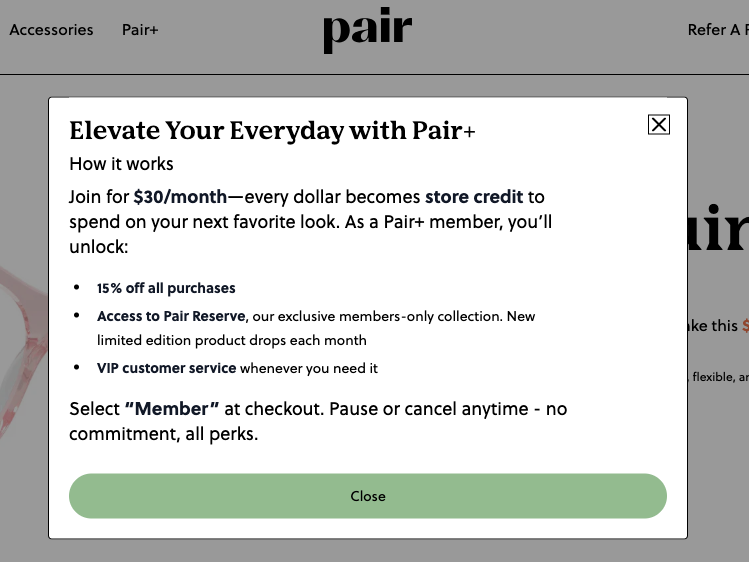
What they did: Tier pricing is displayed with both the standard price and the member price shown side by side. The modal that explains the loyalty terms is clear, easy to close, and present at the moment of purchase consideration. Joining the loyalty program is positioned as the obvious rational move.
Which dimensions it nails: Incentive Alignment, Cognitive Ease, Retention Intent.
Why it works: The visual contrast between member and non-member pricing does the persuasion work without requiring any copy. It makes the value of membership immediately legible.
The clarity of terms — easy cancellation, transparent benefits — removes the friction that typically kills loyalty program adoption.
Why visitors don’t trust your store within 3 seconds
Why shoppers can’t find what they’re ready to buy
What’s stopping 2-3x more shoppers from clicking “Add to Cart”
Where buyers hesitate right before purchase
Why high-intent shoppers still drop off
“The report was deep and super insightful. Can’t believe it’s free.”
Logan Christopher CEO, Empire Herbs
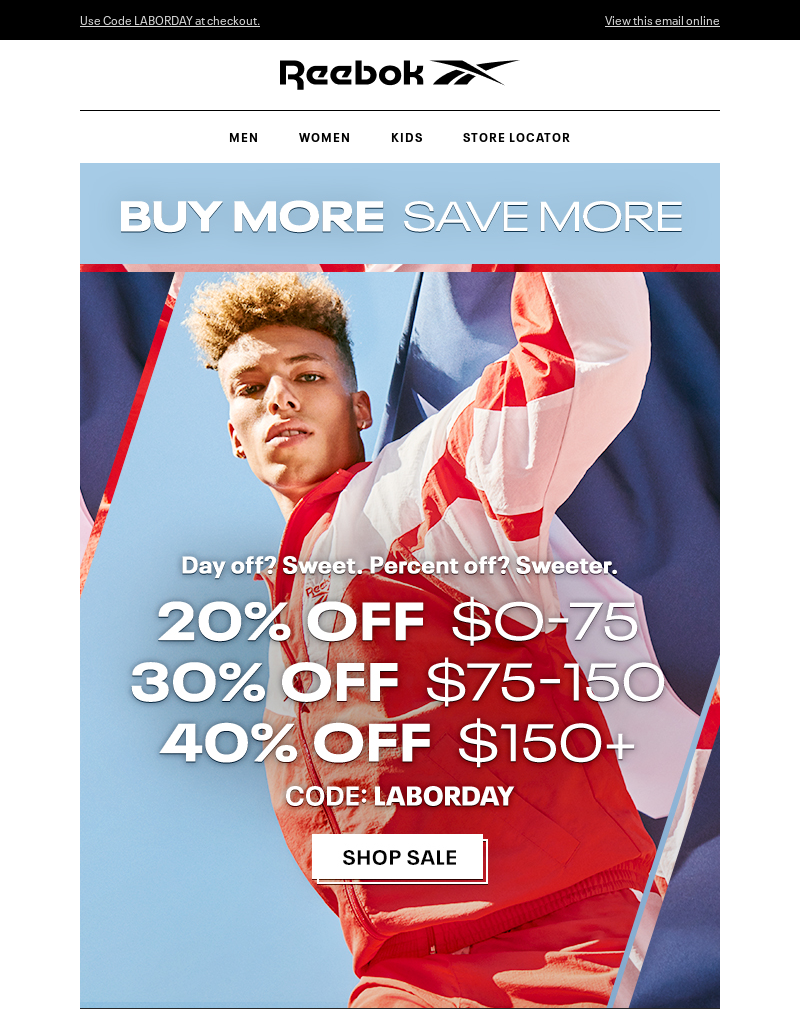
4. The Visual Momentum Model — Reebok
Reebok's tiered discount UX is built around a visible, linear progression that shows customers exactly where they are relative to each tier.
What they did: The tier structure is displayed as a clear visual bar or table, showing $X, save Y% with the customer's current cart value positioned against it. Promo codes are placed immediately below the final tier, so the action to claim the reward is never more than one step away.
Which dimensions does it nail: Momentum Nudges, Cognitive Ease, AOV Stretch.
Why it works: The progress visualization converts the discount structure from information into experience. Customers don't just read that they could save 30%, they see how close they are to it. That proximity is motivating in a way that a static percentage figure is not. The placement of the promo code anchors the completion action.
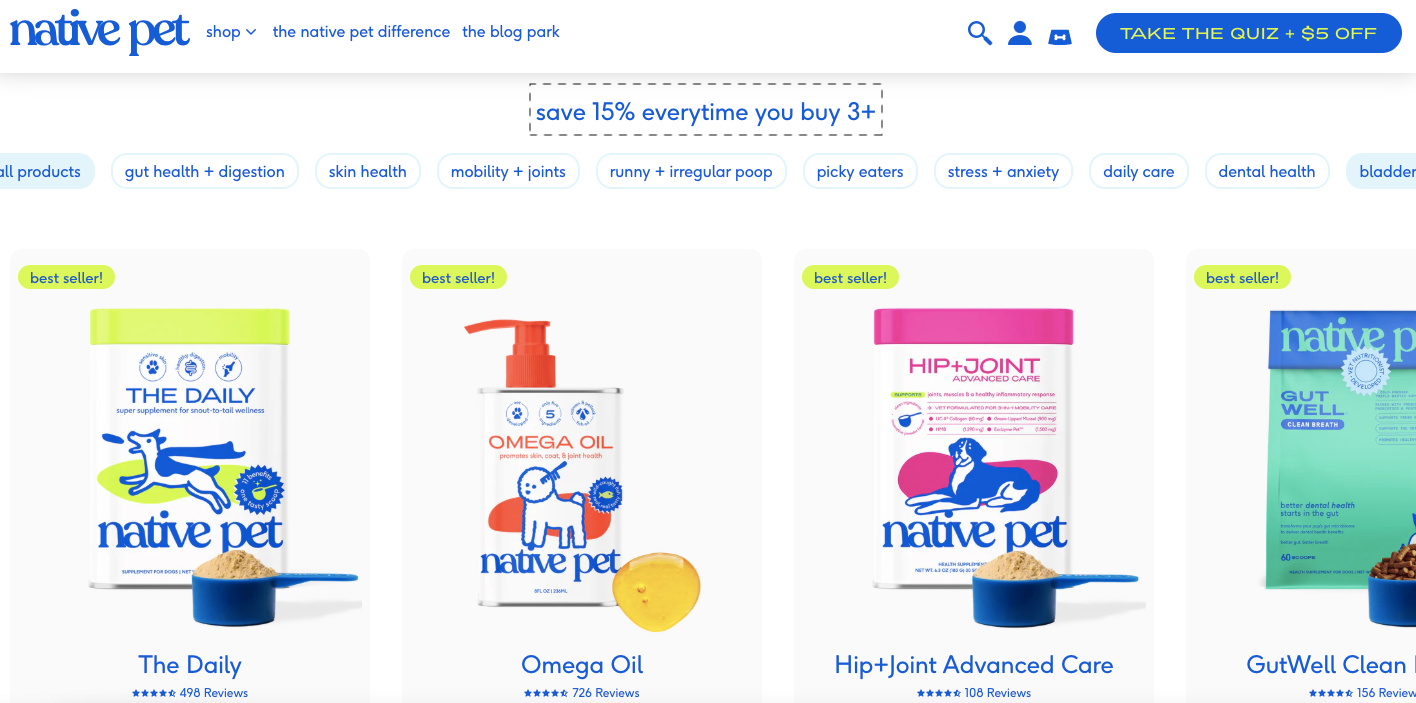
5. The Bulk/Repeat Purchase Model — Native Pet
Native Pet sells consumable pet supplements. Their tiered pricing rewards volume purchases with per-unit savings, and their product discovery UX is built to support the logic of buying more.
What they did: Radio-button selectors organized by pet concern are placed directly beneath the tiered pricing callout, making it easy for a customer who is already considering a higher-volume purchase to find the right product quickly. Bestsellers are prominently featured, reducing decision fatigue for first-time visitors.
Which dimensions it nails: Incentive Alignment, Momentum Nudges, Retention Intent.
Why it works: For consumable products, the per-unit argument is genuinely compelling — customers know they'll use the product, so buying more at a lower cost-per-unit is obviously rational. The product discovery UX reduces the effort of acting on that logic. The bestseller prioritization gives first-time visitors social proof exactly when they need it.
How to Evaluate Any Tiered Discount with This Framework
The Dimension
Self-Audit Question
Score (1-5)
Incentive Alignment
Are thresholds based on current AOV + 15%?
/5
Cognitive Ease
Can a shopper "get" the tiers in <3 seconds?
/5
Momentum Nudges
Is there a progress bar or "You're $X away" message?
/5
AOV Stretch
Is the reward jump between tiers compelling?
/5
Retention Intent
Does it build a habit or just a one-time splurge?
/5
The five dimensions described above aren't just a design tool. They're a diagnostic. Run any tiered discount, your own or a competitor's, through these five questions, and you'll quickly see where it's strong and where it leaks.
Take Pulp & Press as an illustration. On Incentive Alignment, it scores well; the thresholds are tied to specific pack formats, so there's no artificially low floor. On Cognitive Ease, it scores well in three tiers, clearly labeled, instantly legible. On Momentum Nudges, it scores moderately; the structure is visible, but there's no dynamic progress indicator. On AOV Stretch, the top-tier discount (25%) is meaningful relative to the entry tier (10%). On Retention Intent, it scores very highly; the entire structure is designed to build a clean habit.
Now apply the same checklist to your own current promotion. Where are the gaps? That is where the redesign starts.
From Tactic to System
Tiered discounts are one of the more powerful tools available to an eCommerce operator.
They can lift AOV, build repeat purchase habits, fund a loyalty program, and drive product discovery — sometimes all at once. But only if they're designed with intent.
The brands that get the most from tiered discounting are not the ones who've found the best percentage to put in tier three.
They're the ones who've thought carefully about what behavior they want to create, built thresholds that are honest about their margins, and invested in the UX that makes the next tier feel achievable.
Treat tiered discounts as templates, and they'll perform like templates: average, interchangeable, and forgettable.
Treat them as strategic levers, and they become some of the highest-leverage mechanics in your entire growth stack.
Test deliberately. Measure AOV lift and repeat purchase rate, not just conversion.
And revisit the framework whenever a promotion underperforms, the answer is usually visible in one of the five dimensions.
Subscribe for more articles like this!
Thank you - we'll see you in your inbox soon!
Oops! Something went wrong while submitting the form.
Read by 5000+ ecommerce store owners
Subscribe for more articles like this!
Thank you - we'll see you in your inbox soon!
Oops! Something went wrong while submitting the form.




.avif)
.svg)


.svg)

.svg)
.svg)
