Conversion Optimization
19 Most Expensive CRO Mistakes We Keep Seeing
August 8, 2024



While many brands treat conversion rate optimization as a series of quick fixes or a simple quest for more traffic, true success lies in a continuous, data-driven cycle of experimentation.
This post breaks down 19 costly mistakes: from over-relying on A/B testing to ignoring qualitative user feedback, and provides a strategic roadmap to help you turn friction into seamless customer journeys.
Maximizing your website's conversion rate is a high-stakes endeavor where even minor oversights can lead to significant revenue loss.
By identifying common CRO mistakes such as relying on gut feeling over data or ignoring mobile user experience, you can implement strategic fixes that turn missed opportunities into consistent growth.
A lot of companies think they don’t need CRO as they are already doing something about SEO.
Here’s the fundamental difference: SEO is about ranking higher on search results so that when someone searches a related keyword, your website is among the first ones to be visible.
This helps in getting more people to your website. In a nutshell, SEO has to do with increasing your traffic.
At its core, CRO is not about increasing traffic. It is about getting more out of your existing traffic.
It is about making all the necessary improvements on your website so that a larger percentage of your visitors actually complete the purchase that got them to your website in the first place.
The primary way to do this would be to consider a combined CRO and SEO strategy that can nurture existing traffic and also target new visitors—here’s what we’d recommend:
Target high-intent keywords—while “cat food in Georgia” will set you up against many competitors, optimizing for “cat food near me” will certainly give your CRO efforts an upward push
Align on-site content with meta descriptions & tags—while this is more applicable for landing pages, how you describe your site in your paid ads need to reflect across your whole store
Make your product content as original as possible—this is one of the ways to cut out the noise from competitors and stand apart both in terms of SEO and CRO efforts
While A/B testing is definitely a very important component, there is more to CRO than just that.
A/B testing ensures that the changes made on a website are based on data, not on opinions or whims.
But there are other crucial stages that must precede and follow A/B testing. Any optimization exercise must begin with funnel analytics.
Based on that, you formulate hypotheses which are then A/B tested. The hypotheses that work are implemented. The ones that don’t work are re-formulated and subjected to further testing and so on.
What’s being tested is as important as the testing itself. Testing alone isn’t optimization.
To prevent your business from relying only on A/B testing as a CRO initiative, here’s what you’ll need to:
Research to arrive at a hypothesis—look at what action a certain part of your storefront is receiving as clicks, views and scrolls, which can further help you arrive at the elements that may need tweaking and finally zero down on one aspect to define the problem with it and propose a new solution
Define customer behavior clearly—since your CRO efforts are essentially about altering current customer behavior to nudge them towards newer actions, you’ll have to define which elements / actions are doing positively and which are performing negatively and why
Glean insights from heatmaps & surveys—these methods are crucial in catching customer behavior unfold across key junctures like on the product page, in the cart, post purchase, and look at aspects that enable shoppers to continue on their journey and points of friction that make them fall off
Further Reading: 153 A/B Testing Ideas for eCommerce (Homepage, PDP, Cart, Checkout)
CRO is a process, it is not a one-time tactic.
The essence of conversion rate optimization is to continuously improve the website’s experience based on data & experimentation.
It is not about changing the color of the CTA button or adding a spin-the-wheel feature.
It is about systematically learning why your visitors are buying (or not buying) and then optimizing your website based on what you learn.
The tactics must be guided by an overarching framework and not be implemented in isolation.
To make your core CRO efforts successful, your process has to touch the following steps & reiterate where required:
Set a clear goal for testing—are you looking to convert more first-time visitors? Or are you trying to optimize micro-conversions so that more macro ones eventually happen as well? Or is the intent to figure out if the multiple touchpoints of customer service are working well or not?
Test the parts that can potentially convert the best—be it the pages that have consistently worked or the sections on a page that seem to have received more clicks on others - sometimes it’s about optimizing what’s already working well instead of reinventing the wheel
Ensure you’re aiming for statistically significant results—statistical significance reveals if the multiple variants have enough difference to drive conversions - the higher the % of statistical significance, the more confidently you can rely on the rest results
Further Reading: Why Are People Adding To Cart But Not Buying?
Different hypotheses are A/B tested and the ones that succeed are implemented.
But the ones that fail serve a purpose as well. You get to learn what doesn’t work.
It’s like when Edison found 10000 ways not to make a bulb to arrive at one correct way to do so.
Every failed test is an opportunity to learn.
You come back with a different hypothesis that is to be tested further. As mentioned before, it’s a cyclical process of continuous improvement.
The way to not make this core CRO error is to look out at some crucial elements across failed tests and see how you can apply the learnings in subsequent ones:
Figure out improved variations (than the ones you’re testing)—the point is to look at the variants of your failed tests, measure them against customer behavior and see how they can be made better for later tests
Test on fewer pages / more limited audience—while most CRO agencies won’t agree with this, we think after a failed test, a segmented A/B test is what you need - start with larger segments that naturally get better traffic but move towards smaller segments slowly
Compare positive & negative A/B test results—since false negatives and positives are very real in eCommerce A/B testing, checking for skews will help you set more reasonable expectations from future tests
Every eCommerce business is a unique brand. The opportunities for optimization, therefore, are unique.
Make sure you keep in mind what is your company about, what is the story you are trying to tell, what is your brand identity, what your goals are etc. while optimizing your website.
You should focus on core principles (e.g. the Call to Action button must stand out from the rest of the page) rather than on tactics (e.g. change the CTA button from green to red).

For starters, many eCommerce businesses believe if they test the most high intent elements across their site (including CTAs, hero headers and notification bars,) they’ll be able to improve conversions—since this is untrue, you’ll have to look deeper into:
Business goals that are making the test important—for example, while one A/B test may be the need of the hour to help retain return customers, another may target selling more during the peak season
Choose your key testing metrics carefully—without this, the results of the test may seem misleading because you won’t know which metrics to draw insights and inferences from - for example, if you’re an eCommerce brand selling durable products, you may want to consider cart abandonment rate more than a new nutrition brand, which may want to study a metric like scroll depth
The questions the test is supposed to answer—these include what are you trying to find out from the test? Where on your site do you need to conduct the test (and why)? When should the test run that it brings you the most relevant results? Which segment of your audience do you want to study through the test?
Further Reading: The Founder's Guide to Customer Journey Map (eCommerce)
It’s tempting to think the hard numbers will reveal everything that you need to improve about your optimization efforts.
After all, visitor count, click-through rate, length of visitor session have all been such ever-present phrases, that CRO can be confused to be only this kind of numerical data.
However, nothing can be farther from the truth.
When CRO is flatly confused to be numbers generated by heatmaps, A/B tests and surveys, another crucial aspect is missed out on.
Qualitative data.
The asking of relevant questions and trying to go beneath patterns and trends in numbers represented by quantitative data.
Why one-time buyers don’t come back, why the checkout process is difficult and why many customers abandon their cart all point towards qualitative data.
And CRO is about quantitative and qualitative data working hand in hand to get a fuller picture on where a business stands, why its customers are behaving in a certain way and what its competitors are able to (or not) achieve & why.
Since your core CRO efforts depend heavily on measuring the right metrics, you can’t afford to go wrong with this—instead do the following to help identify the right metrics:
Align with the shopper journey—which stage of the journey and which part of the website you’re running the A/B test on will decide which metric will need to be followed - for example, if you’re running an A/B test on the homepage on non-transactional pieces of content to create trust for TOFu, you may pick a metric like average session time to be measured
Track metrics that will inform next steps—while conversion rate is a universal metric tracked across A/B tests, there may be more nuanced metrics like returning customer rate and page views per visit that will offer a more wholesome “big picture” about customer experience and preference
Give vanity metrics a miss—while the whole world may be raving about metrics like bounce rate and time on page, the truth is as an eCommerce brand, you get to know nothing new about how your shoppers are engaging with your site in depth from these metrics
Further Reading: Seasoned eCommerce Leaders Predict CRO Trends for 2024
Think how Amazon features a “save for later” option.
Or Sephora offers rewards to join its online community.
Or even how Staples ensures its on-site navigation is top-notch.
Each of these attributes is worth aspiring for, but copying them in isolation or without a strategy is NOT conversion rate optimization.
We realize how easy it is to think that a brand attracted more customers just because it changed the way its CTA buttons looked and worked.
While it may be misleading to copy big brand website elements onto your own eStore, it’s not a bad idea to study why they do what they do.
Big brand case studies can offer you a glimpse into how established entities strategize to make their eCommerce brands agile enough to change with the times.
An excellent example would be how Sephora introduced omnichannel marketing into their mix, thus uplifting how customers experience the brand across online and offline channels.
The goals of no two eCommerce brands will ever be exactly the same at any given point of time, even if they operate within the confines of the same category - which means if you have to veer away from the mistake of copying, you’ll have to:
Get a sense of when to A/B test—while established businesses run A/B tests through the year, usually within intervals of a month or little more, you may want to do it when you launch a new product, announce an anniversary sale or actively start cause marketing
Learn more about your audience—this is essential to segment and then to create a sample - whether you’re going to run the test on audiences from different countries, or those who buy products from different price ranges, what motivates them will be crucial for setting up effective A/B tests
Prioritize what you need to test—creating a framework that sets up elements to be tested one by one is a good idea - just make sure you make the prioritization process dynamic because each test reveals fresh data that can alter the next set of priorities
FURTHER READING: Marketing Lessons from 10 Great DTC Brands
Experiments are a part and parcel of conversion rate optimization.
However, it’s a myth that core CRO is ONLY about experimenting with multiple elements, all at once.
Testing experiments for conversion rate optimization also need to factor in the type of tests that will work best for a specific scenario.
Usually, neither split testing nor multivariate testing works well in isolation - while the former takes lesser time, the latter helps you glimpse at a greater number of changes.
Thorough and constant testing (and not whimsical experiments) is often considered to be the key for effective CRO.
How to avoid this CRO mistake:
Consider the scenario you’re testing under—is it to make your product page information structure more appealing for both engagement and conversions? Is it to optimize your category pages that also happen to be landing pages that get your ad traffic to visit your site? Based on the scenario, you should be able to zero in on elements that can most closely influence shopper behavior on the action you want them to take
Learn what makes a “bad” A/B test—this includes making comparisons between split tests conducted at disparate times (one during Christmas & one during a winter sale in summer,) making shoppers’ behavior be motivated by different factors
Figure which are the most critical pages & features—align with the customer journey to see which pages are considered most likely before a purchase, email sign-up or membership decision - also look at which aspects on these pages most need to be optimized in order for the shopper to act in a desired manner
FURTHER READING: eCommerce CRO: Which Pages to Optimize First? Data-Driven Answers
All businesses perform to the tunes of certain biases.
And the true role of CRO is to offer insights that can help the business move beyond these biases.
For example, a business might be operating on a bias that their true target audience is pension-earning 70 year olds (a conservatism bias), while tests might be revealing completely different data.
In real-time practice often, CRO is used to confirm already-formed opinions instead of transcending them to find deeper truths.
Analyze secondary metrics—while the winning variant is often chosen on the basis of the primary metric, secondary metrics represent those variants that could also potentially be tested for better results - if you’ve run tests with multiple variants, check out how all of them have performed and not just the one that won
Perform a breakdown analysis—going by audience segments, devices and what worked with old vs. new users independently to see if it makes sense to apply the winning variant across your audiences
Consider other influencing factors—it’s easy to see a great result and reconfirm your original hypothesis even if it’s followed, but we recommend listing all the internal and external factors that could be affecting a test’s results positively or negatively - this could be about seasonality, competitors running better deals and for longer etc.
FURTHER READING: Data beyond Heatmaps — that top eCommerce brands track
CRO is about reducing points of friction that make shoppers drop off, improving persuaders that inspire people to visit your eStore and enhancing hooks that make them engage and convert.
However, it is commonly believed that CRO always results in dramatic changes.
Let’s say if a company pleasantly finds that their sales have gone up by 40% with their initial CRO efforts, they may believe this will happen every time.
The crux of the problem here isn’t the belief in magic, but the avoidance that the probability of every test achieving 100% success is super low.
The way out is not to stop believing in CRO but to understand that CRO offers crucial information that then needs to be heeded timely and worked upon without pre-existing biases.
CRO is an iterative process that is constantly trying to match fine-tuned optimization efforts against a dynamic, ever-changing business environment.
Focus on quicker wins (alongside tests that are more complex)—it’s easy to overlook the elements that are already performing well enough and put all your focus on that which doesn’t seem to be working at all - instead look for quicker tests & wins around optimizing your site for mobile, improving your product descriptions and taking out distractions from the checkout process
Develop a thorough eCommerce CRO checklist—since it’s easy to get lost on the appearances of what competing websites are doing well, it’s best you create a checklist of your own - at Convertcart we suggest that a checklist covers the following crucial aspects across design elements and high intent pages
Deepen your analysis skills with each test—this includes getting a better hang of the CRO tool you use and how it tracks & measures results, getting a sense of how long you need to run a subsequent test given the nature of your audience sample etc.
FURTHER READING:
i. 33 Founders/Industry Experts Share eCommerce CRO Best Practices
ii. What Design Mistakes Kill eCommerce Sales (And Proven Ways To Fix Them)
Suggested CRO features are usually reviewed by internal teams. And we have witnessed many eCommerce brands make this CRO mistake.
They roll out features and don’t know if the feature ‘really’ works.
On the other hand, website visitors take around 0.05 seconds to determine whether they’ll stay or leave.
Therefore, it’s important to understand what they like and dislike about your website layout and content.
To understand ‘real’ website feedback, you can implement the following core CRO strategies:
Enable a page-specific design and usability feedback form to open as a side widget or a pop-up—it can either be triggered when a visitor is going to close the webpage or when their browsing session passes a certain time limit
Monitor website analytics to understand how users engage with your brand—assess the following to get a grasp of what shoppers out there are thinking / doing, check:
Also read: eCommerce Conversion Rate Audit Checklist (And 24 Ideas For Improving Conversions)
Your team ran a CRO experiment. It either brought in or failed to show any significant results.
You moved on and tried something different.
Now, you have a new team. And they seem to be recommending the same strategies.
When we speak to eCommerce brands about what CRO strategies they have previously used to yield results, most provide vague information.
In this instance, having detailed documentation can be helpful.
On the other hand, your CRO team can also look back and see what did and what didn’t work.
Your team can tweak some of the experiments or try a new tangent to bring more conversions.
Create a baseline based on current performance—it’s a good idea to keep historical data as reference as well as the current metrics you’re using to measure performance - depending on these you can create a benchmark for the test to be undertaken
Record the insights you glean from competitor research & data—since these will help you create a hypothesis alongside your website’s past data, take a look at elements competitors may be testing often and contextualize it to the time of the year, offers being put up etc.
Track how data will be collected for a specific test—figure out specifics like metrics to be considered (and what they already seem to be indicating about your website performance) as well as analytics tools that offer a peek into user behavioral flow and conversion paths
Further Reading: eCommerce Website Optimization: 28 Improvements You Can Make Today
Most of the time when we speak with eCommerce brands, we get the usual question,
‘Why should we hire a CRO specialist? We already have an in-house team’.
When eCommerce brands go through a redesign or a site refresh, internal teams put most of their time and effort into research and design.
They are left with no time left to test and ensure their designs are actually performing well.
An external specialist can provide genuine feedback and analysis regarding the new site designs.
While your internal team might be implementing CRO strategies, there are a number of reasons how a specialist can help:
Use a specialist to get a fresh perspective—internal teams consistently look at the same web pages. In this case, it’s easy to overlook obvious CRO opportunities
Lean on a CRO specialist to offer your products in a new way—in-house teams are often well-versed in the product’s USPs and end up writing copy in the same format or using too much jargon
Use external specialists as additional resources—often in-house teams aren’t equipped to handle a store with growing traffic or demand and need an extra set of hands
Most of the time, eCommerce brands hand off their CRO activities to a third party and only want to see the results and how much revenue was generated.
This is a common CRO mistake across industries.
However, some agencies implement standard strategies across industries and gain insignificant results.
Asking the right questions will help you avoid this core CRO challenge.
Here are some questions we recommend:
Further Reading: Hiring a CRO agency: 12 key considerations (and expert advice)
Many brands treat CRO as a purely visual exercise, but the sturdiest sales funnel will collapse if the underlying tech is shaky.
Factors negatively affecting conversion rate optimization often start at the code level.
If your site feels "janky," users won't trust you with their credit card. Here are some technical CRO issues you may have missed, along with how to fix them.
Google has replaced First Input Delay with Interaction to Next Paint (INP), and for good reason. INP measures how "snappy" your site feels. If a customer clicks a "Size" selector and nothing happens for 500 milliseconds, they assume the site is broken. High INP scores are major CRO problems, as they create a laggy experience that frustrates high-intent shoppers.
The Fix: Optimize your JavaScript execution. Every click should trigger an immediate visual response, even if it’s just a loading spinner.
There is nothing more jarring than a Flash of Original Content (FOOC). This happens when your A/B testing tool loads slowly, showing the user the original page for a split second before "flicking" to the test variation.
It makes your site look glitchy and alerts users that they are being experimented on, which undermines the authenticity of your data.
The Fix: To eliminate the "flicker," install an anti-flicker snippet near the top of your website's <head> to temporarily hide the page until the experiment variant is ready to load. For a more permanent fix, switch to server-side testing, which handles the page changes before they ever reach the user's browser.
According to recent data, mobile users have a 40% higher bounce rate than desktop users when navigation elements are spaced closer than 48 pixels.
One of the most common conversion rate optimization issues is designing for a mouse but selling to a thumb. On mobile, "touch targets" (buttons and links) need to be large and spaced out. If your "Add to Cart" button is too close to the "Size Guide" link, users will accidentally misclick, get frustrated, and bounce.
The Solution: To fix mobile touch-target failures, ensure all clickable elements are at least 48x48 pixels and separated by at least 8 pixels of white space.
This simple adjustment prevents "fat-finger" errors and ensures your mobile shoppers can navigate your store without the frustration of accidental clicks.
The checkout is the "final mile" of your marathon. This is where the most common CRO issues occur. If you make it hard for customers to pay you, they won't.
Forcing a user to create an account is like asking for a second date before the first one is over. It’s one of the primary CRO issues that leads to cart abandonment.
The Solution: Always offer a "Guest Checkout" option. You can ask them to create an account after the purchase is complete.

48% of shoppers abandon their carts because extra costs (shipping, tax, fees) were too high or unexpected. Be transparent early.
Nothing kills a conversion faster than a "Shipping & Handling" fee that only appears on the very last screen.
The Solution: To eliminate abandonment due to hidden costs, display a shipping calculator or a "free shipping" threshold directly on the product page or in the slide-out cart. Providing an all-in "estimated total" before the final checkout step builds immediate trust and prevents shoppers from bouncing due to last-minute price shocks.
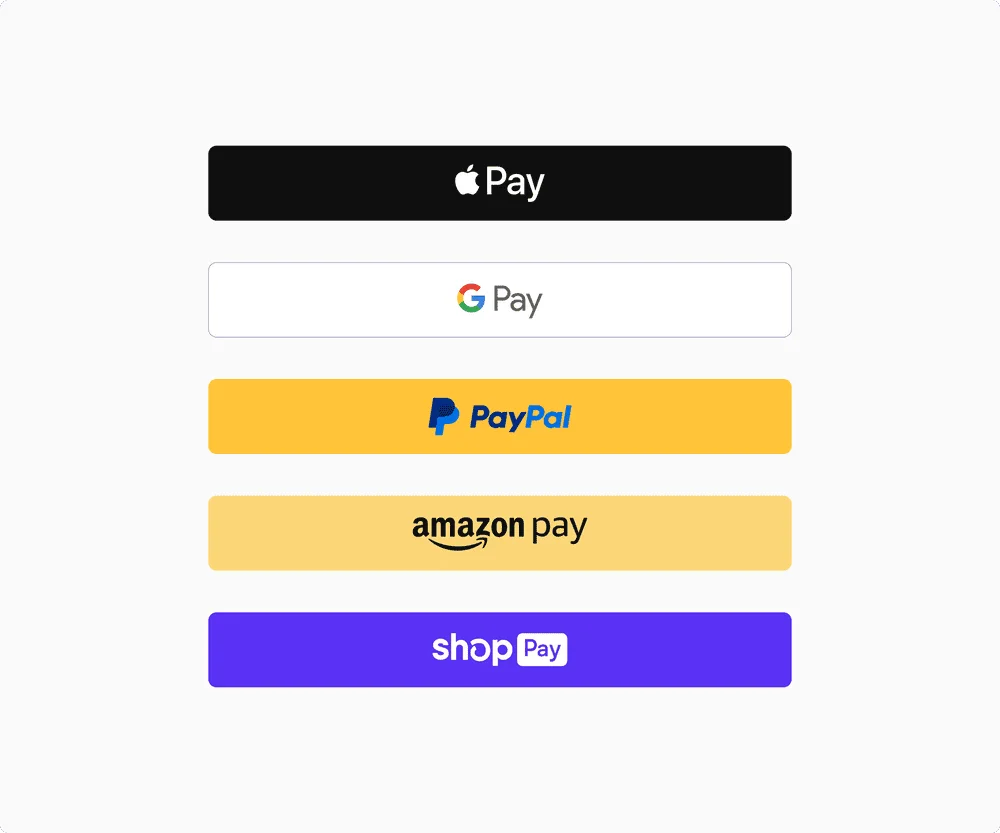
In 2026, manual card entry is a chore. Failing to offer Apple Pay, Google Pay, or Shop Pay is a major conversion-rate optimization mistake. These "one-tap" methods can increase checkout speed by up to 60%.
The Solution: Integrate "one-tap" buttons like Apple Pay, Google Pay, or Shop Pay at the top of your checkout page or directly on product pages to bypass lengthy form-filling. By reducing the checkout process to a simple biometric scan or click, you remove the manual friction that often leads to high-intent mobile abandonment.
If you don't have a plan, you aren't optimizing, you're just moving furniture.
If you only look at "Final Sales," you’re missing the bigger picture. Common cro mistakes and how to avoid them often involve looking at the steps before the sale. Did they use the search bar? Did they view the size chart?
The Solution: Track micro-conversions to see where the "leak" in your funnel actually is.
Testing random ideas is a waste of traffic. You need a CRO roadmap that prioritizes tests based on potential impact and ease of implementation. Without a roadmap, you'll end up testing the color of a footer link while your checkout page is crashing.
The Solution: Stop guessing and start prioritizing by building a data-backed roadmap that ranks experiments by potential revenue impact and ease of implementation. This strategic approach ensures you’re solving your biggest bottlenecks first rather than wasting valuable traffic on low-impact, random changes.
Google Analytics tells you what is happening, but it doesn't tell you why. Only looking at numbers is a major cro problem.
The Solution: Use qualitative data heatmaps, session recordings, and post-purchase surveys to understand the "why" behind the bounce.
Your customers are "cross-device" shoppers. They might discover you on Instagram (Mobile), research you at lunch (Work Laptop), and buy later on their iPad (Tablet). If you only optimize for desktop, you’re ignoring the 70% of traffic that starts elsewhere.
The Solution: Adopt a responsive-first testing strategy that ensures every experiment is designed and verified across mobile, tablet, and desktop views simultaneously. By analyzing your data through device-specific segments, you can tailor the user experience to the unique behaviors of each screen size rather than forcing a "one size fits all" layout.
CRO doesn't end at the "Thank You" page. A terrible post-purchase experience (bad tracking, slow shipping, or difficult returns) ensures that the customer never comes back.
Given that it costs 5x more to acquire a new customer than to retain an existing one, neglecting the post-purchase journey is the most expensive mistake you can make.
The Solution: Extend your optimization strategy beyond the "Thank You" page by automating branded tracking updates and personalized post-purchase follow-ups that address shipping concerns before they become complaints.
Turning a one-time buyer into a repeat customer depends on a seamless delivery experience, so treat the post-purchase phase as the first step toward their next conversion.
98% of visitors who visit an eCommerce site—drop off without buying anything.
Why: user experience issues that cause friction for visitors.
And this is the problem Convertcart solves.
We've helped 500+ eCommerce stores (in the US) improve user experience—and 2X their conversions.
How we can help you:
Our conversion experts can audit your site—identify UX issues, and suggest changes to improve conversions.
Subscribe for more articles like this!


Read by 5000+ ecommerce store owners
.svg)


.svg)

.svg)
.svg)
2026 Convertcart, All Rights Reserved
33/1, Castle Street, Ashok Nagar, Bengaluru, India