How Do You Increase Average Revenue Per User on Your eCommerce Store?
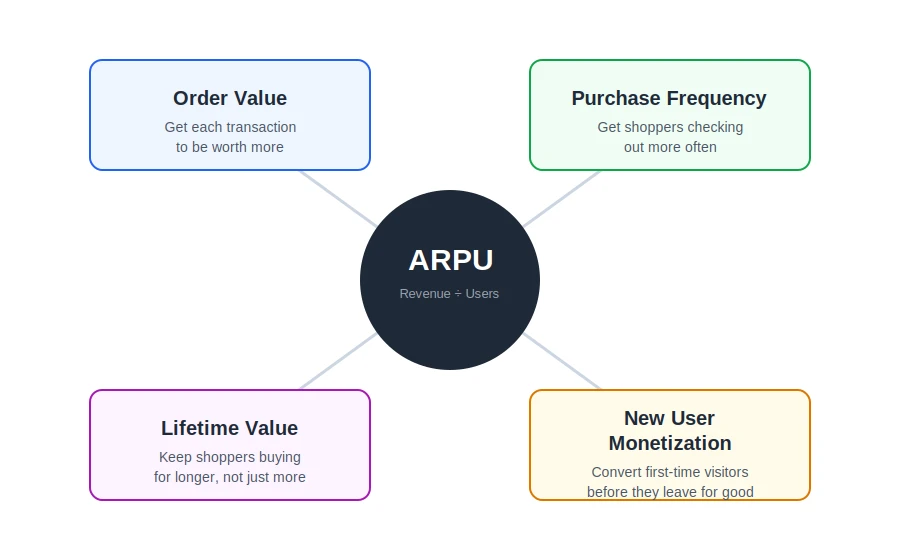
You increase average revenue per user by pulling one of four levers: raising average order value, increasing how often shoppers buy, extending customer lifetime value, or improving how fast new visitors convert on their first visit.
The fastest wins usually come from order value tactics like bundling, cross selling, and free shipping thresholds, since none of them require any extra traffic.
Personalized recommendations and subscriptions take longer to show results, but they tend to compound into the most durable gains over a customer's lifetime.
What if we told you that you could grow revenue without a single new visitor showing up?
That's what average revenue per user actually measures: it’s how much more you can get out of the customers already on your site, instead of paying to bring new ones in.
It's the question Convertcart's conversion team has spent a decade of experience answering for top eCommerce brands.
We have optimized websites for more than 500 eCommerce stores across the US.
Along the way, we have learned which strategies move ARPU and which ones just look good on paper.
And in this piece, we walk you through the framework we use, the eighteen tactics inside it, and five real stores where we put those tactics to work.
But before we dive into the crux of this article, let’s understand how you can calculate average revenue per user and how it’s different from other similar eCommerce metrics.
How to Calculate Average Revenue Per User in eCommerce
Here’s the simple formula to calculate ARPU:
ARPU = total revenue during a period ÷ unique users during that same period
Let’s say a store brought in $500,000 in revenue last quarter from 100,000 unique shoppers. That store's ARPU is $5.
To move that $5 higher, you don't necessarily need more traffic. You need the same people to buy either more or higher value products from your store.
ARPU vs. Revenue Per Visitor vs. AOV vs. CLV
It's easy to get confused between ARPU and a handful of related metrics; let’s understand the nuances before moving further.
Metric
What It Tells You
ARPU
Revenue generated per user during a defined period
Revenue Per Visitor
Revenue generated per website visitor or session
AOV
Revenue generated per completed order
Purchase Frequency
How often a customer purchases
CLV
Value a customer generates over their full relationship with the brand
Now let’s understand the connection between these metrics:
Average order value and purchase frequency are the direct, short-horizon drivers of ARPU.
But improving customer lifecycle value helps you get longer-term results for your ARPU.
Bundling works on a related principle, though it only holds up when the products genuinely belong together, the way a phone case belongs with a phone or batteries belong with a torch.
Upselling and cross-selling follow a similar path inside the cart itself.
Offer a better version of what a shopper already wants, or something closely related to it, and keep the price gap small enough, ideally around sixty percent below whatever is already in the cart, that saying yes requires almost no thought.
Three smaller levers round out order value, and they all lean on the same psychological trick: make the bigger cart feel like the easy choice.
Payment friction: buy now, pay later options make a purchase feel smaller than it actually is, since the cost gets pushed into the future instead of felt today.
Shipping thresholds: set the free-shipping cutoff just above a store's typical order value, so paying for shipping suddenly feels like the worse deal.
Free gift thresholds: set the bar twenty to fifty percent above the usual order value, and make sure the gift is something a shopper would want on its own merits, not stock a store is trying to move.
None of this matters much if a shopper can't tell why the product is worth buying in the first place.
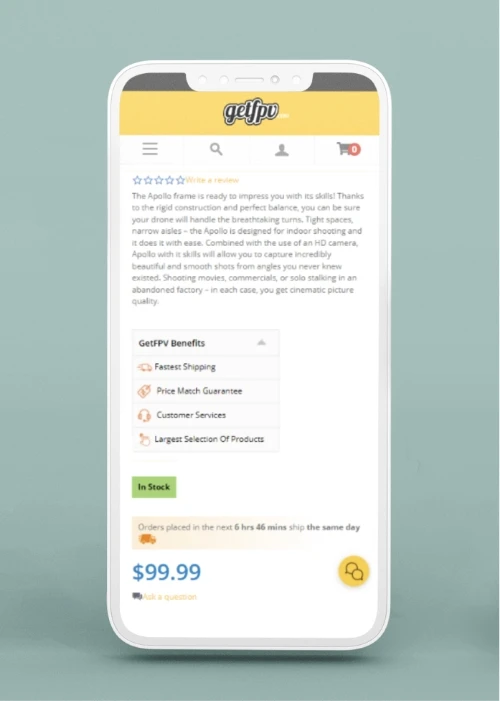
A short, scannable list of benefits sitting just below the buy button, icons rather than paragraphs, makes it easier to justify adding a few extra items instead of just the one someone came for.
It's a small addition to a page, but it's often the difference between a shopper who adds one thing and a shopper who adds three.
2. Purchase Frequency: Get Them to Checkout More Often
Getting an existing customer to buy again is almost always cheaper than finding a new one, though it rarely happens without a nudge.
A coupon on the thank-you page, reinforced by an email a few days later, takes advantage of a shopper's buying momentum instead of waiting for them to think of the brand again unprompted.
Subscriptions push the same idea further by making the repeat purchase the default rather than a decision a customer has to remake every time.
Put the subscription option next to the one-time purchase option, attach a clear discount to it, and recurring revenue stops being the exception.
Loyalty programs work through a different kind of pull. Give a shopper a visible goal, spend a hundred dollars and unlock a thousand points plus a free product, and show them exactly how close they already are.
That sense of nearly arriving somewhere brings people back faster than the reward itself does.
Two more channels round out this lever, and both work between purchases rather than at the moment of one:
Email: segmented, well-timed sequences, new arrivals, customer favorites, expert picks, keep a brand top of mind without waiting for the shopper to think of it first.
Samples: a low-risk way to get someone to try a product they'd never have bought outright. People tend to like what they try, and the full-size version becomes the next order.
Holidays and back-to-school season do something similar at scale, giving a store a built-in reason to re-engage its list on a predictable schedule instead of leaving repeat visits to chance.
3: Customer Lifetime Value: Keep Shoppers Buying For Longer
Lifetime value compounds in a way a single order never can, and the clearest way to move it is relevance.
Recommendations built from past purchases, browsing behavior, or what similar shoppers bought, placed on category pages, product pages, and sparingly in the cart, turn a single purchase into an ongoing relationship without asking a shopper to do any extra work.
The effect takes longer to show up than something like a bundle or a discount, but it's usually the most durable improvement a store can make to this number.
There's a second, less obvious version of the same idea: recommending something for someone other than the shopper.
Suggesting a product for a partner, a child, or a dog taps into a motivation that has nothing to do with personal need, and it multiplies the reasons a customer has to keep coming back to the same store.
4. New User Monetization: Convert First-Time Visitors Before They Leave for Good
A new visitor carries no history, which means a store gets exactly one shot at making that first visit worth something.
Limited-edition products tied to a season or a moment give a first-time shopper a reason to act now instead of filing the idea under maybe, which is usually the same as filing it under never.
Featuring what's new at the top of the homepage works on a related principle, catching first-time visitors who have nothing else anchoring their impression of the brand.
Urgency closes the gap for shoppers still on the fence. Flash sales and countdown clocks work especially well on new visitors, since they have no particular reason yet to assume the brand, or the deal in front of them, will still be there next week.
That is the framework this piece has been building toward.
Let’s now take you behind the scenes of how we helped some stores improve their average revenue per user.
How Convertcart Increased Average Revenue Per User for 5 eCommerce Stores
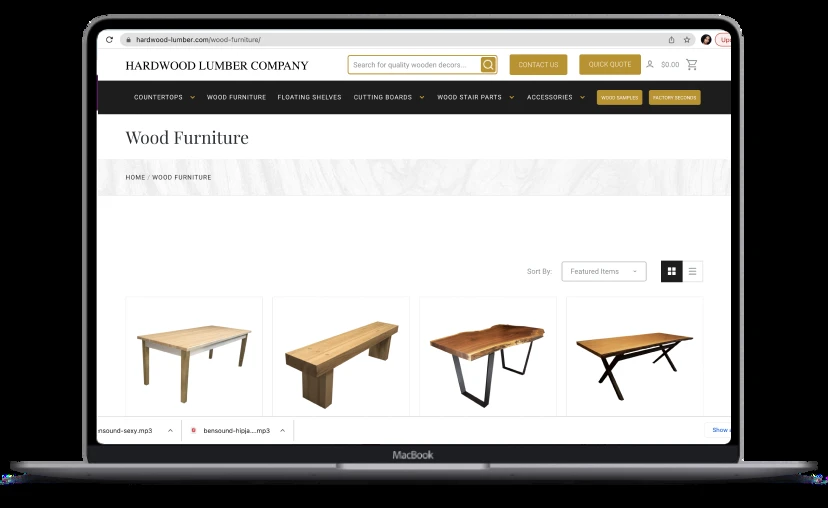
1. Hardwood Lumber: How We Increased Revenue Per Visitor by 22X
Hardwood Lumber's product pages were trying to do far too much at once. There were specs, filters, cross-sells, and trust badges on the same small patch of screen.
This led shoppers to wander off before they ever reached the add-to-cart button. We stripped the page back to whatever mattered at each stage of the decision.
We then layered in product recommendations for the shoppers who were ready to see more. The leaner layout pushed revenue per user up 22X.
And when we added the recommendations on top, revenue per visitor climbed another 3.7X.
Finally, there were fewer distractions and more finished purchases and more revenue from every person who showed up.
4. GetFPV: How We Increased Purchase Frequency and Added $3.4M in Revenue
Now, GetFPV was a store that already had loyal customers. But their customer weren't ordering as often as they could have.
So, we tested FOMO driven messaging around limited stock. We also added a sticky add-to-cart bar that kept a second purchase one tap away instead of a long scroll back up the page.
And here’s what happened: Repeat orders rose 20 percent, and it also added up to 3.4 million dollars in new revenue across 36,068 transactions.
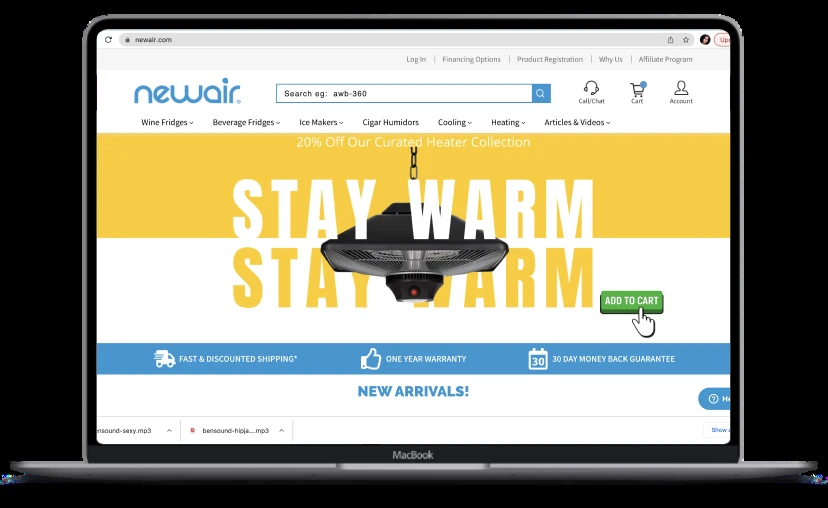
For NewAir, the challenge was a lack of history to build on. So our focus went entirely to that first visit. We made sure the right products showed up fast enough.
This way, the revenue from new users doubled. It's the thinnest data point among the five stores here, but it rounds out the framework nicely.
Average revenue per user isn't only about existing customers spending more. Sometimes it’s about making sure the first visit already counts for something.
Product discovery – barriers that prevent shoppers from finding items
Category/collection pages – improvements that drive deeper product exploration
Product page – what to optimize to convert 2–3x more buyers
Cart – ways to ease hesitation and speed up purchase decisions
“The report was deep and super insightful. Can’t believe it’s free.”
Logan Christopher CEO, Empire Herbs
The Takeaway
Average revenue per user went up for five different brands for five genuinely different reasons.
Every one of those reasons traces back to the same four levers: order value, purchase frequency, lifetime value, and new user monetization.
None of it needed more traffic. It needed more value out of the traffic already showing up.
That's why the whole idea to treat ARPU as a serious metric when you're trying to scale an eCommerce business without scaling ad spend at the same pace.
If you are trying to improve your own ARPU, the honest answer is that it depends on which of these four levers you actually need to pull.
Frequently Asked Questions About Increasing Average Revenue Per User
How Do You Increase ARPU?
You increase ARPU by pulling one of four levers: raising order value, increasing how often shoppers buy, extending how long they stay customers, or converting new visitors faster on their first visit.
Most stores find the fastest early win in order value, through bundling, cross-sells, and thresholds like free shipping or a free gift.
How Do You Improve ARPU Without Increasing Ad Spend?
You improve ARPU by getting more revenue out of the visitors already on your site instead of paying for more of them.
Personalized recommendations, subscriptions, and a cleaner product page all raise revenue per visitor without touching the acquisition budget.
How Do You Increase Revenue Per Visitor?
Revenue per visitor usually rises fastest when friction comes out of the product page and checkout flow, since every extra click is a chance for a visitor to leave before buying.
Hardwood Lumber saw revenue per visitor climb 3.7X once product recommendations were added to a simplified page.
What Is Average Purchase Revenue Per User?
Average purchase revenue per user, more commonly shortened to ARPU, is total revenue divided by the number of users over a given period.
Whether you call it average revenue per user or average purchase revenue per user, it's the same metric, used across eCommerce, subscription, and app businesses to track how much value each user generates.
What Is ARPU in eCommerce?
In eCommerce, ARPU measures how much revenue each shopper generates on average, whether they buy once or return repeatedly.
Average order value only looks at a single transaction. ARPU captures a shopper's total contribution over time instead.
What Are the Best Strategies to Increase Average Revenue Per User?
Order value tactics like bundling and cross-selling tend to move ARPU fastest, since they don't need any additional traffic to work.
Personalized recommendations and subscriptions take longer to show results, but they produce the most durable gains, because they compound over a customer's lifetime instead of a single order.
How Does Increasing ARPU Help Scale an eCommerce Business?
Increasing ARPU lets a store grow revenue without a proportional increase in acquisition spend.
A store that doubles its ARPU effectively doubles the return on every visitor it already earns, and that's usually cheaper than doubling traffic itself.
Subscribe for more articles like this!
Thank you - we'll see you in your inbox soon!
Oops! Something went wrong while submitting the form.
Read by 5000+ ecommerce store owners
Subscribe for more articles like this!
Thank you - we'll see you in your inbox soon!
Oops! Something went wrong while submitting the form.






.avif)
.svg)


.svg)

.svg)
.svg)
