Inside High-Converting Apparel Product Pages (10 Breakdowns)


Here's a number that should keep any apparel store owner up at night: the average eCommerce clothing store converts just 1–3% of its visitors. That means that for every 100 people who land on your product page, 97 leave without buying anything.
Apparel is uniquely difficult to sell online. Shoppers can't touch the fabric, try on the fit, or hold it up to the light. Every purchase is a leap of faith, and your product page either builds enough confidence to make that leap, or it doesn't.
In this guide, we studied 10 of the world's most effective apparel product pages from Nike's frictionless UX to Gucci's aspirational storytelling and broke down not just what they do, but also why they work and how you can steal them.
This post covers:
What Makes a High-Converting Apparel Product Page?
The 5 Elements of High-Converting Fashion Product Pages
10 Best Apparel Product Page Examples (With Breakdown)
What All High-Converting Apparel Product Pages Have in Common
Minimal vs High-Conversion Product Pages: Which Approach Wins?
Common Apparel Product Page Mistakes to Avoid
Apparel Product Page Optimization Checklist
Which Product Page Style Is Right for You?
A high-converting apparel product page does one thing above all else: it eliminates uncertainty.
Shoppers don't abandon product pages because they dislike the product. They abandon because they're not sure it'll fit, not sure it'll look right, not sure it's worth the risk. The best pages answer those doubts before the shopper even thinks to ask.
Four things drive this:
Size anxiety is the single biggest conversion killer in apparel. Shoppers who aren't sure something will fit don't buy; they bounce. Fix it with a visible size guide, prominently displayed model measurements, and fit descriptions that go beyond "slim fit" to explain exactly how a garment sits.
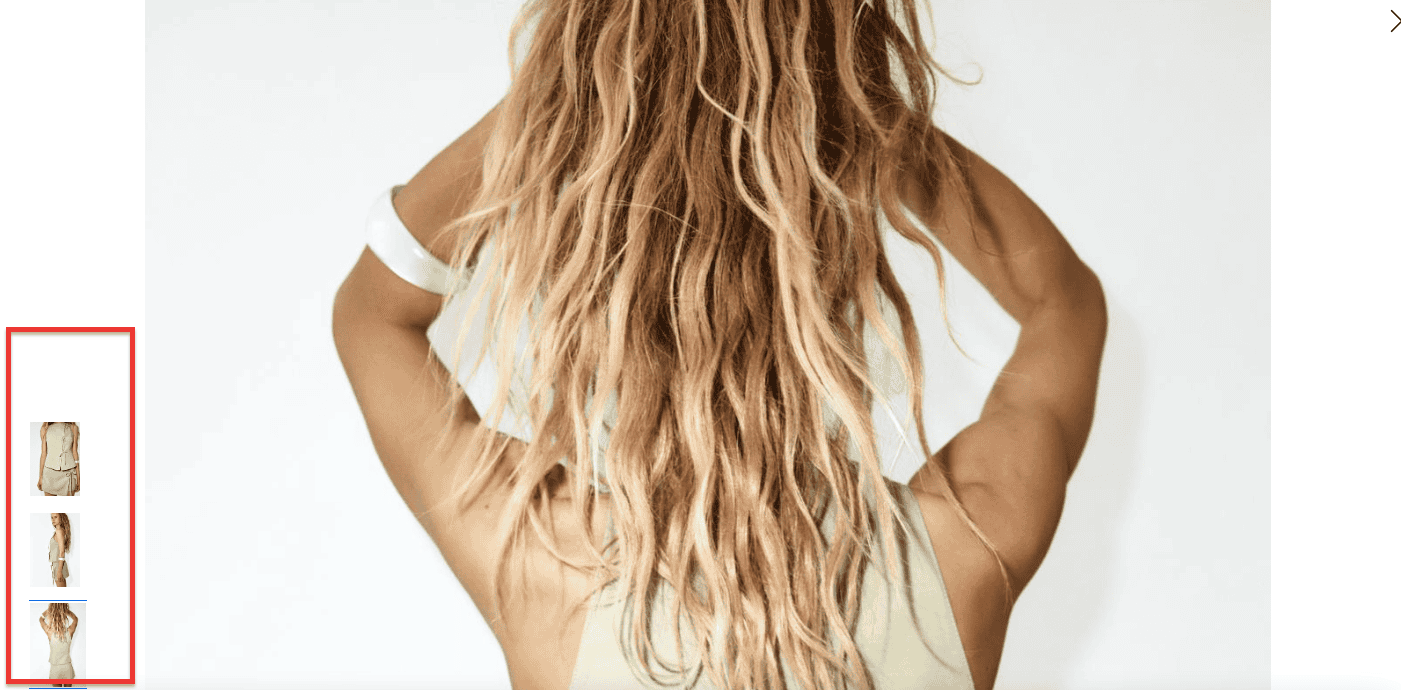
Your images have to replace the in-store experience. That means multiple high-quality shots from every meaningful angle, on diverse body types, with a zoom that doesn't pixelate. Video, even a short clip of fabric in motion, does more for conversion than a dozen static shots.
Reviews that mention fit accuracy, fabric quality, and real-world appearance consistently outperform generic star ratings. UGC (customer photos in the wild) beats studio photography for purchase confidence every time. Surface both prominently.
"Complete the look" sections increase AOV and help shoppers visualize actually wearing the product. Lifestyle imagery of the product in a real setting, not a white studio, gives the aspirational context fashion buyers need.
Even a convinced shopper hesitates if the return policy is buried. Prominent, plain-English return and shipping information removes the last barrier between browsing and buying.

Quick context: Nike is the global benchmark for eCommerce UX. Their product pages are engineered for one thing: getting a decided shopper to checkout without a single unnecessary click.
What they do:
Why it works: Nike's page attacks decision friction at every layer. Above-the-fold size selection solves apparel's biggest anxiety before the shopper even thinks to ask. The minimal design reduces cognitive load; fewer elements mean faster decisions.
The visual hierarchy is deliberate: eyes move naturally from the image to the size selector to the CTA, with nothing pulling attention sideways. The sticky mobile CTA keeps the "buy" button just one thumb tap away.
Net effect: shoppers don't have to think. They choose, and they buy.
When to use this approach: Works best if you sell high-demand or well-known products, and your brand already carries trust equity. Less effective for new brands that need to educate and persuade before converting.
Steal this: Move your size selection above the fold. If you do nothing else from this teardown, do that. Bonus: add a sticky "Add to Cart" button on mobile and remove any page elements that don't directly support the purchase decision.

Quick context: Zara doesn't sell clothes. It sells mood. Their product pages reflect that heavy on imagery, light on everything else, trusting the visual to do the persuading.
What they do:
Why it works: Zara's shopper arrives already primed by brand identity. The page's job isn't to convince it's to confirm. The visual-first layout respects that. By keeping the text minimal, Zara removes friction for shoppers who've already made an emotional decision and just need a clear path to checkout.
The expansive recommendations section captures browsers who aren't ready to commit to one product yet, keeping them on-site and in the funnel.
Net effect: the page feels like flipping through a lookbook, not navigating a store.
When to use this approach: Works best for established fashion brands with strong visual identity and high brand recognition. Less effective if your product needs explanation or your brand is still building trust.
Steal this: Let your imagery lead. If you're overloading your PDP with text, strip it back and see what happens to your conversion rate. Bonus: don't artificially limit your recommendations; let shoppers browse.

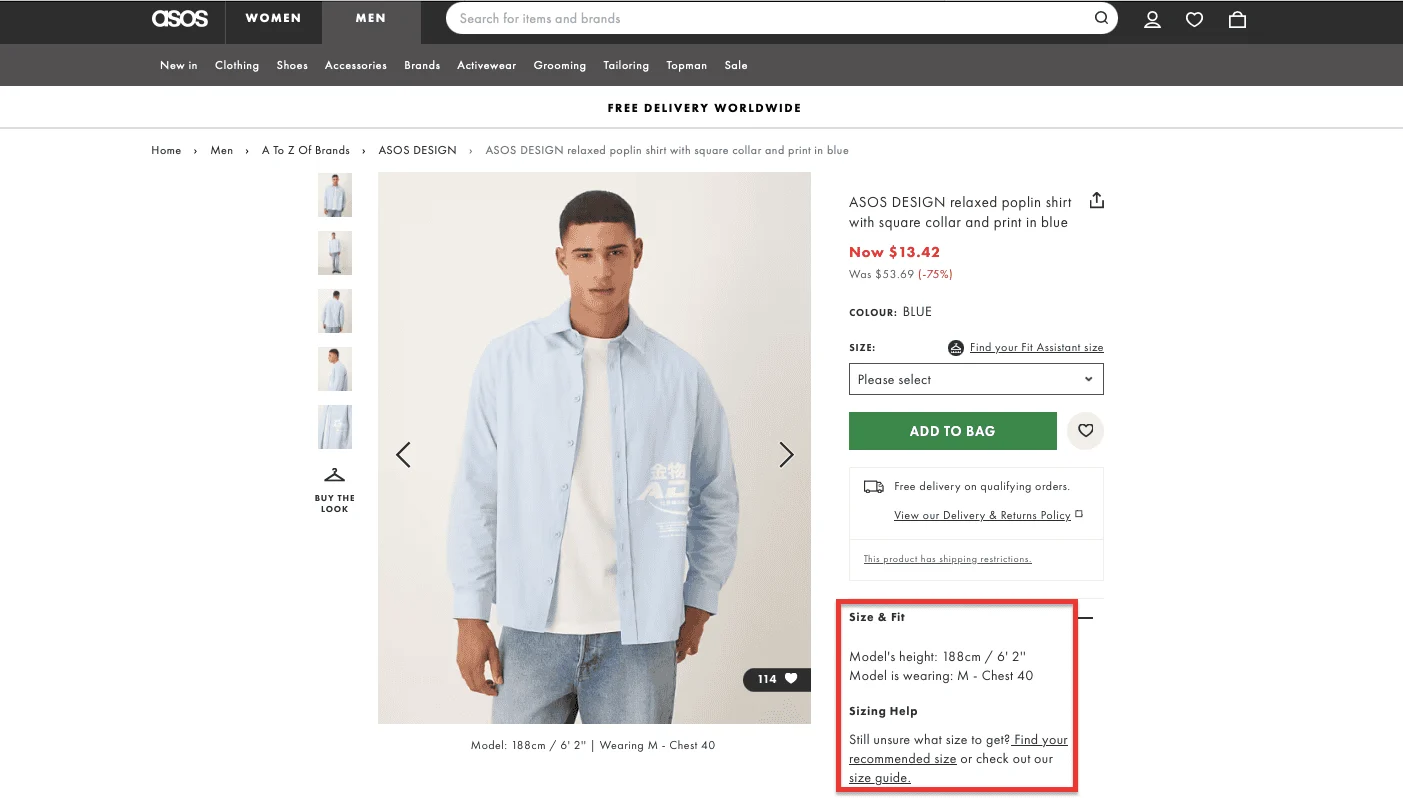
Quick context: ASOS sells thousands of brands to millions of body types. Their product pages have to work for everyone, and their approach to size and fit is the best in the business.
What they do:
Why it works: ASOS treats fit uncertainty as the central UX problem to solve because it is. Every element on the page exists to answer the question "will this fit me and look good?" before the shopper has to ask. The model measurements give shoppers a human reference point.
The reviews filtered by fit ("runs small," "true to size") let shoppers crowdsource the answer. The video removes the last visual unknown.
Net effect: shoppers arrive uncertain and leave confident. Returns drop. Conversions rise.
When to use this approach: Essential for multi-brand retailers, plus-size ranges, or any store where fit varies significantly across products. Also powerful for any brand trying to reduce return rates.
Steal this: Display your model's height and size on every single product image. It costs nothing and removes one of the most common pre-purchase doubts in apparel.

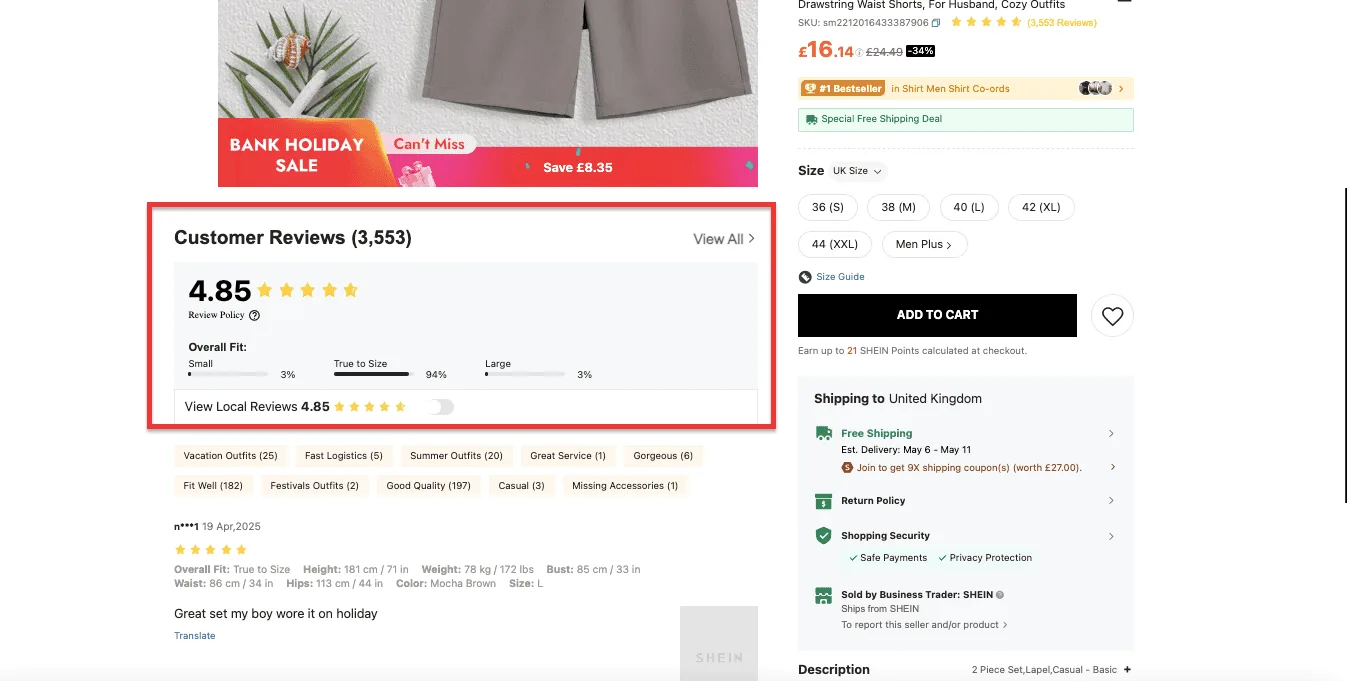
Quick context: Shein's product pages are anything but minimal. They pack in every possible conversion lever and somehow make it work. This is aggressive CRO in action.
What they do:
Why it works: Shein's customers are value-driven, high-intent shoppers who want as much information as possible before committing. The dense layout serves that need directly. UGC photos answer fit questions better than studio shots.
The review bucketing ("great quality," "gorgeous") mirrors the exact language shoppers use when searching reinforcing confidence in the words they're already thinking. Every element applies gentle pressure toward purchase without ever feeling like a hard sell.
Net effect: shoppers get so much reassurance, so fast, that hesitation barely gets a foothold.
When to use this approach: Ideal for high-volume, value-driven eCommerce where shoppers are comparison shopping and need a density of proof. Less suited to premium or luxury brands where restraint is part of the brand signal.
Steal this: Bucket your reviews under the actual phrases your customers use, not just star ratings. It speeds up scanning and makes the social proof feel more personal.

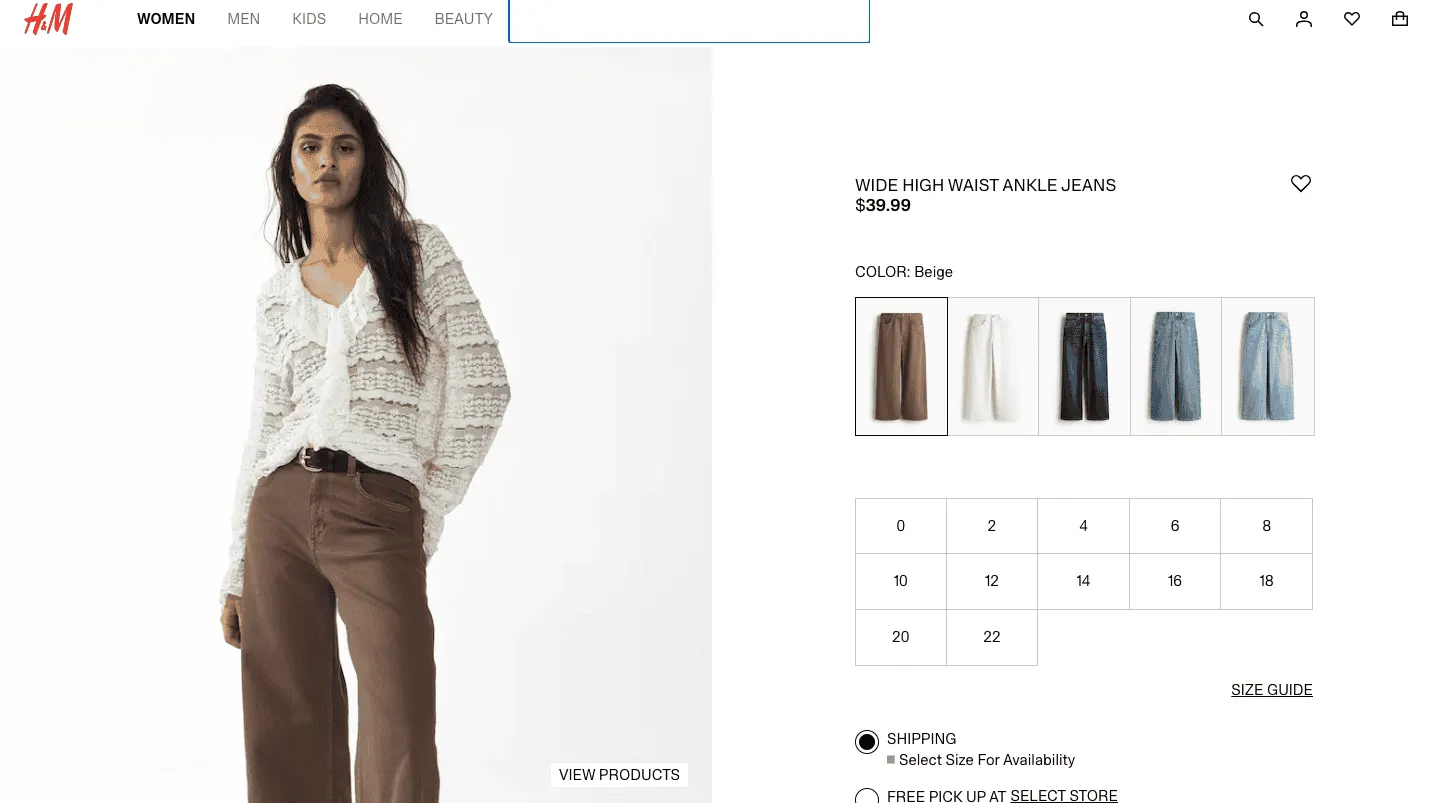
Quick context: H&M sits in the middle of the fashion market, not luxury, not ultra-fast fashion, and their product pages reflect that balance. Clean, clear, and replicable at scale.
What they do:
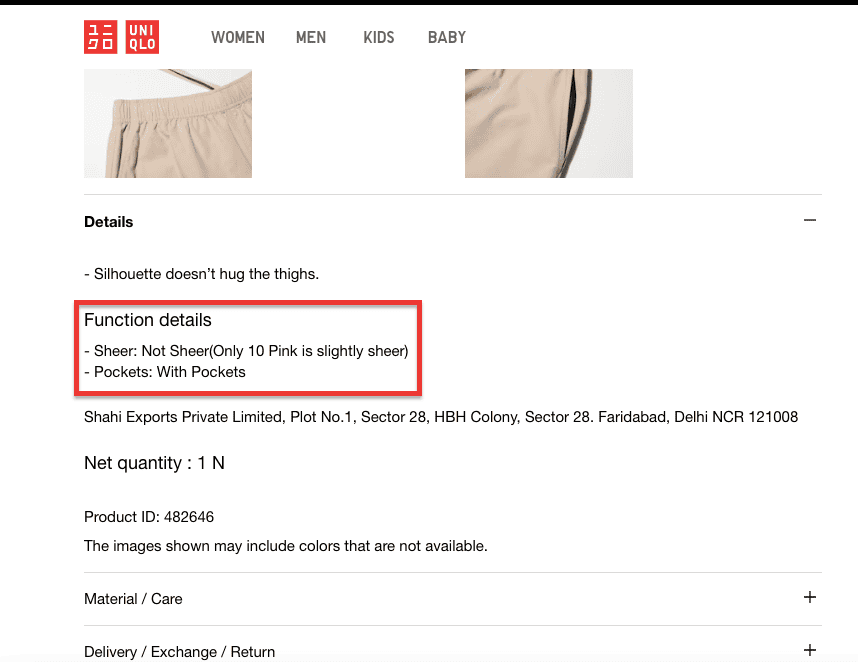
Why it works: H&M's pages work because they don't try to be clever. The layout is immediately legible shoppers know exactly where to look for what they need. The supplier transparency ("made in Portugal, 100% organic cotton") builds trust with the growing segment of shoppers who factor ethics into purchase decisions.
Recommendations placed near the product rather than at the bottom of the page catch shoppers mid-consideration, before they've decided to leave.
Net effect: a page that feels reliable, which is exactly what a mid-market brand needs to be.
When to use this approach: The go-to model for mid-market brands scaling across large product catalogs. Works especially well when consistency across hundreds of SKUs matters more than per-product customization.
Steal this: Add transparent materials and supplier information to your product pages. It costs nothing, builds trust, and increasingly influences purchase decisions, especially among younger shoppers.

Quick context: Gymshark built a billion-dollar brand without a single retail store. Their product pages are a masterclass in DTC conversion community-driven, visually compelling, and engineered to reduce every possible point of drop-off.
What they do:
Why it works: Gymshark's page speaks directly to its community's identity. The imagery doesn't just show the product — it shows the life the shopper wants to live. The "size out of stock" flow is a particularly smart CRO move: it converts a lost sale into a lead, and a lead into a future buyer.
The community feedback snapshot gives shoppers a quick confidence boost without requiring them to scroll through hundreds of reviews.
Net effect: even shoppers who can't buy today stay connected to the brand.
When to use this approach: Perfect for DTC brands with strong community identity and high repeat-purchase potential. Also, a powerful model for brands with frequent sell-outs or limited-run inventory.
Steal this: Add a "notify me when back in stock" flow for out-of-stock sizes. It's one of the highest-ROI CRO additions any apparel brand can make.

Quick context: Allbirds sells shoes made from merino wool and sugarcane. That's not self-explanatory, and their product pages know it. Every element is designed to educate the shopper on why the product is worth it before asking them to buy.
What they do:
Why it works: Allbirds' customers aren't just buying a shoe; they're buying a value system. The product page reflects that by making the "why" as prominent as the "what." The carbon footprint figure is a brilliant CRO move: it's specific, it's verifiable, and it does the work of ten paragraphs of sustainability copy in a single number. The educational content also handles objections proactively, so shoppers who might balk at the price leave understanding exactly what they're paying for.
Net effect: the page transforms a premium price point from a barrier into a badge.
When to use this approach: Essential for brands where product differentiation is the primary driver of conversion, such as sustainable goods, innovative materials, or products that need explanation to justify their price.
Steal this. Identify the single most compelling fact about your product's materials or manufacturing and make it unmissable on your PDP. Specificity builds credibility faster than any amount of marketing copy.

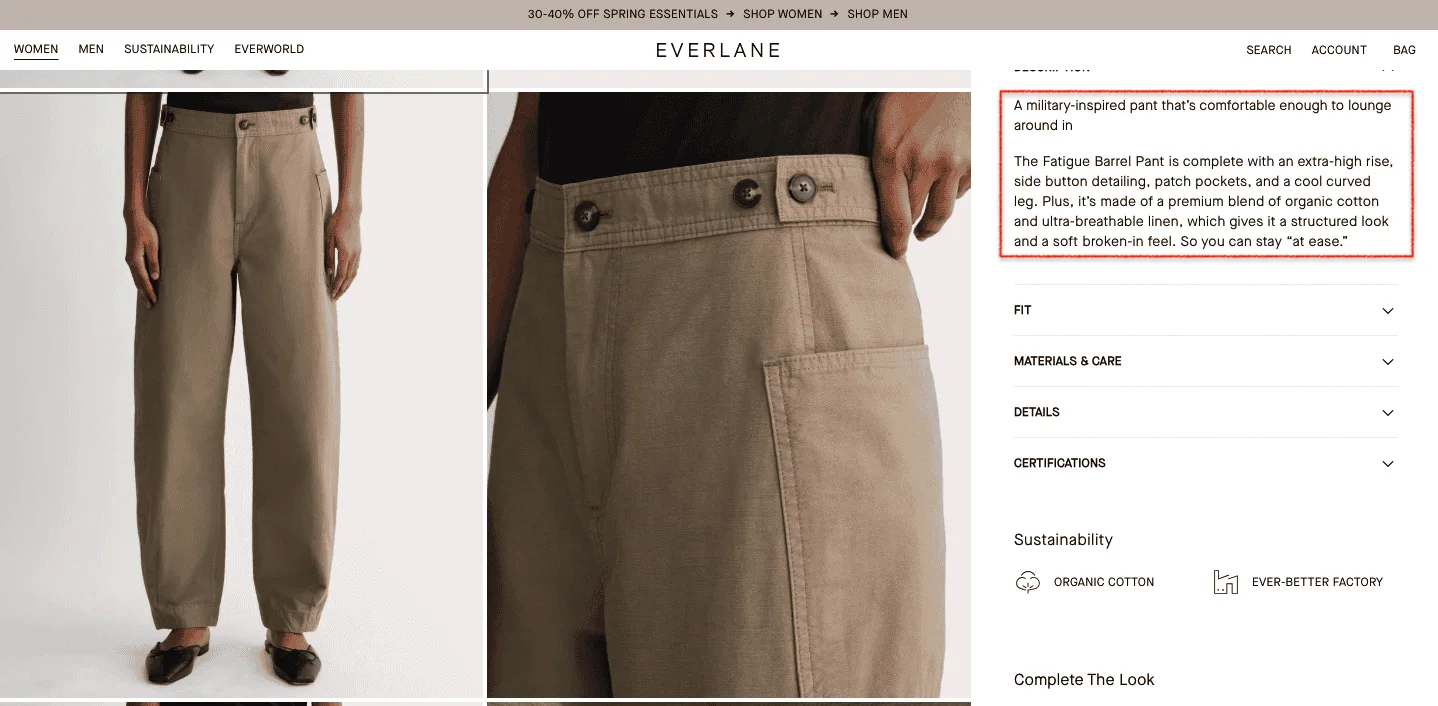
Quick context: Everlane built its entire brand on radical transparency, showing customers exactly what their clothes cost to make and why they're priced the way they are. Their product pages make that transparency the star of the show.
What they do:
Why it works: Price transparency does something counterintuitive: it makes shoppers trust the brand more, not less. When Everlane shows you it costs $18 to make a t-shirt they're selling for $38, you stop wondering if you're being overcharged and start feeling like you're in on the secret. The detailed reviews with purchase specifics are another trust accelerator; they're the digital equivalent of asking a friend who owns the product, "What size did you get?"
Net effect: shoppers feel informed and respected, which is exactly the emotional state that leads to confident purchases.
When to use this approach: Powerful for any brand competing on values rather than price, ethical production, fair wages, and sustainable materials. Also effective for brands trying to justify a premium over fast-fashion alternatives.
Steal this: Add purchase specifics to your review prompts. Ask customers to share their height, the size they bought, and how it fits. Reviews with that detail convert browsers into buyers faster than any studio photograph.

Quick context: Lululemon charges more than most of its competitors and converts at rates that justify every penny. Their product pages are designed to make premium feel like a no-brainer.
What they do:
Why it works: Lululemon's pages are built for the deliberate buyer, someone who will read everything before they click "add to cart." The collapsible sections respect that without burying information. The size optimizer is a standout move: instead of making shoppers guess or consult a generic chart, it calculates their size in real time. The "Why we made this" section isn't just good content marketing; it creates an emotional connection to the product, making the price feel earned.
Net effect: shoppers arrive considering a purchase and leave feeling like they made a smart decision.
When to use this approach: The model for premium and performance brands, where the buying decision is considered rather than impulse-driven. Also powerful for brands with strong product stories to tell.
Steal this: Add a "Why we made this" section to your top-selling products. Two or three sentences of genuine product narrative, the problem it solves, and the design decision behind it consistently outperform generic feature lists.

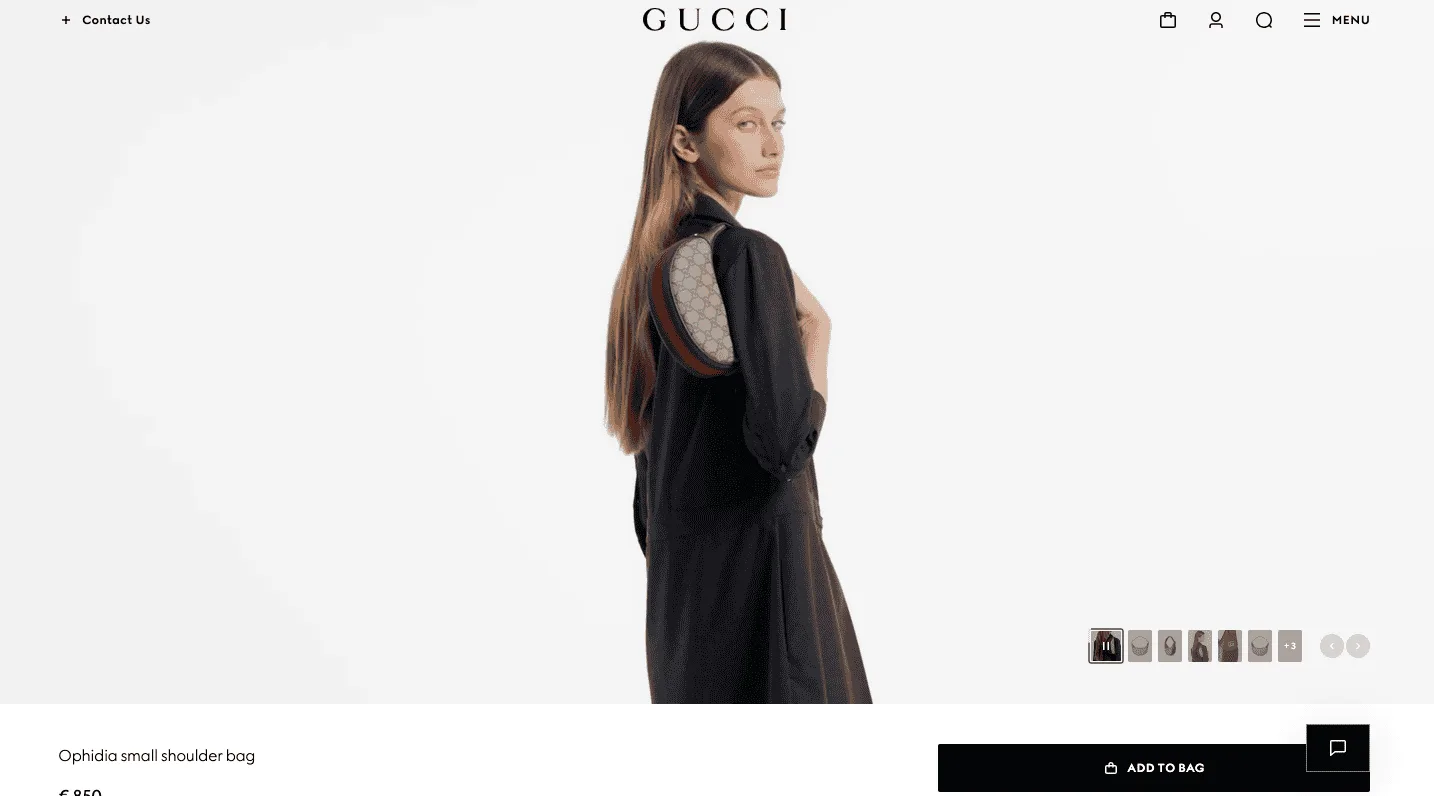
Quick context: Gucci's product pages don't sell products. They sell worlds. Every design decision, from the typography to the image pacing, is in service of one goal: making the shopper feel something before they think anything.
What they do
Why it works: At the luxury end of fashion, the rules of CRO flip. Urgency tactics cheapen the experience. Dense information clutters the mystique. What Gucci's page sells is desire, and desire requires space, beauty, and restraint. The cinematic imagery creates aspiration before the shopper has read a single word. The page's quiet confidence signals that this brand doesn't need to persuade you. It simply shows you something beautiful and waits.
Net effect: shoppers don't feel sold to. They feel chosen.
When to use this approach: The luxury playbook. Works when brand equity is so high that the name alone is the primary driver of conversion. Ineffective for brands still building recognition, you need trust before you can afford restraint.
Steal this: Audit your PDP for elements that create urgency or pressure. For premium products, removing elements like countdown timers and "X people are viewing this" nudges can actually increase conversion by aligning the page feel with the price point.
Before we zoom out and look at what all these product pages have in common, it’s worth pausing on something important:
Not all high-converting product pages look the same. In fact, some of the most effective brands take completely opposite approaches, and still win.
Ten brands. Ten completely different aesthetics, price points, and customer bases. And yet, look closely at what they all do, and the same patterns emerge every time.
They put the most important information above the fold: Nike's size selector. ASOS's model measurements. Gymshark's swatch options. Every top-performing page makes the shopper's most urgent question answerable without a single scroll. If your size guide, CTA, or pricing requires hunting, you're losing buyers before they even begin.
They use visuals to replace the in-store experience: No shopper can feel the fabric or try on the fit. The best pages compensate aggressively multiple angles, diverse models, zoom that actually works, and video wherever possible. Shein's UGC galleries and ASOS's product videos exist for exactly this reason.
The more sensory information you can deliver through a screen, the less uncertainty the shopper carries into the checkout.
They build trust before they ask for the sale: Everlane shows you the production cost. Allbirds shows you the carbon footprint. Gymshark shows you community feedback. Lululemon offers a real human to talk to. Every one of these brands earns the click before they request it. Trust signals don't have to be elaborate; they just have to be honest and visible.
They make the path to purchase frictionless: Sticky CTAs. One-tap size selection. Streamlined checkout nudges. The best apparel pages treat every extra click as a conversion risk and eliminate them ruthlessly. Zara strips out the copy. Nike strips out clutter. Gucci strips out pressure. Different approaches, same instinct — get out of the shopper's way.
They're built for mobile first: Sticky add-to-cart buttons, thumb-friendly size selectors, fast-loading images. Every brand in this list optimizes for the shopper on a phone. Given that the majority of fashion ecommerce traffic now comes from mobile, this isn't optional. A page that converts beautifully on desktop but fumbles on mobile is leaving most of its potential revenue on the table.
They use social proof strategically, not decoratively: The difference between reviews that convert and reviews that just sit there is specificity. ASOS filters by fit. Everlane captures the height and size bought. Shein surfaces the exact phrases shoppers search for. Generic star ratings are table stakes.
The brands that win use social proof to answer the specific questions that stand between a shopper and a purchase.
Zara and Shein represent two extremes of apparel eCommerce design.
And yet both convert exceptionally well.
Zara’s approach works because it assumes trust already exists. The shopper arrives with intent, and the page simply removes friction between desire and checkout.
Shein succeeds because it aggressively builds trust. Every question: fit, quality, value is answered before hesitation can set in.
👉 Same goal: reduce uncertainty
👉 Different strategies: remove vs reinforce
Use a Zara-style page if:
Use a Shein-style page if:
There’s no single “best” product page. The best product page is the one that aligns with how your customers make decisions.
Most product pages don't fail dramatically. They fail quietly, one small friction point at a time, each one nudging a shopper a little closer to the back button. Here are the mistakes that do the most damage.
Burying the size guide: This is the single most common and most costly mistake in apparel ecommerce. When shoppers can't find sizing information instantly, they don't go looking for it. They leave. A size guide linked three pages deep, or collapsed under an accordion nobody opens, is functionally the same as no size guide at all.
Put it above the fold, make it impossible to miss, and watch your return rates drop alongside your bounce rates.
Weak product imagery: A single front-facing studio shot on a white background tells a shopper almost nothing they need to know. What does it look like from the back? How does the fabric move?
What does it look like on someone my size? Poor imagery forces shoppers to guess — and shoppers who guess don't buy. Every product deserves multiple angles, a real-body fit shot, and ideally a short video.
Overloading the page with information: There's a version of this mistake that's the opposite of the last one: cramming so much onto the page that shoppers can't find what they actually need. Walls of product copy, seven different promotional banners, recommendations stacked on recommendations, cognitive overload kills conversion just as surely as missing information does.
If everything is shouting, nothing gets heard.
Missing or generic social proof: Star ratings without context don't convert. A 4.7-star average is reassuring, but it doesn't answer the question every apparel shopper is actually asking: Will this fit me and look like the photos?
Reviews that don't capture size bought, height, or fit accuracy are wasted real estate. Prompt your customers to leave specific feedback and surface the reviews that answer the questions your new shoppers are asking.
No mobile optimization: A CTA button that's hard to tap. A size selector that requires pinching and zooming. Images that take four seconds to load on a 4G connection. Mobile friction is invisible on desktop QA and devastating in the real world.
Test your product pages on an actual phone, with an actual thumb, on an actual mobile connection — and fix everything that makes you wince.
Urgency tactics on the wrong products: Countdown timers and "14 people are viewing this" nudges work on impulse purchases. They actively damage conversion on considered, premium, or luxury products where the shopper's instinct is to slow down, not speed up.
Applying the same urgency playbook to a £400 coat as you would to a £12 sale item tells the shopper your page wasn't designed for them. Match your tactics to your price point and your customer's buying psychology.
Use this before you launch a new product page — or as an audit tool for your existing ones. If you can't check every box, start with the ones at the top. They'll do the most work.
Fit & Sizing
Visuals
Social Proof
Trust & Risk Reduction
Buying Experience
Social Proof & Discovery
Not every brand should build its product pages the same way. The right approach depends on where you are, who you're selling to, and what your shopper needs to feel before they buy. Here's how to find your fit.
You're a new DTC brand still building trust → Look at Gymshark Community-first imagery, tight social proof, and smart inventory tools like "notify me when back in stock" do the heavy lifting when brand recognition isn't there yet. Build identity before you build minimalism.
You're a mid-market brand scaling across a large catalog → Look at H&M: Consistency beats cleverness at scale. Clean layouts, transparent product information, and well-placed recommendations give shoppers a reliable experience across hundreds of SKUs without requiring custom treatment for each one.
You're in fast fashion or value-driven ecommerce → Look at Shein: Dense information, aggressive social proof, and UGC-heavy galleries speak directly to the comparison-shopping, deal-hunting buyer. Give them every reason to say yes before they click away to a competitor.
You sell performance or technical apparel → Look at Lululemon: Deliberate buyers want to read everything. Give them collapsible sections, a size optimizer, and a genuine product narrative. Make the premium price feel earned — not just asserted.
You're a sustainable or values-led brand → Look at Allbirds or Everlane: Education is your conversion tool. Lead with the specific, verifiable facts that justify your price point and differentiate you from fast fashion. Transparency isn't just ethical — it converts.
You're building a premium or luxury positioning → Look at Gucci or Zara: Restraint is the strategy. Strip out urgency tactics, let the imagery breathe, and trust your brand to do the persuading. The page should make it feel like the product is beautiful and worth it.
Look back across all 10 pages in this guide and one truth emerges clearly: the best apparel product pages aren't the most beautiful, or the most feature-packed, or the most cleverly designed. They're the ones that make it easiest for a shopper to go from uncertain to confident.
Fit anxiety, visual uncertainty, trust gaps, and mobile friction are the things that stand between your product page and a conversion. Every brand in this guide attacks those problems differently, shaped by its price point, its customer, and its identity.
But they all attack them. Deliberately, specifically, and without leaving it to chance.
The good news is that you don't need Gucci's creative budget or Nike's brand equity to build a high-converting product page. You need to know where your shoppers hesitate and design your page to answer those hesitations before they're even voiced.
Start with the checklist. Pick the brand model that fits where you are. Make one change this week.
That's how product pages get better — not all at once, but one confident decision at a time.
Want to know exactly where your product page is losing conversions? Get a free audit from ConvertCart.
Related Reading:
How to Boost Fashion eCommerce Conversion Rate