What Makes an eCommerce Clearance Sale Successful?
A successful eCommerce clearance sale does more than reduce prices.
It helps brands sell excess inventory quickly while protecting profit margins and customer trust.
The best clearance campaigns combine strategic discounts, urgency, merchandising, personalized offers, and product recommendations to increase sell-through without training customers to wait for sales.
Clearance sales fail when every product gets the same treatment.
Slow-moving inventory, seasonal stock, discontinued products, and overstock each require different merchandising and pricing strategies.
Applying the same discount across your catalog often reduces margins without significantly improving sell-through.
The most effective eCommerce clearance sales identify the real bottleneck first.
Is product discovery poor?
Are shoppers waiting for deeper discounts?
Is inventory concentrated in a few unpopular SKUs?
Once you know what's preventing products from selling, you can choose tactics that solve that specific problem instead of relying on larger discounts alone.
That's how we've organized this guide: by the inventory or shopper behavior each strategy addresses.
Use it to choose the right clearance sale tactics based on the outcome you want, whether that's faster inventory turnover, higher average order value, or better revenue recovery.
The eCommerce Clearance ROI Matrix Matrix: What to Do First
The matrix below ranks clearance sale tactics by their expected return on investment (ROI), implementation effort, and business impact.
Start with Tier 1 quick wins before investing in higher-effort strategies.
Priority
What It Does
Effort
Tactics
Tier 1
High-Impact Quick Wins
Triggers immediate "buy" signals. Lifts click-through rate and reduces price resistance — without requiring deeper discounts.
Zero dev work
A store manager can do this in minutes via Shopify or any standard CMS.
Price anchoring
Highlight savings
Homepage sale banner
Above-the-fold placement
Tier 2
Revenue Multipliers
Increases basket size and rewards loyal customers. Protects long-term profitability and prevents brand erosion.
Hours
Needs cross-team coordination between marketing and inventory — but no major technical overhaul.
VIP early access
Discounting strategy
Product bundling
Tiered discounting
Tier 3
Velocity Accelerators
Clears the final 15% of stuck inventory by creating a "closing window" effect. Essential for moving seasonal stock that won't shift on its own.
Good for brand story and long-term retention — but carries a higher cost per dollar of revenue generated. Do these after Tiers 1–3 are in place.
High effort
Requires dedicated design assets, ad spend management, or creative event planning.
Themed events
Retargeting ads
Highlighting popular products
Convertcart Insight: We always remind our customers that 80% of clearance velocity comes from the 20% of strategies. It gives them a chance to absorb some failures and stick to the plan (the tiers that we described above).
Now let's get into exactly how to execute each one.
PRIORITY TIER 1: High-Impact "Quick Wins" (Do These First)
Focus: Psychological triggers that require zero technical development and instantly influence the user's perception of value.
1. Use price anchoring to the fullest
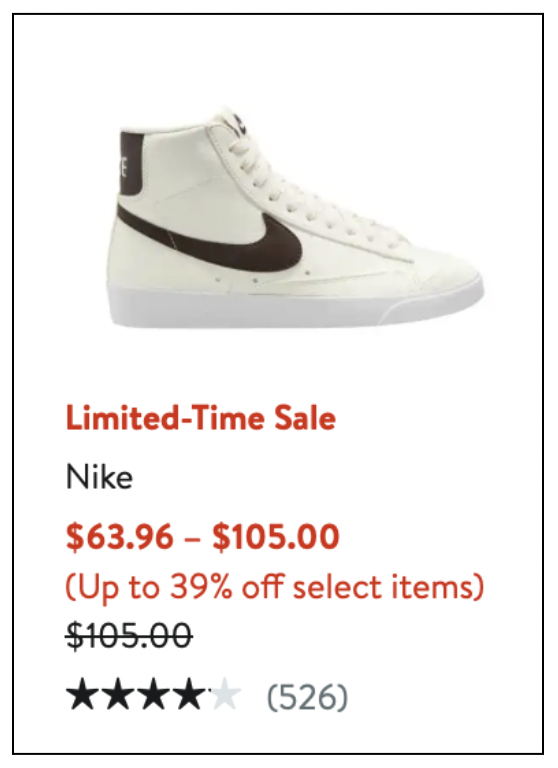
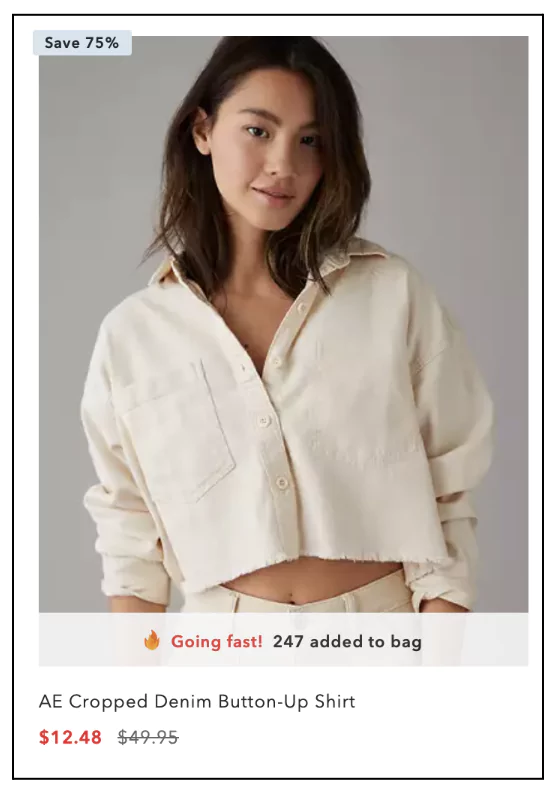
Anchoring basically is showcasing the original price prominently on your product listings, followed by the discounted price. For instance, if you have a sofa originally priced at $1,000, display the discount as “Now $599, Was $1,000” in your marketing materials and online store.
This technique makes the discounted price appear more attractive by highlighting the substantial savings compared to the original price.
Additionally, employ psychological pricing strategies to enhance the perceived value of your discounts.
For example, instead of showing a flat $599, you might list the discounted price as “$598.99,” subtly reinforcing the idea of a better deal.
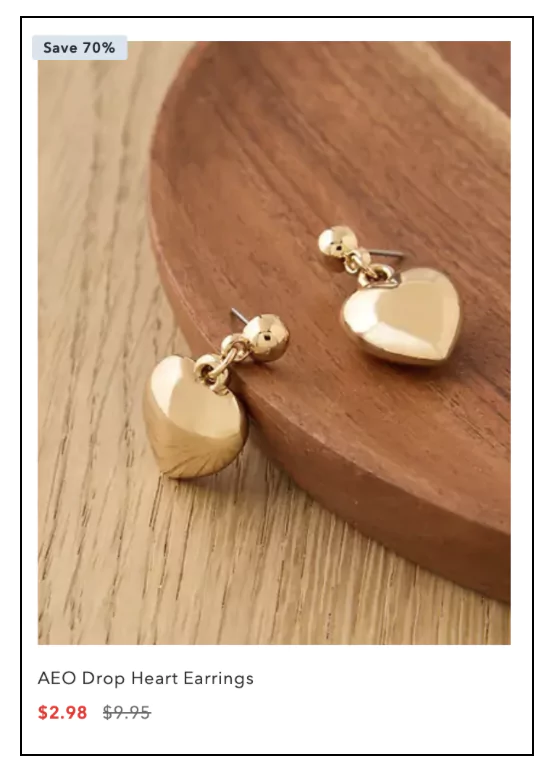
2. Highlight savings
Savings are what drive your clearance sale. They must find a special place on your website and other marketing materials.
For example, if an item originally costs $200 and is now on sale for $120, prominently feature a savings label like “Save $80!” on the product image and in the product description.
This immediate visual cue helps customers quickly understand the value of the discount.
3. Place a *sale* banner on your homepage
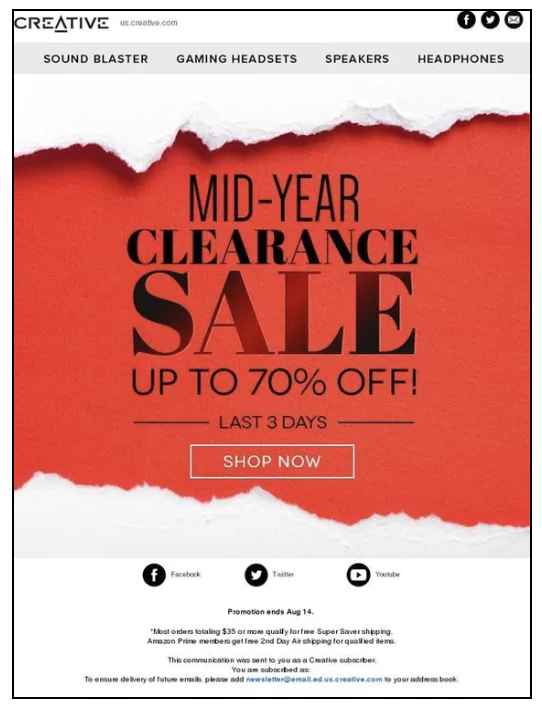
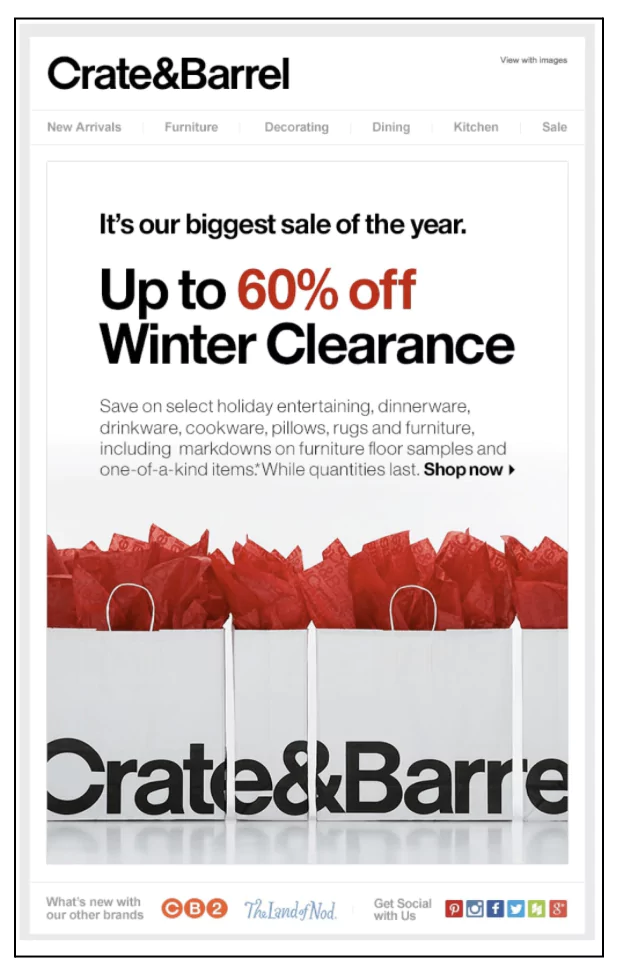
Start by designing a visually appealing banner that stands out with bold colors and clear messaging. Use eye-catching phrases like “Clearance Sale: Up to 70% Off!” or “Limited Time Only: Huge Savings!” to immediately convey the urgency and scale of the discounts.
Position this banner at the top of your homepage so it’s the first thing visitors see when they land on your site.
To maximize its impact, make the banner clickable and link it directly to your clearance sale page. Ensure the banner includes a strong call to action, such as “Shop Now” or “Grab the Deals,” to encourage immediate engagement.
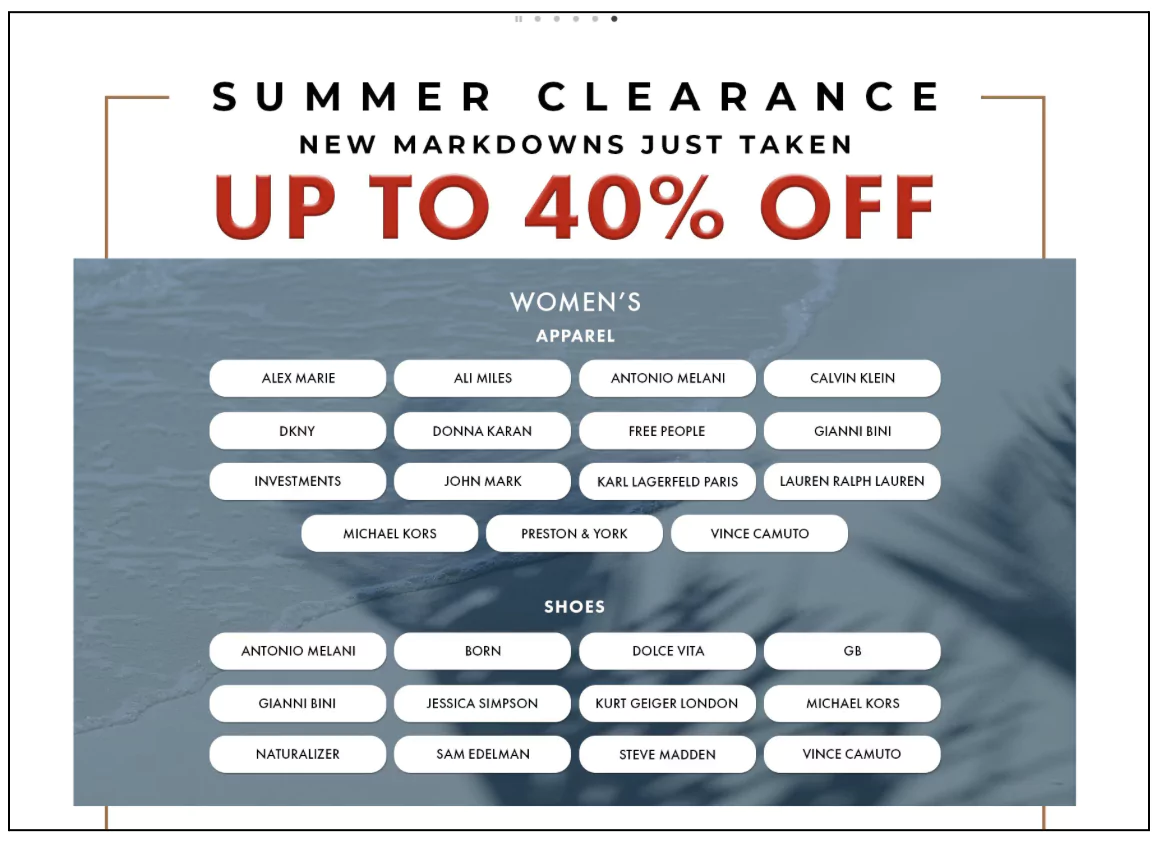
For example, your banner could read, “Summer Clearance Sale! Up to 70% Off—Shop Now,” with a bright, clickable button. Additionally, consider incorporating countdown timers or end-date information within the banner to enhance the urgency, like “Sale Ends in 3 Days!”
4. Highlight your best deals on the homepage–above the fold
Select a few of your most attractive and heavily discounted items. Create high-quality images and compelling descriptions for these products, and feature them prominently on your homepage.
For example, if you’re offering a popular office chair at 50% off, showcase it with a banner that reads, “Top Deal: Ergonomic Office Chair – Now $99, Was $199!”
Ensure that these highlighted deals are positioned above the fold so visitors see them without needing to scroll. Use bold, contrasting colors for discount labels and include clear call-to-action buttons like “Shop Now” or “Limited Stock – Buy Now.”
⚠️
Want to know how to convert more shoppers during sales?
Product discovery – barriers that prevent shoppers from finding items
Category/collection pages – improvements that drive deeper product exploration
Product page – what to optimize to convert 2–3x more buyers
Cart – ways to ease hesitation and speed up purchase decisions
“The report was deep and super insightful. Can’t believe it’s free.”
Logan Christopher CEO, Empire Herbs
PRIORITY TIER 2: The Revenue Multipliers (Strategic Planning)
Focus: Increasing Average Order Value (AOV) and using segmentation to reward your best customers.
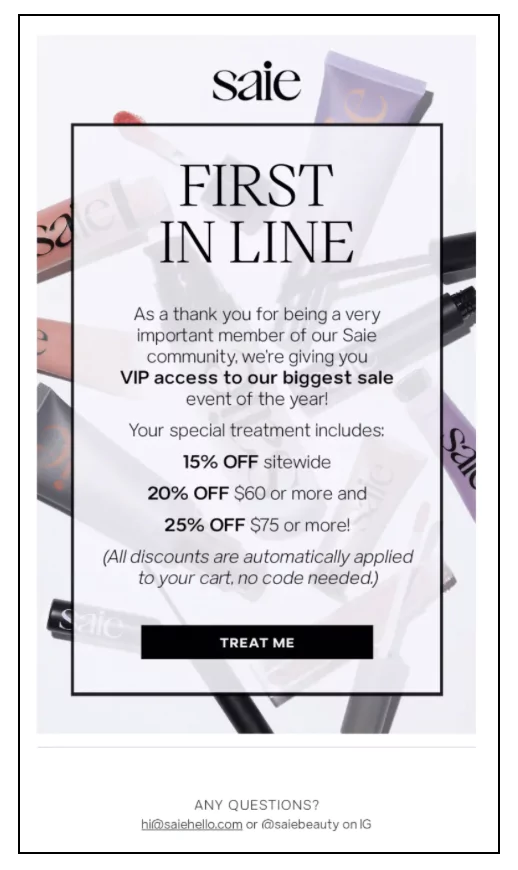
5. Give VIP early access
This strategy not only rewards your top shoppers but also creates a sense of exclusivity and urgency.
A week before the general public, send an email to your VIP subscribers that goes something like this:
Subject line: "Exclusive Early Access: Clearance Sale Just for You!"
Inside, include a personalized message thanking them for their loyalty and providing a special early access link or code.
Body text: "As a thank you for being one of our top customers, we're giving you exclusive early access to our clearance sale! Shop now with the code VIPACCESS to get first dibs on the best deals before they're gone."
6. Get your discounting right
To set effective discounts for your clearance sale, start by analyzing your product costs and desired profit margins.
For example:
If you have a product that costs you $50 to produce and sells for $100, your typical profit margin is 50%.
For high-demand items, offer a moderate discount of around 20-30%. This means a 20% discount on a $100 item would reduce the price to $80, giving you a profit of $30, which still maintains a reasonable margin.
For products that are slower-moving, increase the discount to 30-50%. For instance, a 40% discount on the same $100 item would lower the price to $60, resulting in a profit of $10. This is less than your original margin but still positive.
For items that are particularly challenging to sell or are seasonal, you may need to use deeper discounts of 50-70%. A 60% discount would reduce the price to $40, resulting in a loss of $10. While this might seem unappealing, it’s a strategy to clear out inventory and make room for new stock.
7. Bundle your products
Create attractive bundles by grouping complementary items together at a discounted rate. For example, if you’re clearing out home office supplies, you could bundle a desk, chair, and desk lamp together at a special price.
Instead of selling each item individually, offer the entire bundle for 25% off the total combined price, which not only provides value to customers but also helps you move multiple items at once.
8. Implement tiered discounting
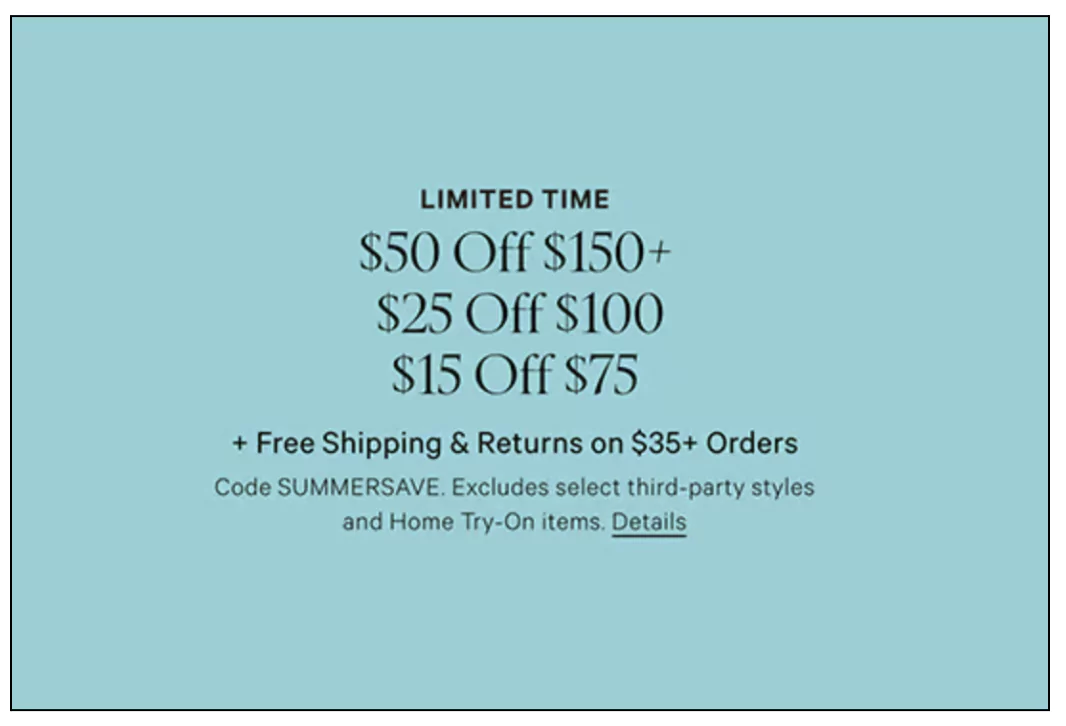
Another effective technique is tiered discounting. Start by establishing discount levels based on the total purchase amount or the number of items bought.
For example, offer a 20% discount on orders over $100, a 30% discount on orders over $200, and a 40% discount on orders over $300.
To make the tiered discounts more enticing, clearly communicate these levels in your promotional materials and on your website.
For instance, create banners that highlight “Save More as You Buy More—20% Off Orders Over $100, 30% Off Orders Over $200, and 40% Off Orders Over $300!”
Use these banners on your homepage, product pages, and during checkout to remind customers of the potential savings.
PRIORITY TIER 3: The Velocity Accelerators (Liquidation Phase)
Focus: Creating a "Closing Window" effect to clear the final 10-15% of stubborn inventory.
9. Send email countdown alerts
Segment your email list to target customers who have shown interest in your products or who have made purchases in the past.
Craft a series of countdown emails leading up to the end of the clearance event.
For example, you could send a “72 Hours Left” email highlighting the top deals and reminding customers that time is running out.
Follow this with a “48 Hours Left” email featuring a few bestsellers and perhaps a special incentive, like an extra 10% off with a specific code.
As the sale nears its end, increase the frequency of your emails. Send a “24 Hours Left” alert emphasizing the final chance to grab significant savings, and a “Last Chance—6 Hours Left!” email with bold graphics and direct calls to action such as “Shop Now Before It’s Gone!”
Use attention-grabbing subject lines like “Final Hours to Save Big!” and include clear, clickable buttons within the email.
Show real-time inventory counts on your product pages.
For instance, if you have only a few items left of a popular product, display a message like “Only 5 left in stock—order soon!”
Enhance this strategy by using visual cues and alerts.
For example, highlight low-stock items with bold, attention-grabbing labels such as “Low Stock” or “Almost Gone!” in bright colors.
You can also incorporate a progress bar that shows how many units have been sold and how few are left, such as “80% sold—hurry, limited stock remaining!”
Additionally, send email alerts to customers who have viewed or added low-stock items to their cart, reminding them of the limited availability.
For instance, an email might say, “Don’t Miss Out! Only a Few Items Left in Your Cart” with a direct link to complete the purchase.
11. Sweeten the deals as the days progress
Don’t let the excitement die.
Begin with moderate discounts and gradually enhance the offers to entice customers to make a purchase before the sale ends.
For example, start the sale with 20% off on the first day, then increase the discount to 30% on the third day, and culminate with up to 50% off on the final days.
In addition to increasing discounts, add special incentives as the sale progresses. For instance, in the final days of the sale, offer free shipping on all clearance items or include a bonus gift with purchases over a certain amount.
Promote these escalating deals through email alerts and social media posts to keep your audience informed and excited. For example, an email campaign could say, “Final Days of Clearance: Now Up to 50% Off + Free Shipping!”
12. Optimize for mobile
More often than not, if you are running ads, your shoppers will land on your website on their mobile devices.
Ensure that your website is fully responsive, which means it adjusts seamlessly to various screen sizes and orientations. For instance, simplify your mobile navigation by using a collapsible menu that allows users to easily browse clearance categories without excessive scrolling.
Large, touch-friendly buttons for actions like “Add to Cart” and “Buy Now” should be easy to tap.
Additionally, optimize your mobile checkout process by minimizing form fields and streamlining steps to reduce cart abandonment. For example, implement a one-page checkout with autofill options for shipping and payment details, and provide a clear progress indicator to keep customers informed.
13. Offer a free gift–above a threshold
Set a clear spending threshold, such as “Get a Free Gift with Orders Over $100,” and prominently feature this offer on your homepage, product pages, and during checkout.
Let’s say, if your clearance sale includes home goods, you could offer a free kitchen gadget or accessory for orders exceeding $100. Highlight this offer with eye-catching banners that say, “Spend $100 and Receive a Free Stainless Steel Utensil Set!”
Make sure to clearly communicate the value of the free gift and how it enhances the customer’s purchase. Include images and descriptions of the gift on your sale-specific landing page and in promotional emails, such as “Enjoy a Free Gift with Every Order Over $100—Choose from Our Exclusive Selection!”
Ensure the free gift is relevant to your clearance items to maximize its appeal.
For instance, if you’re clearing out office furniture, offer a free desk organizer or lamp.
Focus: These tactics are important for brand building and future retention, but have a higher "cost-per-acquisition" or require significant creative effort.
14. Create “themed” clearance events
Instead of a generic clearance event, select a theme that resonates with your brand and products.
For instance, if you sell outdoor gear, you could organize a “Summer Adventure Clearance” where customers can find all their camping, hiking, and beach essentials at discounted prices.
Be specific in your promotions to capture the theme's spirit.
For example, send an email with the subject line, "Gear Up for Adventure: Summer Clearance Event!" and in the body, highlight key products like tents, backpacks, and coolers, with compelling discounts.
Decorate your website and social media profiles with themed graphics and use hashtags like #SummerAdventureSale.
15. Run retargeting ads
Set up retargeting campaigns through platforms like Google Ads or Facebook Ads, targeting users who have visited your clearance sale page or specific product pages.
For example, if a customer browsed your discounted home office furniture but didn’t buy, create ads that highlight the exact products they viewed, along with a reminder of the limited-time discounts.
To make your retargeting ads more compelling, include strong calls to action and emphasize the urgency of the clearance sale.
Use phrases like “Hurry, Clearance Sale Ending Soon!” or “Last Chance to Save 50%!” alongside the products they viewed.
You can also offer additional incentives, such as an extra 10% off for returning customers, to encourage conversions. For instance, an ad could say, “Come Back and Save an Extra 10% on Clearance Items—Use Code SAVE10.”
16. Highlight popular products
Grab attention by featuring bestsellers or high-demand items prominently in your promotional materials and online store.
For example, if your most popular product is a stylish office chair, create eye-catching banners and social media posts showcasing this chair with a bold discount label. Use phrases like “Top Seller Now 50% Off!” to grab attention.
In addition, consider creating a "Staff Picks" or "Customer Favorites" section on your website where you spotlight these popular items.
If you’re clearing out inventory of a bestselling ergonomic desk or a trendy coffee maker, display these products at the top of your clearance page with large, high-quality images and clear pricing.
Run This Clearance Velocity Audit Before Every Sale
Use this checklist before you run your next sale. If you check fewer than 5 boxes, you're almost certainly giving away more margin than you need to.
Phase 1: Quick Win Audit (Tier 1)
Are original prices struck through next to every clearance price?
Can a first-time visitor tell you're running a sale within 3 seconds, without scrolling?
Do product cards show the dollar amount saved ("Save $40"), not just a percentage?
Phase 2: Profitability Audit (Tier 2)
Did your top 10% of customers get at least 4 hours of early access?
Do you have at least one tiered offer to increase units per transaction (e.g., "Buy 3, get an extra 10% off")?
Are you bundling slow-moving inventory with clearance bestsellers?
Phase 3: Liquidation Audit (Tier 3)
Do product pages show live stock counts when inventory drops below 10 units?
Are discounted items clearly marked "Final Sale" to prevent costly returns?
Do you have a scheduled plan to deepen deals only on inventory that hasn't moved in 48 hours?
How to read your score:
8–9 checked: You're running a tight operation. Shift focus to Tier 4 for long-term brand equity.
5–7 checked: You're moving product, but you're likely giving discounts to people who would have paid more.
Below 5: Stop your ad spend. Fix your Tier 1 elements first, then come back to everything else.
Why visitors don’t trust your store within 3 seconds
Why shoppers can’t find what they’re ready to buy
What’s stopping 2-3x more shoppers from clicking “Add to Cart”
Where buyers hesitate right before purchase
Why high-intent shoppers still drop off
“The report was deep and super insightful. Can’t believe it’s free.”
Logan Christopher CEO, Empire Herbs
5 examples of winning clearance sales
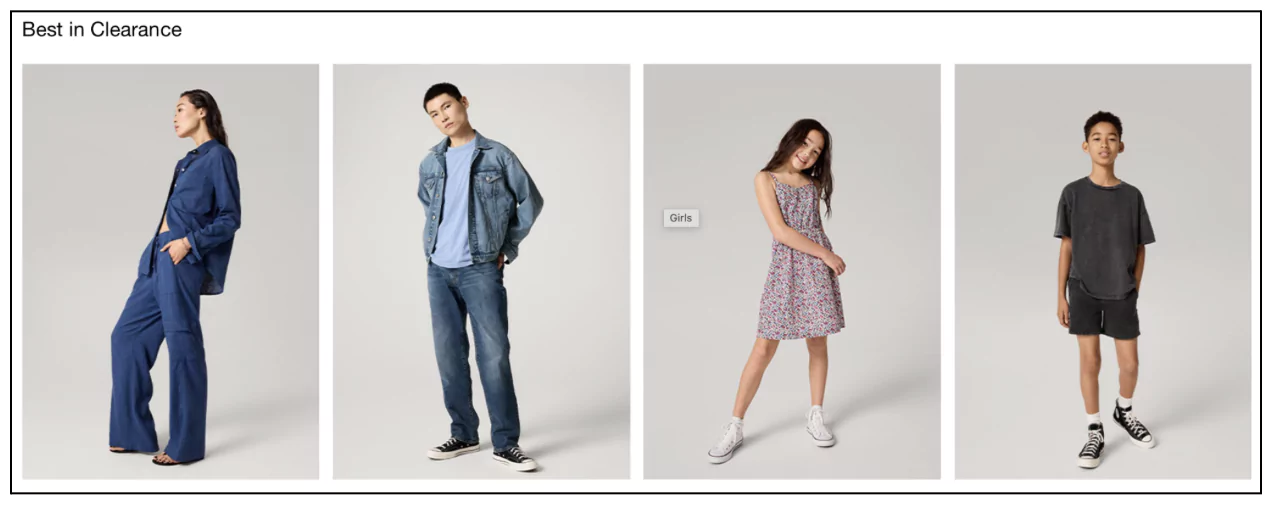
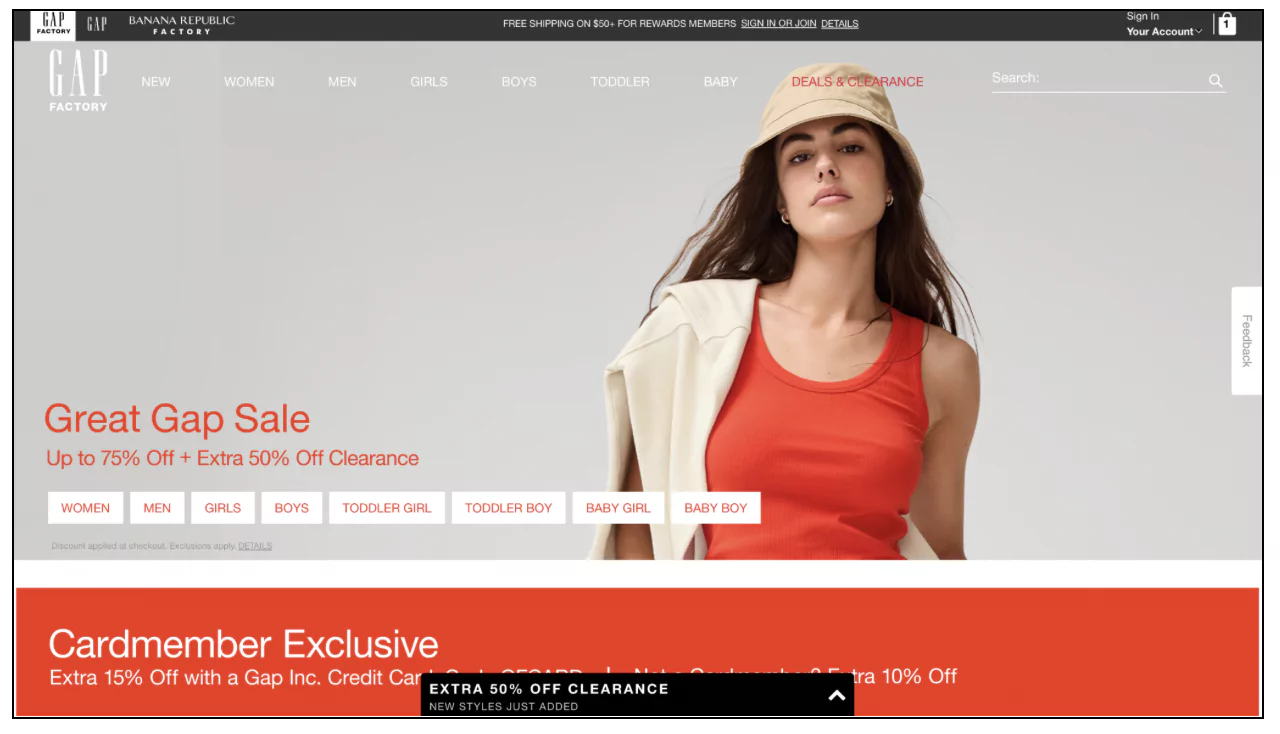
1. Gap Factory
Sale details: Gap Factory is offering up to 75% off and an extra 50% off on clearance items across various categories, automatically applied at checkout.
Key deals: Women's t-shirts are available for as low as $4.99 (originally $20), and men's pants are now $6.99 (originally $24).
Additional perks: Free shipping is available on all orders above $50.
Website mentions: The sale is prominently advertised on the homepage with a banner, in the navigation bar, in the clearance section, and on individual product pages.
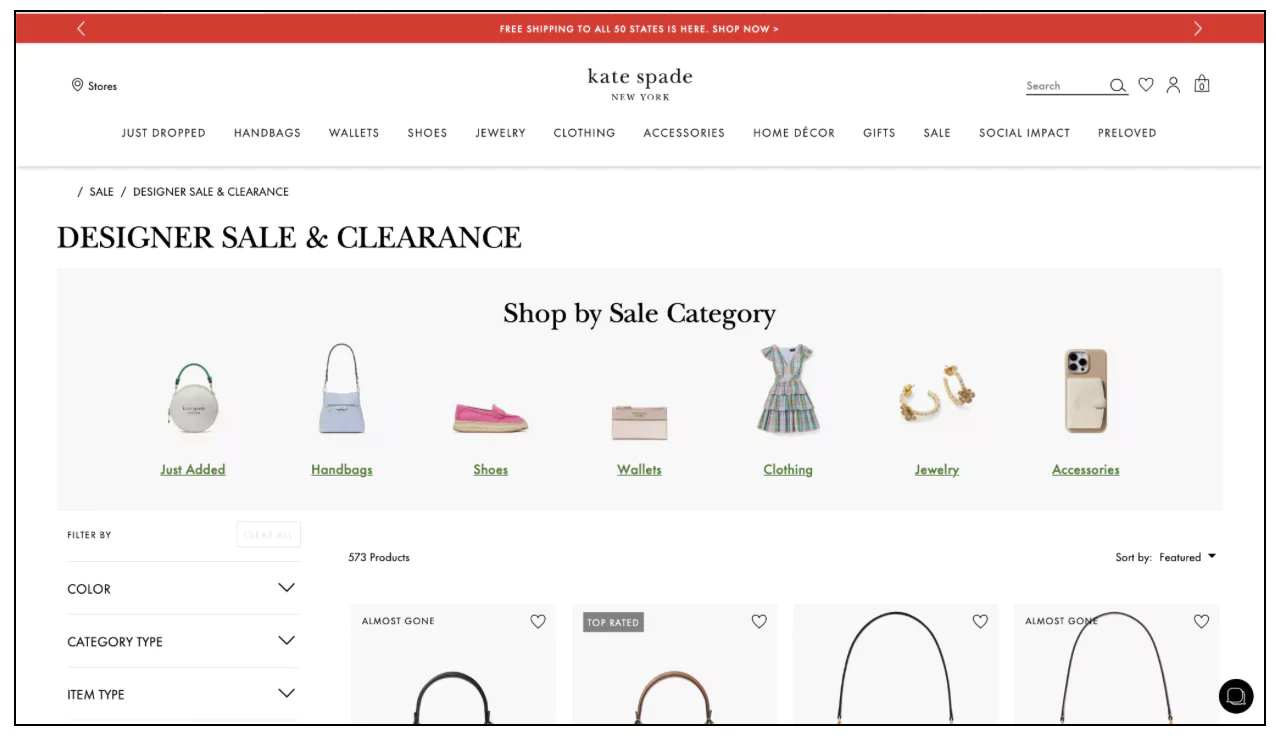
2. Kate Spade
Sale details: Kate Spade is currently offering a significant clearance sale with discounts up to 50% off on a wide variety of items. This includes designer handbags, clothing, shoes, jewelry, and accessories.
Key deals:
Handbags: For instance, the Knott Colorblocked Medium Zip-top Satchel is discounted from $378 to $302
Jewelry: The Take The Leap Bracelet is reduced from $198 to $158
Wallets: The Morgan Crystal Inlay Small Slim Wallet is available for $94, down from $118
Additional perks: Kate Spade provides free shipping on all orders as well as free gift-wrapping options.
Website mentions:
Homepage: The sale is prominently advertised on the Kate Spade homepage with a dedicated section
Specific landing page: Sale items are featured on the "Sale" page
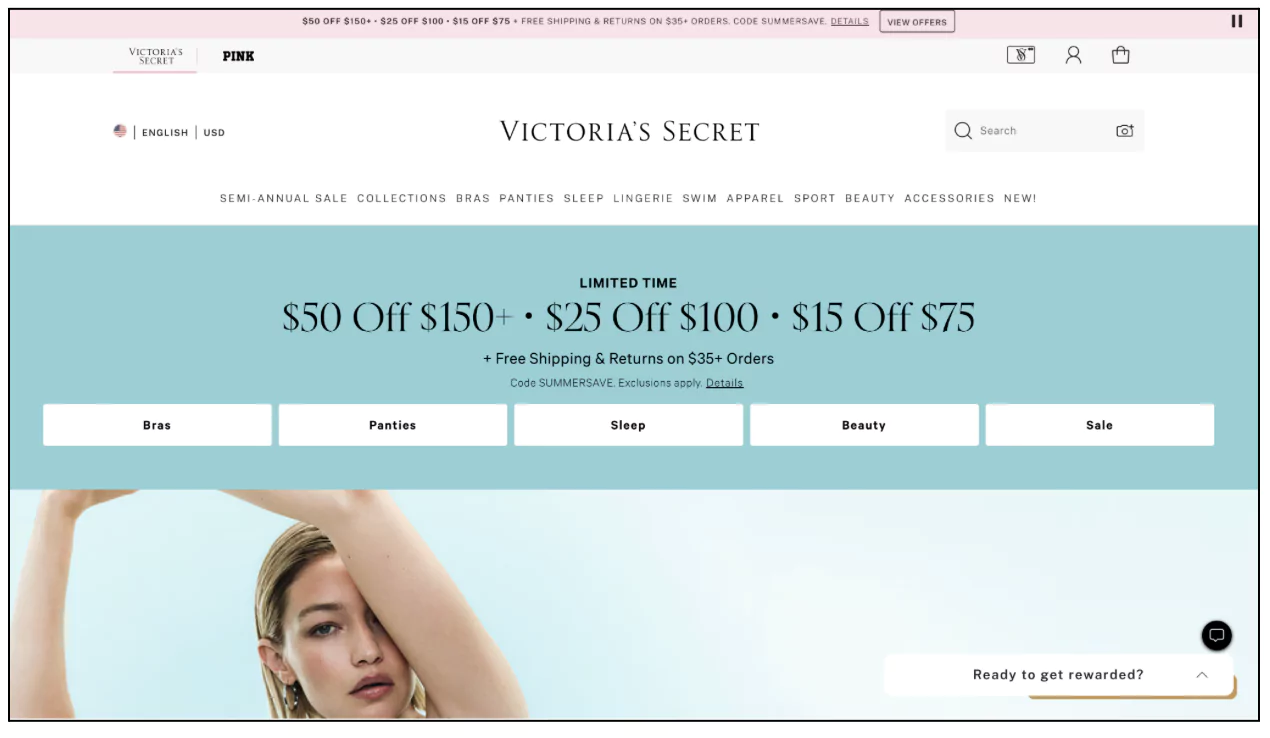
3. Victoria’s Secret
Sale details: Victoria's Secret is currently running its highly anticipated Semi-Annual Sale, featuring discounts of up to 70% on a wide range of items.
Key deals:
Discounts: Save up to 70% on select items, with popular products like cozy pyjama sets at $30
BOGO Deals: Enjoy Buy One, Get One Free deals on select items, which is perfect for stocking up
Free Gifts: Promotions that include free gifts with purchase, adding extra value to your shopping
Additional perks: Victoria's Secret offers free shipping on orders over $35
Website mentions:
Homepage: Sale is prominently advertised above the fold and in the navigation bar
Different sections: Featured throughout various sections of the website
Category and product pages: Highlighted within specific product categories
Promotional banners: Displayed through eye-catching banners
Dedicated sale page: Includes a dedicated page showcasing all sale items
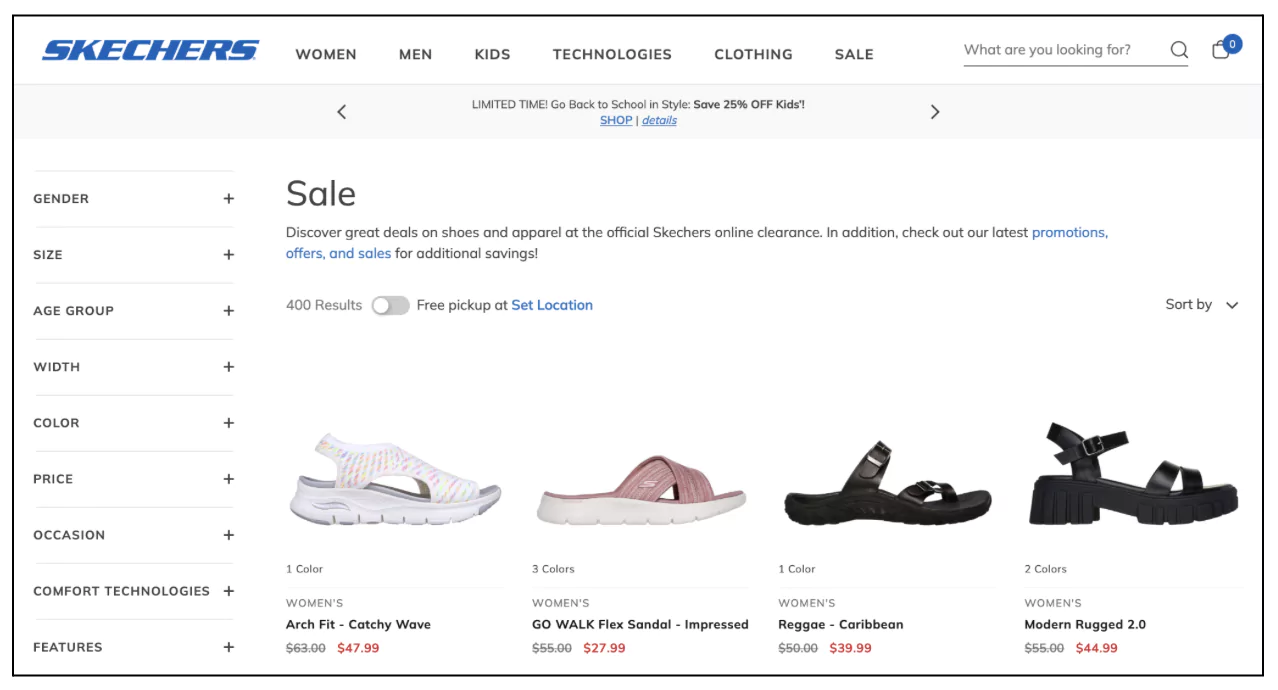
4. Skechers
Sale details: Skechers is currently hosting a clearance sale that features significant discounts on a wide range of footwear and apparel. The sale includes items for men, women, and children, with discounts reaching up to 50% off select items.
Key deals:
Men’s Footwear: Up to 50% off on various styles, including casual and athletic shoes
Women’s Footwear: Similar discounts on popular lines like GOwalk and D’Lites
Kids’ Footwear: Special 25% off on back-to-school styles, including models like Microspec and Power Jams
Additional perks:
Free Shipping: Available for members of Skechers Plus
Additional Discounts: An extra 20% off for members and an extra 10% off for Buy Online, Pick-Up In-store orders using the code "PICKUP"
Website mentions:
Homepage: Banner highlights the sale and key promotions
Sale Section: Dedicated area showcasing all discounted items
Product Pages: Individual product listings include discounted prices and promotional details
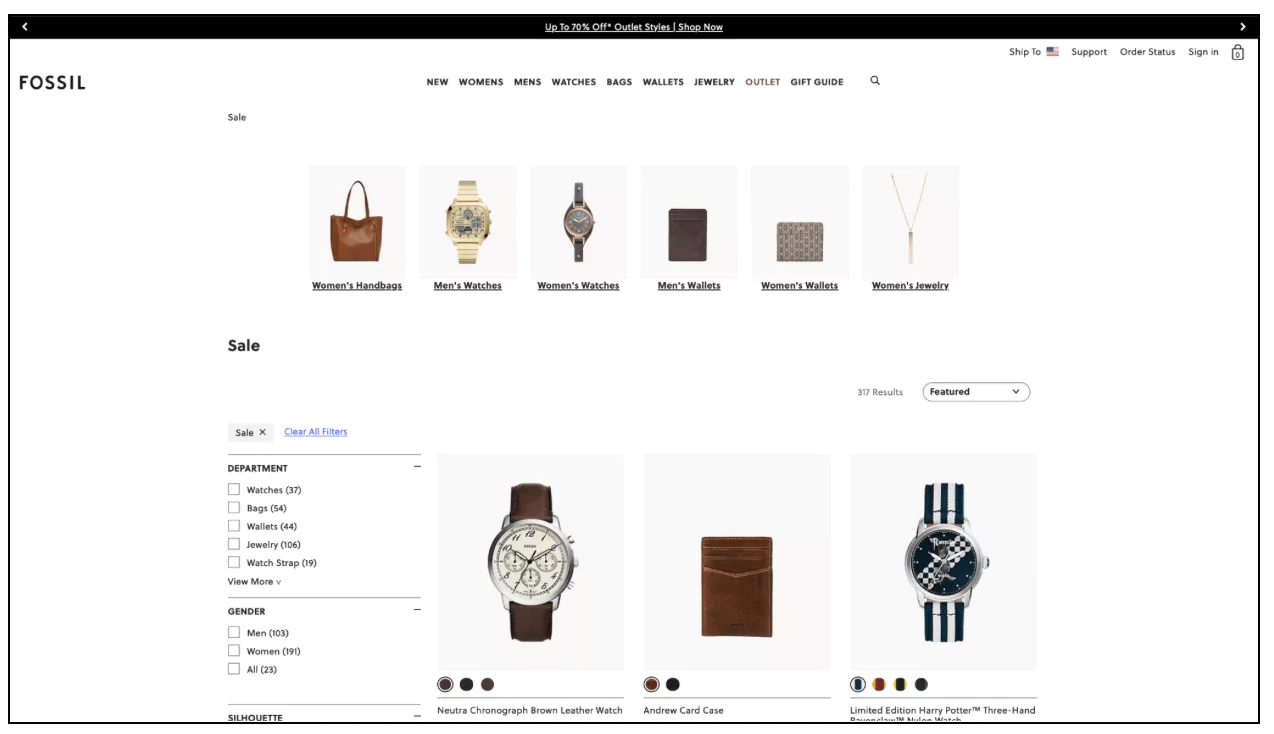
5. Fossil
Sale details: Fossil's current clearance sale offers significant discounts across a variety of products. Shoppers can enjoy up to 50% off on sale and outlet styles, with discounts automatically applied at checkout. The sale includes a wide range of items such as watches, bags, wallets, jewelry, and accessories for both men and women.
Key deals:
Men’s Watches: Up to 60% off on various styles, including classic and smartwatches
Women’s Watches: Significant discounts on popular models like the Jacqueline and the Carlyle
Bags and Accessories: Up to 50% off on selected bags, wallets, and belts, including bestsellers like the Sydney Satchel and the Derrick Wallet
Additional perks: Fossil offers free shipping on orders.
Website mentions:
Homepage: Banner prominently displays the clearance sale and highlights key promotions
Sale Section: A dedicated area on the website showcasing all discounted items
What exactly is a clearance sale, and how is it different from a regular promotion?
A clearance sale is a deliberate, time-limited event where you discount specific products to move them out, permanently. Unlike a seasonal promotion, which drives volume on healthy stock, a clearance event targets inventory that's eating into your cash flow and warehouse space: last season's products, slow-movers, discontinued lines.
The goal isn't just revenue, it's recovery. You're converting stuck capital back into working capital, making room for new stock, and doing it without permanently repositioning your brand as a discount store.
When is the best time to run a clearance sale?
The strongest windows follow natural inventory inflection points. End-of-season transitions, winter into spring, summer into fall, give you a logical reason to clear stock that customers understand intuitively.
Black Friday, Cyber Monday, and the post-Christmas window (December 26 through mid-January) are high-intent shopping moments where buyers expect deals. Back-to-school season (late July through September) works well for apparel, electronics, and supplies. For markets outside the US, Diwali and Singles' Day drive comparable urgency.
The rule of thumb: run clearance when the reason is obvious, not just when you feel like it.
How deep should my discounts actually go?
It depends on how urgently you need to move the product. High-demand items that happen to be overstocked rarely need more than 20–30% off, which just tips the decision.
Slow-moving stock typically needs 30–50% to generate serious interest. Seasonal or genuinely stuck inventory sometimes needs 50–70%, even if that means thin margins. The key is to set floor prices before the sale opens and hold them.
Customers who watch you drop from 40% to 70% in 48 hours learn that waiting pays off, and they'll do exactly that next time.
How do I create urgency without annoying my customers?
Use real information, not manufactured panic. Show live stock counts when inventory drops below 10 units. "Only 4 left" lands hard when it's true. Add a countdown timer to your homepage banner if the sale has a hard end date.
Create a "Last Chance" section as the final days approach. On email, escalate frequency only in the last 24–48 hours, not throughout the whole event.
Subscribe for more articles like this!
Thank you - we'll see you in your inbox soon!
Oops! Something went wrong while submitting the form.
Read by 5000+ ecommerce store owners
Subscribe for more articles like this!
Thank you - we'll see you in your inbox soon!
Oops! Something went wrong while submitting the form.






.avif)
.svg)


.svg)

.svg)
.svg)
